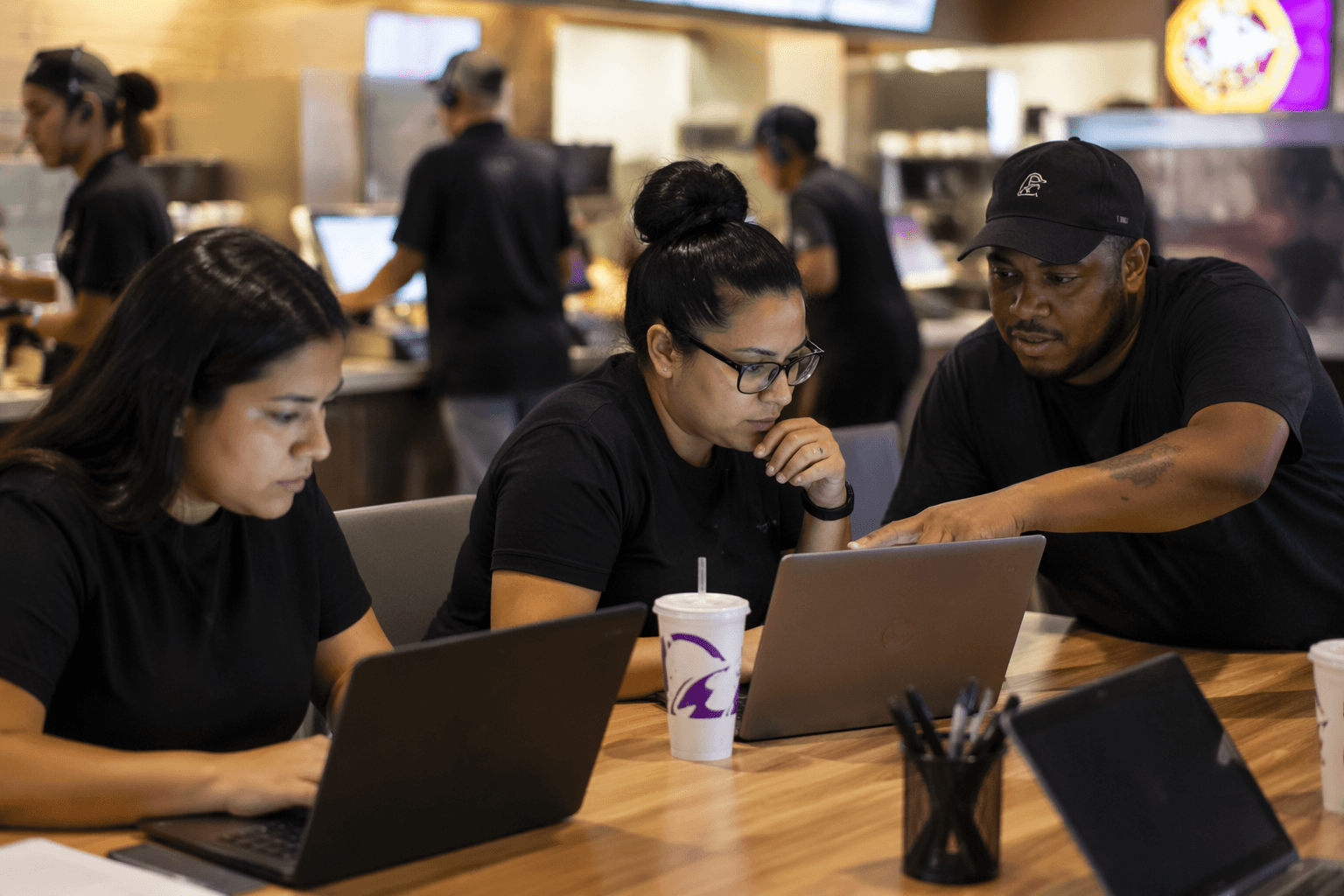
Taco Bell workers look for values they can see on the job
Crew members notice fast when values stay on the wall, and a new survey shows authenticity can decide whether they stay or leave.
When crew members cannot see a company’s values in the schedule, the breaks they get, the way training is handled, or how a shift manager treats them, the brand starts to feel fake. That is the retention risk Taco Bell is staring at: employees do not just want a mission statement, they want daily proof that the company means what it says.
A survey of more than 900 people found that 81% of job seekers were more likely to pursue a job if the ad discussed an organization’s core values. But 45% also said they had worked for an employer that did not live up to the values it claimed to uphold. The five values workers wanted most were integrity, respect, teamwork, growth and honesty. In a restaurant, that translates into very concrete tests. Does the manager build the schedule fairly? Do breaks happen when they are supposed to? Is coaching consistent, or does it only appear when district leaders are watching?

That question matters inside Taco Bell because the brand is both huge and highly fragmented. Glen Bell opened the first Taco Bell in Downey, California, in 1962, and Yum! says the first franchise was sold in 1964. Today, Yum! says its system spans more than 63,000 restaurants in 155 countries and territories and is operated primarily by about 1,500 franchisees. Taco Bell says it has about 250,000 U.S. team members, and at year-end 2024 it had 498 company-run stores. In a franchise-heavy system like that, the experience of “culture” can change restaurant by restaurant, depending on the operator and the shift leader on duty.
Taco Bell has tried to make culture more tangible through benefits and advancement. In October 2025, the company said it would extend its Tacos & Tuition education benefit to participating franchised locations, not just company employees and company-operated stores. Taco Bell also said retention in its company-owned portfolio improved year over year by 17% in 2025, general manager vacancy fell by 27%, and general managers on average spend 10 years with the brand. The message is clear: education and development are not just perks, they are retention tools.
Still, the labor friction has not disappeared. A National Labor Relations Board case involving C&R Restaurant Group LP doing business as Taco Bell in Alhambra, California, was filed on October 7, 2024 and later settled in 2025. Another Taco Bell case in Findlay, Ohio, was filed on May 24, 2024. For Taco Bell leaders, the lesson is simple: values only matter when a crew member can feel them in the next schedule, the next conversation and the next promotion.
This article was produced by Prism’s automated news system from verified source data, official records, and press releases, then run through automated quality and moderation checks before publishing. The system is built and supervised by the people who set the standards it runs under. Read our full AI policy.
Did this article answer your question?