Taco Bell’s MyTacoBell portal restricts access to authorized workers and contractors
MyTacoBell is a closed internal portal for six authorized user groups, and its business-only rules show how tightly Taco Bell controls worker information.
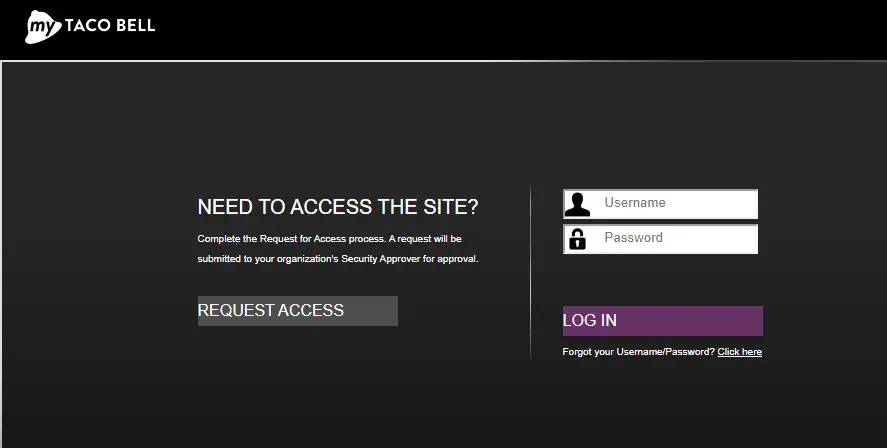
What MyTacoBell is, and why the login page matters
Six categories of people can get into Taco Bell’s MyTacoBell portal, but only if Yum authorizes them: current employees, contractors, franchisees, licensees, suppliers, and approved consultants. That alone tells you this is not a casual company website. It is a controlled workplace system, and the login page makes that boundary explicit by limiting access to business use only and banning unauthorized downloading, saving, or transmission of materials.
That matters because access rules are not just legal fine print. They reveal how Taco Bell and its parent company keep internal information behind a corporate wall, where workers, vendors, and franchise operators can find materials that are not meant for public eyes. For employees trying to understand where official information lives, the portal signals that some of the most important records and communications sit inside a closed system rather than on a public careers page.
Who can log in, and what that says about control
The access list is broad, but it is not open. Taco Bell and Yum are not limiting the portal to store employees alone. They are extending entry to outside parties such as franchisees, licensees, suppliers, and approved consultants, which shows how many different people touch the brand’s internal operations. At the same time, the authorization requirement keeps the company in control of who sees what, and when.
That structure reflects the reality of fast-food work under a large brand network. A crew member may spend every shift dealing with local management, but the systems that govern some internal information are set higher up the ladder. The portal is a reminder that Taco Bell’s workforce is split between what happens in the restaurant and what happens inside corporate systems, and those two layers do not always look the same from the counter or the prep line.
What workers are likely to use it for
Even though the login page is minimal, it points to a place where internal work materials live. Portals like this are usually where employees handle work-related access, company forms, and other internal functions that are not meant for the public. The page’s restricted design makes clear that MyTacoBell is meant to be an official channel for internal business, not a general information hub.
For workers, that has practical consequences. If a document, policy, or permission is tied to the portal, it likely belongs to the company’s controlled internal record system. That means employees should not expect to treat every Taco Bell-related document the same way they would a public posting, and managers should not assume staff know the difference unless the company spells it out clearly.
Why the business-only rule is a workplace issue, not just a security warning
The warning against unauthorized downloading, saving, or transmission is one of the clearest signs of how seriously the company treats its internal materials. It is not simply saying, “keep this private.” It is setting a rule about what workers and other authorized users may do once they are inside. That kind of language matters in a workplace where information can move quickly through screenshots, texts, or informal sharing between shifts.
For crew members and managers, the message is straightforward: access comes with limits. If a policy, form, or company notice is inside MyTacoBell, that does not mean it is free to circulate outside the authorized group. The company is drawing a line between internal business use and broader distribution, and that line helps explain how much control Yum keeps over its brand-level information.
What this reveals about Taco Bell’s employment structure
MyTacoBell also shows how layered the Taco Bell system is across corporate and franchise operations. The portal sits inside Yum’s broader system, which means access is shaped not only by store-level management but by the parent company’s rules. That structure helps explain why some tools, policies, and records are centralized even when the day-to-day job happens in a single restaurant.
For employees, that can feel remote, but it has real effects on how information flows. If the company keeps key materials behind a corporate login, then official knowledge is not always where a worker first looks for it. The result is a workplace where local managers may handle the immediate schedule and the shift, while the deeper infrastructure of permissions, documents, and internal communications remains locked inside a broader corporate network.
What employees should take from it
The clearest lesson is simple: MyTacoBell is an authorized internal gateway, not a public reference point. If you are one of the people allowed in, the portal is part of the company’s official machinery. If you are not authorized, the login page itself tells you that the door stays closed.
That makes the portal a useful window into Taco Bell’s approach to workplace control. The company relies on a shared system for employees and outside partners, but it keeps that system bounded by authorization, business-purpose limits, and rules against redistribution. For workers trying to understand where official information lives, MyTacoBell shows that the answer is often inside the wall, not on it.
This article was produced by Prism’s automated news system from verified source data, official records, and press releases, then run through automated quality and moderation checks before publishing. The system is built and supervised by the people who set the standards it runs under. Read our full AI policy.
Did this article answer your question?