Yum! Brands Launches AI-Powered Byte Platform Across 61,000 Global Locations
Taco Bell has the most Byte by Yum! solutions integrated of any brand, and Yum executives say that's a key reason same-store sales grew 5%.
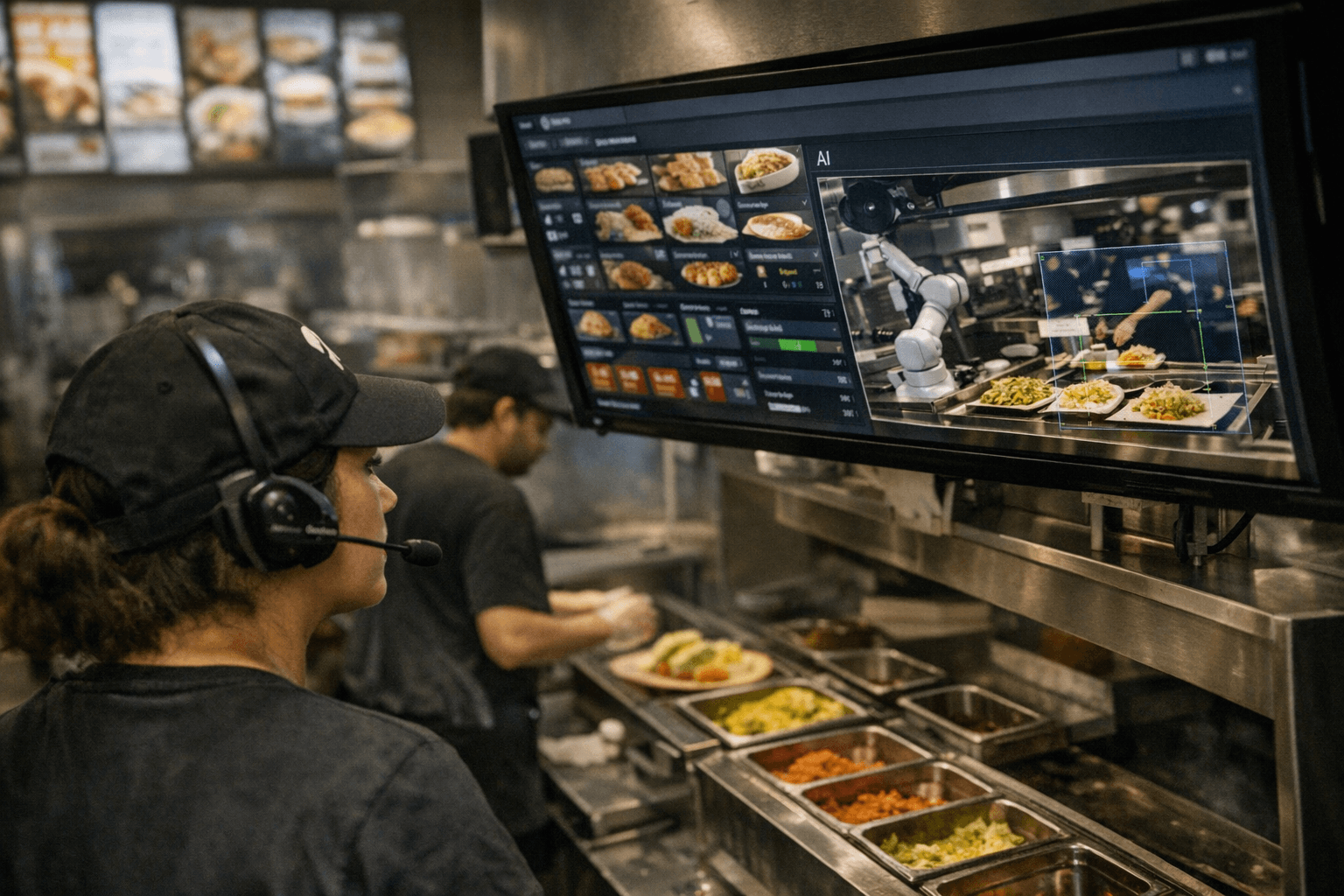
Taco Bell's 5% same-store sales gain last quarter didn't come from a new menu item alone. Yum! Brands executives pointed to something less visible to customers but increasingly central to how the chain operates: Byte by Yum!, the company's proprietary AI-driven technology platform, which Taco Bell has adopted more deeply than any other brand in the Yum portfolio.
Yum launched Byte by Yum! on February 6, 2025, consolidating years of separately acquired and developed technology capabilities into a single software ecosystem. The platform covers online and mobile app ordering, point-of-sale, kitchen and delivery optimization, menu management, inventory and labor management, and team member tools. It replaced legacy product names including the Yum Commerce Platform and the company's SuperApp. Joe Park, Yum's Chief Digital & Technology Officer, took on the additional role of President of Byte by Yum! alongside the launch.
For Taco Bell specifically, the platform integrates online ordering, point-of-sale, and back-of-house technologies into one connected system. Yum's press release described the result as "rich customer experiences and speedy operations." During Yum's second-quarter earnings call, executives credited that deep integration as a material factor in Taco Bell's performance, while KFC U.S. same-store sales dropped 5% and Pizza Hut declined 2% in the fourth quarter — brands with comparatively lighter Byte adoption.
The scale of the rollout is significant. Yum operates more than 61,000 restaurants worldwide, and the company said 25,000 of them already use at least one Byte capability. Yum's brands collectively process more than 300 million digital transactions per year, with digital sales growing 15%.
"As the world's largest restaurant company, Yum's scale allows us to make massive strides in growing our proprietary digital and AI-driven platform in partnership with franchisees," Park said.
CEO David Gibbs framed the build-it-yourself approach as a deliberate strategy. When companies rely on multiple third-party vendors, getting those systems to work together becomes the problem. Owning the stack, Gibbs argued, solves that. Cameron Davies, Yum's Chief Data Officer, described the logic as a flywheel: "Owning those surfaces gives us more data. More data makes our AI smarter, which makes the platforms better. Better platforms drive more usage, which generates even more data. The entire cycle starts over, getting more powerful with each turn."
Davies also claimed the platform has cut restaurant stockouts by 85% and delivered personalized marketing to 180 million customers, though no methodology or timeframe was provided alongside those figures.
One newer piece of the platform with direct financial implications for franchisees is Byte Connect, a tool that links restaurant menus and orders directly with third-party delivery providers. It launched in the second quarter of 2025 and has been scaling across Pizza Hut U.S. Incoming CEO Chris Turner, who currently serves as CFO, described the economics plainly on an earnings call: "This service is typically provided to restaurant companies at a significant cost per order by a third party, but we are able to offer it to our franchisees using the Byte stack at a more affordable price. This platform serves as the essential infrastructure for all our brands to better support our sizable third-party delivery business."
Yum has also announced a partnership with NVIDIA, targeting deployment of AI solutions in 500 restaurants using NVIDIA NIM microservices, which analyze performance data across thousands of locations to generate customized operational recommendations for managers. The infrastructure runs on NVIDIA AI Enterprise software available through AWS Marketplace.
For crew members and shift managers at Taco Bell, the platform's labor management and forecasting tools are the features with the most direct day-to-day relevance. Yum's official materials describe the platform as enabling "easy operations for team members," though the company has not publicly detailed how labor forecasting integrates with local scheduling laws or franchisee autonomy over staffing decisions. KFC's use of an AI restaurant coach — described as improving operational consistency and manager efficiency — offers a preview of where Taco Bell's toolset may be heading as adoption deepens across the system.
This article was produced by Prism’s automated news system from verified source data, official records, and press releases, then run through automated quality and moderation checks before publishing. The system is built and supervised by the people who set the standards it runs under. Read our full AI policy.
Did this article answer your question?