Yum! Brands profile highlights unexpected careers beyond Taco Bell stores
A Yum! Brands profile on an underwater archaeologist doubles as a map for Taco Bell workers who want careers in IT, risk, or compliance.

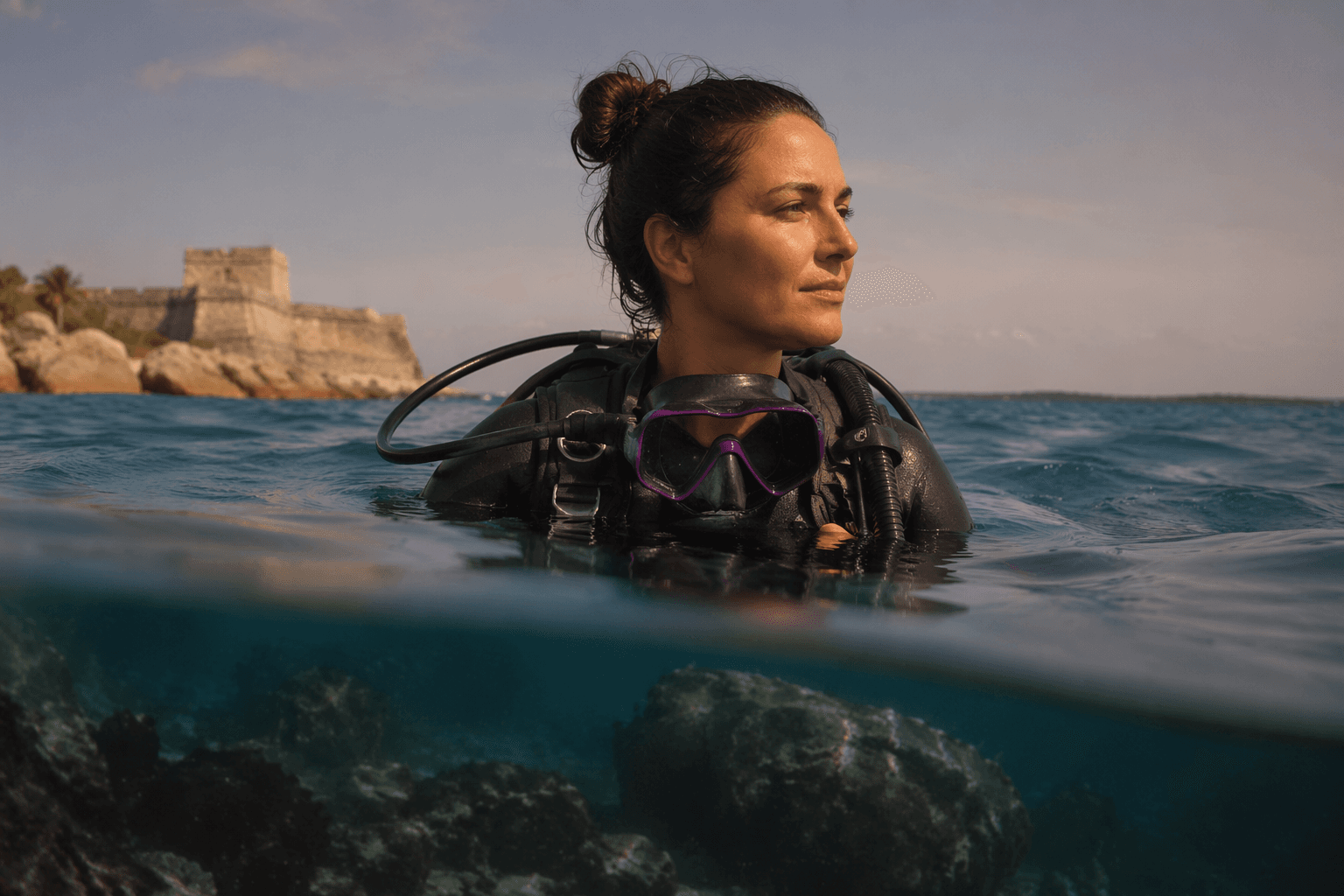
Steve Abell’s side job as an underwater archaeologist is more than a quirky profile detail. For Taco Bell workers, it is a reminder that Yum! Brands has built a system where restaurant experience can sit alongside technical, analytical, and leadership work, including roles in global IT security, governance, risk, and compliance.
A profile that points beyond the store
Yum! spotlighted Abell as its global IT security director of governance, risk and compliance, and the company paired that work history with his underwater archaeology. That combination matters because it shows a multinational restaurant company making room for people whose careers do not fit a single template. In a business as large as Yum!, the path from a restaurant shift to a corporate specialty role is not automatic, but the profile suggests it is visible enough to be part of the company’s storytelling.
For Taco Bell employees, the bigger takeaway is not the shipwrecks. It is the idea that curiosity, outside interests, and technical skills can all coexist with a serious corporate career. That matters in a labor market where workers often want more than a schedule and a wage: they want a ladder, and they want to know where that ladder can lead.
How Yum! says internal mobility works
Yum! says professional development is part of its employee value proposition, and it says workers can take short-term assignments across corporate, brand, and affiliate offices. It also gives every employee access to LinkedIn Learning, which it describes as a library of more than 16,000 online videos and courses. For someone in restaurant operations, that matters because it creates room to build skills that are useful outside the four walls of a store, especially in areas like systems, risk, and compliance.
The company says each employee works with a coach during its annual Building People Capability cycle to create an Individual Development Plan. That detail is important because it turns career growth into something more concrete than vague encouragement. A crew member who wants to move toward corporate work can use that process to map out the skills needed for the next step, rather than waiting for a lucky opening to appear.
The most practical reading of that setup is straightforward: the company is not saying everyone leaves the restaurant path, but it is signaling that nontraditional backgrounds are welcome. For a Taco Bell manager, that can also help with retention. If employees can picture themselves moving into support functions, they may be more likely to stay long enough to grow into them.
Why Taco Bell’s scale makes the pathway matter
Taco Bell is not a small brand with a narrow set of jobs. The company says it has more than 9,000 restaurants in 35-plus countries and territories, and it reported $18.361 billion in total system sales in its 2025 year-end earnings report. It traces its first location to Glen Bell in Downey, California, in 1962, which is a reminder that the brand’s culture has long been tied to reinvention as much as repetition.
That scale creates demand well beyond line work and shift coverage. Restaurants need people who understand IT security, supply chain systems, brand support, and risk management just as much as they need people to run the drive-thru and prep line. A profile like Abell’s makes that invisible labor more legible to workers who may never have considered that a fast-food company could also be a home for specialized corporate careers.
Taco Bell also says its careers are available at both corporate-owned and franchised locations, which matters for workers trying to understand where a future job might sit. In a franchise system, the difference between corporate and operator-owned roles can shape everything from training to promotion to the kind of benefits offered, so knowing that both sides of the business hire is useful when planning a next step.
Education, scholarships, and the retention signal
The company has also built a wider education and advancement platform around that message. Taco Bell says its foundation has awarded more than $155 million in grants and scholarships focused on education and career readiness. It also said it awarded a record $14 million in Live Más Scholarships in the prior year, which adds another layer to its worker-development pitch.
The strongest retention signal came in October 2025, when Taco Bell said it would expand its Tacos and Tuition education benefit to employees at franchisee-owned locations. The company said those education-benefit efforts improved retention by 17% year over year, reduced general-manager vacancies by 27%, and produced a 73% retention rate among front-line workers enrolled in the program. Those are the kinds of numbers that matter to crew members and managers because they connect development programs directly to staffing stability.
That link is especially relevant in a restaurant business where turnover is expensive and disruptive. If education support helps keep a line shift covered, cuts vacancies at the general-manager level, and makes a worker more likely to stay, then the benefit is not just a perk. It becomes part of how the operation holds together.
What workers can take from the story now
The most useful part of the Abell profile is how it reframes ambition inside a restaurant giant. It says a Taco Bell career does not have to stop at the store boundary, and it suggests that skill-building can happen in parallel with restaurant work, not only after it. For workers aiming at IT, risk, or compliance, the clearest starting points are the tools Yum! already says it provides: development plans, coaching, short-term cross-office assignments, and online learning.
The broader lesson for store leaders is just as important. When workers can see a path into corporate or specialist roles, the company is not only selling a dream, it is creating a retention strategy. In a brand built on high volume and constant labor pressure, that kind of internal mobility may be one of the few ways to keep good people from seeing the next shift as the end of the road.
This article was produced by Prism’s automated news system from verified source data, official records, and press releases, then run through automated quality and moderation checks before publishing. The system is built and supervised by the people who set the standards it runs under. Read our full AI policy.
Know something we missed? Have a correction or additional information?
Submit a Tip