Yum seeks capitalized, capable, committed Taco Bell franchise partners
Yum’s 3C test is more than a franchise filter. It helps decide whether Taco Bell crews get steady staffing, working equipment, and managers who can actually support the store.

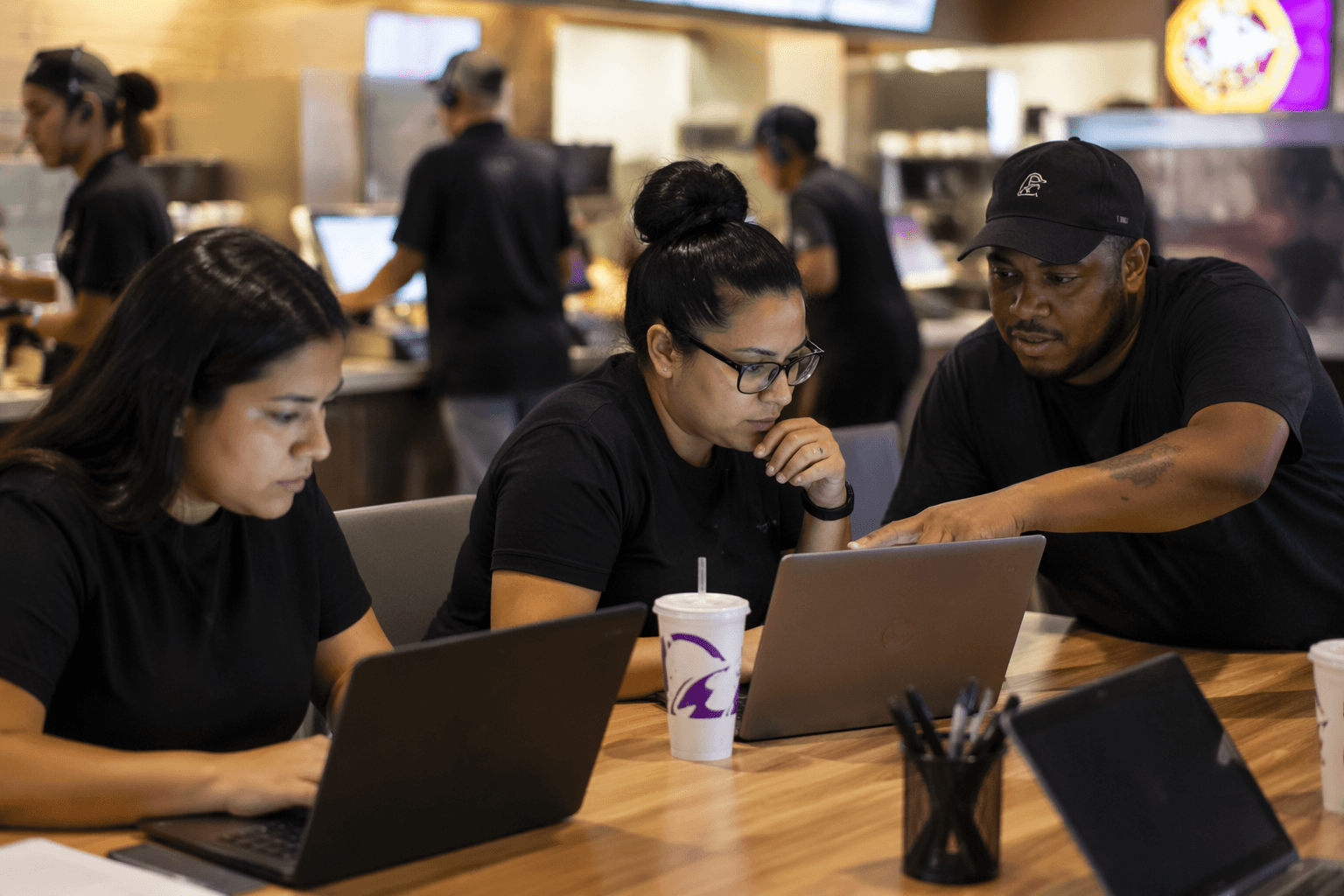
Taco Bell’s next franchise partner is not just buying a logo. Yum! Brands says it wants operators who are capitalized, capable, and committed, and that standard shapes what happens after the deal is signed, from staffing stability to whether a store can keep up with repairs, training, and service pressure. For workers, the question is blunt: does ownership have enough backing to run a real restaurant, or just enough cash to open one?
What Yum means by the 3C test
Yum says it looks for “3C” partners who are well capitalized, capable, and committed, and it ties that profile to running world-class restaurants with an unmatched customer and team member experience and consistent, compelling paybacks. That language is easy to read as investor talk, but in a Taco Bell store it points to very practical things: whether the operator can handle equipment failures, keep enough people on the schedule, and build training systems that do not collapse under turnover.
The company also says those partners should bring solid team-building skills, employee-development skills, and multi-unit restaurant and retail experience. That matters because the franchise model rewards scale, but scale only helps workers when the operator knows how to run more than one location without cutting corners at each one. A franchisee may own the store, but the quality of that ownership shows up in the pace of onboarding, the reliability of the shift plan, and the consistency of day-to-day support.
Why this matters on the line
For crew members, franchising is not an abstract ownership structure. It decides who sets the tone in the store, how fast equipment gets fixed, how much training a new hire gets before a rush, and whether the manager has the backing to cover call-outs without throwing the whole shift into chaos. A well-capitalized franchisee can usually absorb remodels, unexpected repairs, and staffing swings better than one that is stretched thin.
Capability is the other half of the equation. A capable operator is more likely to keep labor practices steady, maintain service standards, and avoid the kind of churn that leaves workers learning on the fly every week. Commitment is the part employees feel most directly: if an owner is truly committed, that usually means investing in people, not just pushing labor harder when traffic spikes.
That is why Yum’s franchise screening matters beyond the boardroom. The company is signaling that it wants operators who can support both guest experience and team member experience, not just add unit count. For restaurant managers, that is a clue about what corporate thinks expansion should look like, and for workers it is a reminder that store conditions often reflect ownership quality as much as brand promise.
A brand built on franchising from the start
Taco Bell has been tied to franchising almost from the beginning. The first Taco Bell opened in 1962 in Downey, California, under Glen Bell, and the first franchise was sold in 1964. That history matters because the chain’s growth model has always depended on giving operators room to scale, while keeping the brand’s food, pace, and standards recognizable.
The franchise model is even more central outside the United States. Taco Bell says all of its restaurants internationally are franchise-owned, which means the brand’s global footprint is built on local partners who carry the operational load. Spain is one example the company points to: Casual Brands Group, led by Ignacio Mora-Figueroa, recently opened the country’s 100th Taco Bell restaurant. That milestone is not just a marketing number. It is evidence that Taco Bell’s international growth depends on whether franchise partners can keep building stores that actually work.
Yum’s broader scale shows how much rides on those choices. Across its brands, the company says it operates or franchises more than 63,000 restaurants in 155 countries and territories, with global franchise opportunities across KFC, Taco Bell, Pizza Hut, and Habit Burger & Grill. In a system that large, operator quality is not a side issue. It is the difference between smooth expansion and a network of stores where the people doing the work absorb the cost of weak ownership.
The legal split that can shape accountability
Franchising also affects how responsibility gets divided when labor problems surface. The National Labor Relations Board’s 2023 joint-employer rule said two entities may be joint employers if they share or codetermine essential terms and conditions of employment. A U.S. District Court vacated that rule in March 2024, and in February 2026 the NLRB moved to restore the prior standard.
That shifting legal backdrop matters for Taco Bell because it shows how complicated it can be to pin down who is responsible for schedules, pay practices, discipline, and other workplace terms in a franchised system. Worker advocates have long argued that franchise structures can let brands distance themselves from labor problems while still shaping the systems that govern store operations. For employees, that can make accountability feel diffuse right when it matters most.
When the franchise model breaks down
The clearest evidence comes from enforcement actions. In 2023, New York City’s Department of Consumer and Worker Protection said Taco Bell franchisee GF Enterprise III would pay more than $819,000 in restitution to 888 workers and nearly $81,000 in civil penalties and costs after alleged Fair Workweek and Paid Safe and Sick Leave violations at 10 locations. That case tied franchise behavior directly to worker schedules and pay, not just back-office compliance.
A second New York City case in March 2026 pushed the point further. The city said a franchisee operating Taco Bell and Dunkin’ restaurants agreed to pay more than $1.5 million over alleged scheduling violations at roughly two dozen locations. Put plainly, the same franchise structure that allows rapid growth can also create the conditions for unstable scheduling, especially when operators are undercapitalized or inattentive.
Those cases are why Yum’s 3C standard should be read as a worker issue, not only a growth filter. Capital can mean the difference between a store that can absorb a repair and one that keeps limping along. Capability can mean the difference between an organized schedule and constant scramble. Commitment can mean the difference between a shop that treats training as an investment and one that treats people as replaceable.
What workers and managers should take from the 3C standard
For crew members, the practical lesson is that the quality of ownership often shows up in the most immediate parts of the job: whether managers have enough people to cover the line, whether equipment works when the lunch rush hits, and whether training is consistent enough to keep new hires from getting lost. For shift leaders and restaurant managers, the 3C profile explains why some operators get the chance to grow and others stall out. Yum is looking for partners who can scale without turning every problem into a labor problem.
That is the real story behind the franchise pitch. Yum says it wants capable, committed, well-capitalized partners, but the measure that matters inside a Taco Bell is simpler: whether that ownership produces a store where the crew can stay staffed, supported, and ready for the rush.
This article was produced by Prism’s automated news system from verified source data, official records, and press releases, then run through automated quality and moderation checks before publishing. The system is built and supervised by the people who set the standards it runs under. Read our full AI policy.
Did this article answer your question?