April 5 General Strike Could Disrupt Staffing and Operations at Target
A no-call, no-show on April 5 could accelerate you toward termination under Target's attendance policy. Here's how to protect your paycheck and your record before Saturday.
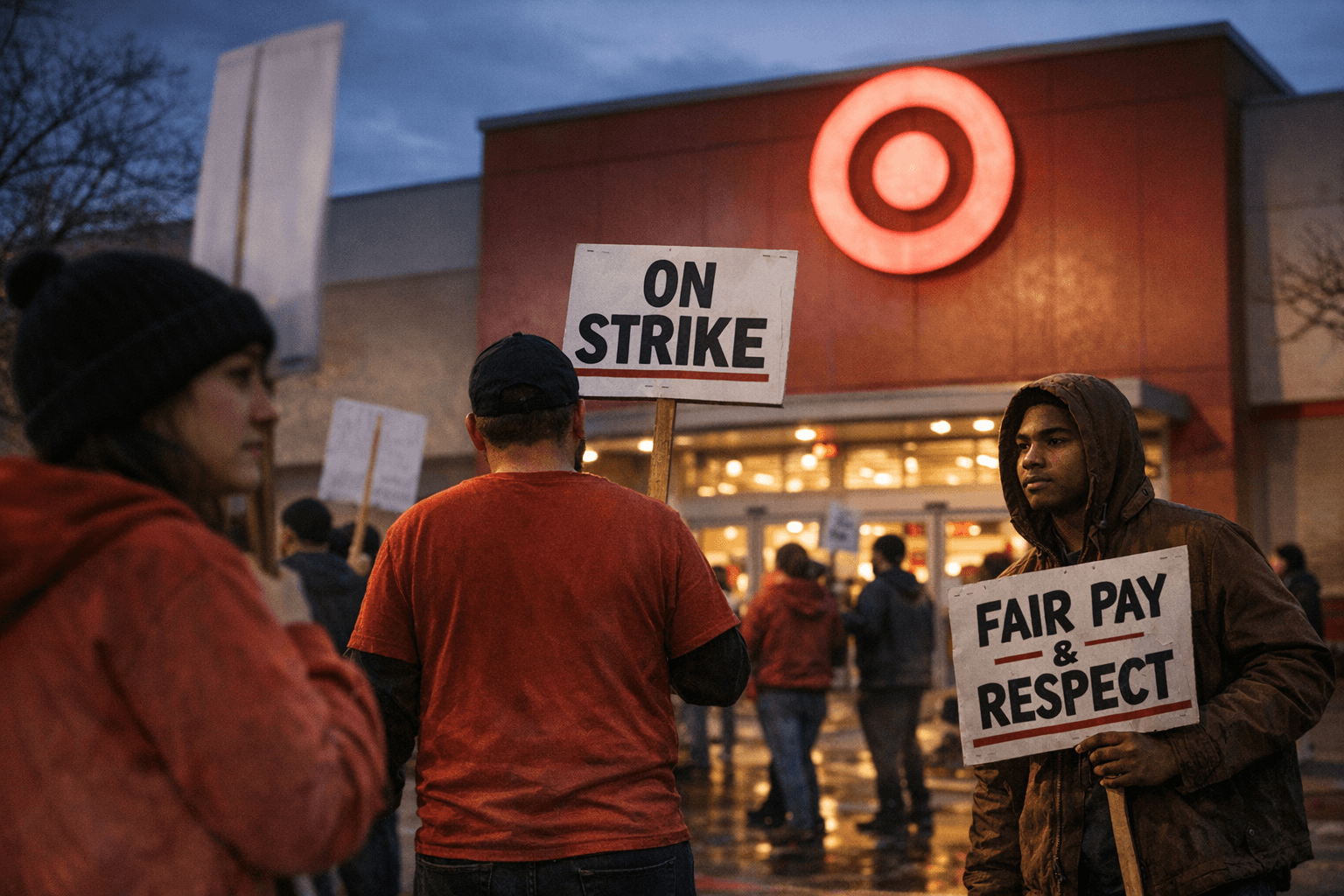
Saturday arrives with a scheduled shift and a decision to make. The nationwide general strike organized under the banner of General Strike 2026, also known as Strike26, is set for April 5, and organizers have explicitly named retail among the industries they hope to mobilize. For Target team members clocked into the schedule that day, the practical questions are immediate: What happens to your pay? Can you use PTO? And what does Target's attendance policy actually do with a no-show tied to a protest?
If you are scheduled and do not show up, Target's attendance tracking treats the absence as unexcused unless approved time off is on record. The situation worsens considerably if you neither show up nor call: three separate no-call, no-show incidents can accelerate a team member toward termination more quickly than accumulated documented sick calls, according to Target's Team Member Handbook guidance. The safest move, if you plan to skip the shift, is to call your manager before Saturday, request to use available PTO, and confirm it in writing. Full-time hourly team members accrue PTO covering vacation, personal, and sick time; part-time team members accrue at a lower rate. Approval depends on your store's coverage needs, but requesting it proactively is categorically better than a retroactive conversation on Monday.
There is one labor-law wrinkle that could catch team members off guard. Strike26's stated demands, stopping ICE enforcement actions and opposing current federal policy, are political in nature, not workplace grievances over wages or conditions. That distinction matters. Section 7 of the National Labor Relations Act protects "concerted activities for the purpose of collective bargaining or other mutual aid or protection," but the NLRB draws a line between economic workplace strikes and primarily political actions. Non-union workers who miss a shift for a political demonstration have less clear NLRA protection against discipline than workers striking over pay cuts or unsafe working conditions. Before taking any action, consulting an HR partner or a qualified labor attorney is worth the 20-minute conversation.
The second scenario to plan for: you show up, but demonstrations near your store prompt management to reduce hours or close early. You are generally paid only for hours actually worked in that case; Target has no published policy guaranteeing the full scheduled shift when a store closes at management discretion. If you are sent home early, log your exact clock-out time and check with your ETL or HR partner whether your state's reporting-time-pay law applies. California and New York, among others, require a minimum payout when a worker reports for a scheduled shift and is dismissed before completing it. If you feel unsafe because of activity outside the building, notify your manager directly and follow posted safety guidance for exits and staging areas rather than leaving without communicating.
The third situation is one many team members will face regardless of their own plans: an ETL calling around for coverage because April 5 call-outs are elevated. On-Demand and part-time team members may receive shift requests as Strike26 depletes rosters. Picking up a shift is voluntary unless covered by your scheduling agreement, and the rate is your standard hourly wage. There is no automatic surge pay for a non-union retail environment.
Strike26 follows a January 30 general strike that organizers framed as the opening move in a broader campaign. Whether April 5 draws enough participation to disrupt operations at your specific store is an open question. Whether a no-call, no-show affects your attendance record is not.
This article was produced by Prism’s automated news system from verified source data, official records, and press releases, then run through automated quality and moderation checks before publishing. The system is built and supervised by the people who set the standards it runs under. Read our full AI policy.
Did this article answer your question?