April jobs report signals tighter hiring conditions for Target stores
Target is still fighting for reliable hourly workers: April payrolls rose 115,000, unemployment held at 4.3%, and part-time-for-economic-reasons work jumped 445,000.

Target store leaders are still hiring into a labor market that is moving, but not loosening fast enough to make backfills easy. The U.S. Bureau of Labor Statistics said total nonfarm payroll employment rose by 115,000 in April and the unemployment rate stayed at 4.3 percent, a pace that suggests plenty of worker churn without the kind of broad easing that would suddenly make staffing simpler for stores.
That matters inside Target because the company is still a labor-heavy business. In its fiscal 2025 annual report, Target said it employed about 415,000 full-time, part-time and seasonal team members as of Jan. 31, 2026. With that many people on the payroll, even small shifts in hiring conditions can shape how quickly stores can fill front-end openings, inbound shifts, fulfillment roles and seasonal slots heading into summer.

The April jobs mix was also not especially friendly to retailers. Job gains came in health care, transportation and warehousing, and retail trade, which means Target is competing with logistics and service employers for many of the same reliable hourly workers. The report also showed the number of people working part time for economic reasons increased by 445,000 to 4.9 million, a sign that many workers are still looking for more hours or steadier schedules. For Target managers, that creates a practical opening: flexible shifts and clear paths to more hours may resonate, but only if schedules are dependable enough to keep people from walking.
That is especially relevant after Target said in February that it would invest more in store labor while cutting about 500 office and supply-chain roles. The company has also said it planned to reduce the number of store districts so it could free payroll for additional labor, more hours and guest-experience training. In other words, Target is trying to shift resources toward the store floor at the same time the broader labor market remains competitive.
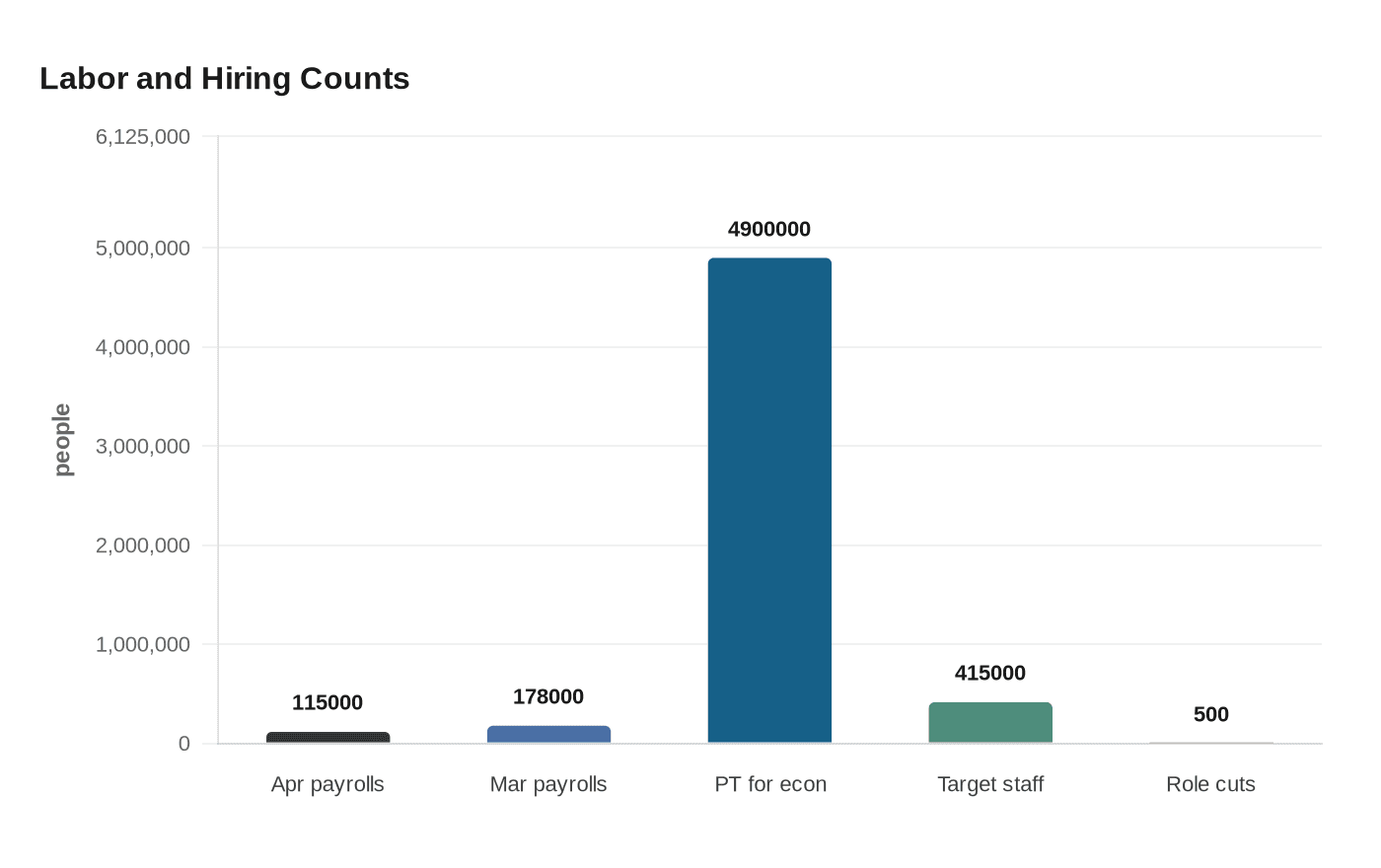
March already pointed in the same direction. Payrolls rose by 178,000 that month and unemployment remained at 4.3 percent, which suggests April was not a sudden turn but another reading of a steady, still-tight market. Target’s next Q1 2026 earnings conference call is scheduled for May 20, giving investors and managers a near-term checkpoint on whether that staffing pressure is easing or still shaping how stores run into the summer.
This article was produced by Prism’s automated news system from verified source data, official records, and press releases, then run through automated quality and moderation checks before publishing. The system is built and supervised by the people who set the standards it runs under. Read our full AI policy.
Did this article answer your question?