Clergy, Community Leaders Hold Vigils and Nonviolent Actions at Southern California Targets
Clergy and community leaders are holding vigils and nonviolent actions at select Southern California Target stores to press the company to "Expect More, Do Better" and oppose ICE activity.
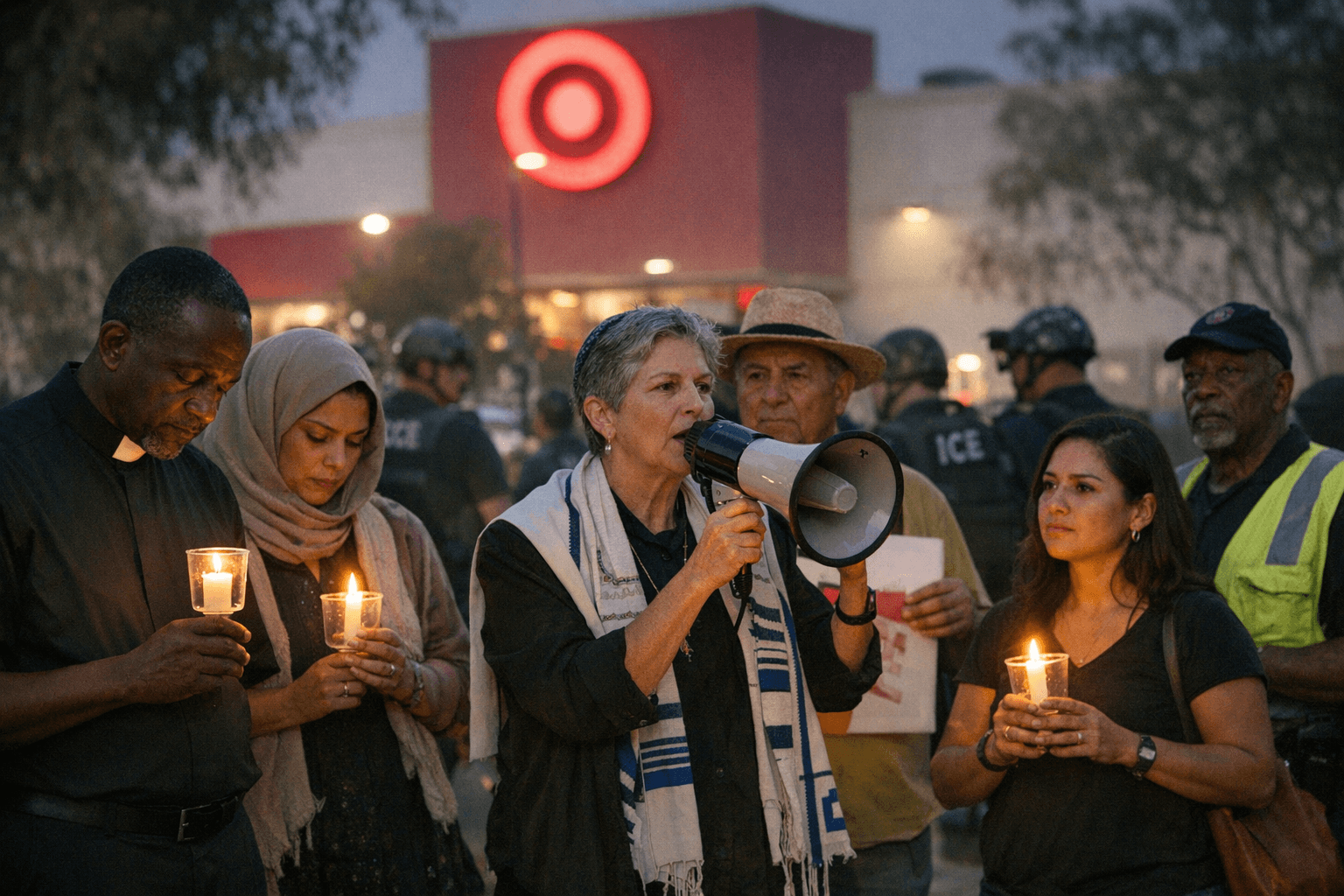
Clergy, labor and community leaders are holding vigils, delegations and nonviolent direct actions at select Southern California Target stores as part of a national day of action, organizers announced in a press release posted Feb. 10. Participants say they will deliver a letter to Target management, provide public witness through prayer and song, and press the Minneapolis-based retailer to "take corporate leadership" on what organizers call state-sanctioned violence.
Organizers listed Alliance of Californians for Community Empowerment Action, Clergy and Laity United for Economic Justice (CLUE), Sacred Resistance and SEIU 721 among participating groups. CLUE describes itself in the release as founded in 1996 to bring clergy and lay leaders together with low-wage workers and immigrants in campaigns for dignity and justice. The Feb. 11 activities were framed under the banner "ICE OUT" and the slogan "Expect More, Do Better."
The press release framed the actions around a broad critique of federal immigration enforcement, saying in part: "As ICE agents continue to descend on schools and churches, abduct children, raid residences without warrants, and separate families without due process across the country, the call for Target to show corporate leadership is expanding." Organizers also wrote that "Faith, Community, and Labor leaders are escalating their call on the company to take corporate leadership in recognizing the humanity of its employees and its customers and demanding an end to state-sanctioned violence that terrorizes neighborhoods across the country."
The actions in Southern California follow and tie into a series of related clergy-led mobilizations earlier in January in Minneapolis. A People’s Tribune call for clergy described a two-day convening that included formation and orientation, and set explicit demands for Minnesota operations of ICE. That call said in part: "The people of Minneapolis will continue to struggle for an end to suffering and violence, and to redeem the soul of this nation. But this moment also demands that others come, to witness what is being tested here, to learn from how communities are responding, and to help bear the burden together." The People’s Tribune call also urged clergy nationwide to join a "day of witness and resistance."
Religious and interfaith coverage of the Minneapolis events stressed large participation and moral framing. Episcopal News Service reported that over 2,000 people signed in to a "National Prayer Call for Minnesota" to kick off the Jan. 23 action. Rev. JaNae Bates of ISAIAH said, "We’re standing collectively together, challenging ICE." Bishop Craig Loya noted that "The response from clergy around the country, interfaith clergy, has been overwhelming." UU World coverage included Valerie Kaur’s line: "Revolutionary love is the choice to leave no one outside of our circle of care, to risk ourselves for one another, to show up with whistles when they have guns."
For Target employees and managers, the actions represent public pressure that intersects with workplace dynamics and labor relations. The involvement of SEIU 721 signals organized-labor support that could amplify calls for corporate policy changes and protections for workers and customers. Organizers say they will deliver a letter demanding just action, but the press release did not publish that letter’s text, nor did it name the specific Southern California store locations or provide details on timing and permits.
Questions remain for follow-up reporting: which stores hosted actions, what exactly was in the letter delivered to Target management, and whether Target corporate or local store leadership will respond. For employees and workplace observers, the events underscore how faith-based and labor alliances can bring public pressure onto retailers and how corporate responses or lack thereof may shape morale, community relations and potential future organizing.
Know something we missed? Have a correction or additional information?
Submit a Tip