Saks Global cuts 16% of corporate staff as bankruptcy ends
Saks Global is cutting 16% of corporate teams while stores and distribution centers stay untouched, a sign bankruptcy cleanup is hitting headquarters last.

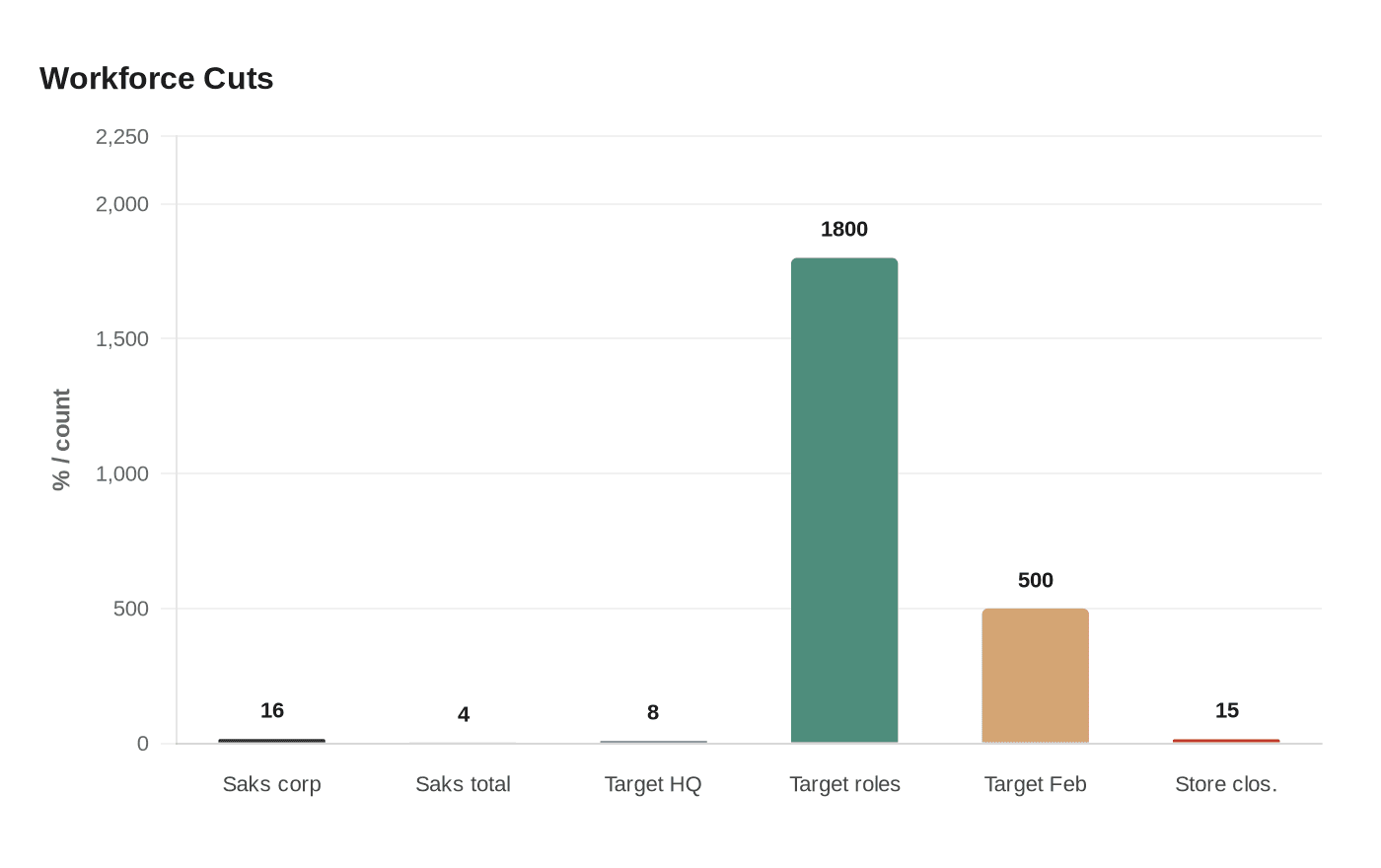
Saks Global is cutting 16% of its corporate teams as it wraps up bankruptcy, a move that affects less than 4% of total headcount but leaves stores and distribution centers untouched. The message to workers is clear: when retail leaders redraw the chart after financial distress, headquarters takes the hit first, while the parts tied most directly to selling and moving merchandise are usually shielded.
The company has about 17,000 employees, and the latest cuts come after its January 14 Chapter 11 filing followed a liquidity crunch tied to missed vendor payments and inventory disruptions. Saks Global secured about $1.75 billion in bankruptcy financing, including $1.5 billion from senior secured bondholders, and a U.S. bankruptcy judge later approved access to $400 million in new cash. On May 1, the restructuring plan went to creditors for a vote, with a proposal that would wipe out the company’s equity and hand control to senior lenders.

This was not the first round of contraction. On March 6, Saks Global said it would close 15 more stores as it pushed to focus on more profitable, higher-end locations, and earlier reporting showed the company had already cut more than 1,200 jobs tied to store closures and facility changes. The company’s leadership also shifted during the process, with former Neiman Marcus chief Geoffroy van Raemdonck taking over from Richard Baker as the post-merger strategy unraveled.
For retail workers, especially at Target, the pattern is worth watching. When sales soften and debt piles up, companies do not usually start with store teams or distribution centers. They start with layers: planning, merchandising support, finance, real estate, HR, and other headquarters functions that can be trimmed without immediately disrupting the selling floor. Saks Global’s decision to spare stores and distribution centers fits that playbook.

Target workers have already seen a version of this at home. In October 2025, Target cut 1,800 corporate roles, about 8% of its headquarters team, including 1,000 layoffs and 800 open roles, to reduce layers and overlapping work under incoming CEO Michael Fiddelke. In February 2026, Target announced about 500 more cuts as part of an effort to improve the in-store guest experience. The comparison matters because it shows how retail employers protect the work closest to shoppers while shrinking the support structure around it.
That is the real workplace signal in Saks Global’s bankruptcy cleanup: when a retailer is under pressure, the org chart gets rewritten around the functions that directly support stores, digital sales and core operations, and the corporate bench becomes the easiest place to cut.
Know something we missed? Have a correction or additional information?
Submit a Tip