Target Boycott Reignites as Grassroots Leaders Reject Pastor's Call to End It
Nekima Levy Armstrong called Bryant's move "a slap in the face" after he ended his Target fast with nothing to show — and the boycott's founders say they're escalating.

When Atlanta pastor Jamal Harrison Bryant announced he was ending his yearlong Target fast, he expected to turn the page. Instead, organizers convened a hastily called press conference outside Target's Minneapolis headquarters on March 11 and told him, publicly, that the boycott was never his to end.
"How can you call off a boycott focused on diversity, equity and inclusion and have no results to show for it?" said Nekima Levy Armstrong, founder of the Racial Justice Network and one of the boycott's original architects. "That is a slap in the face for the people."
The confrontation exposed a fault line that had been building for months: a nationally prominent religious figure stepping away from a movement that was built, block by block, by Minneapolis-based community organizers. Armstrong launched the boycott on Feb. 1, 2025, alongside Monique Cullars-Doty, cofounder of Black Lives Matter Minnesota, and Jaylani Hussein, executive director of CAIR-Minnesota. Their demand was specific and unmet: that Target reverse its rollback of DEI programs it had expanded following the 2020 murder of George Floyd in the city where Target is headquartered.
Bryant and other community leaders said their protest was over following a series of conversations with Target representatives, including new CEO Michael Fiddelke. But a spokesperson for Bryant acknowledged the talks produced nothing concrete: "There are no new commitments, no reversals."
That admission fueled the backlash. Target shoppers, particularly Black women, flooded Bryant's Instagram page to say he did not speak for them. Former Ohio state Sen. Nina Turner, whose organization We Are Somebody had called for a nationwide boycott the day after Target announced its DEI rollback, was direct about what the organizers heard when they sat across from Target leadership.
"In the last meeting between organizers and Target leadership, corporate leadership was hostile towards the very idea of diversity, equity and inclusion," Turner said. "While Pastor Bryant will be stepping away from our efforts, we plan not only to continue the boycott but also to escalate our actions to hold corporations accountable."
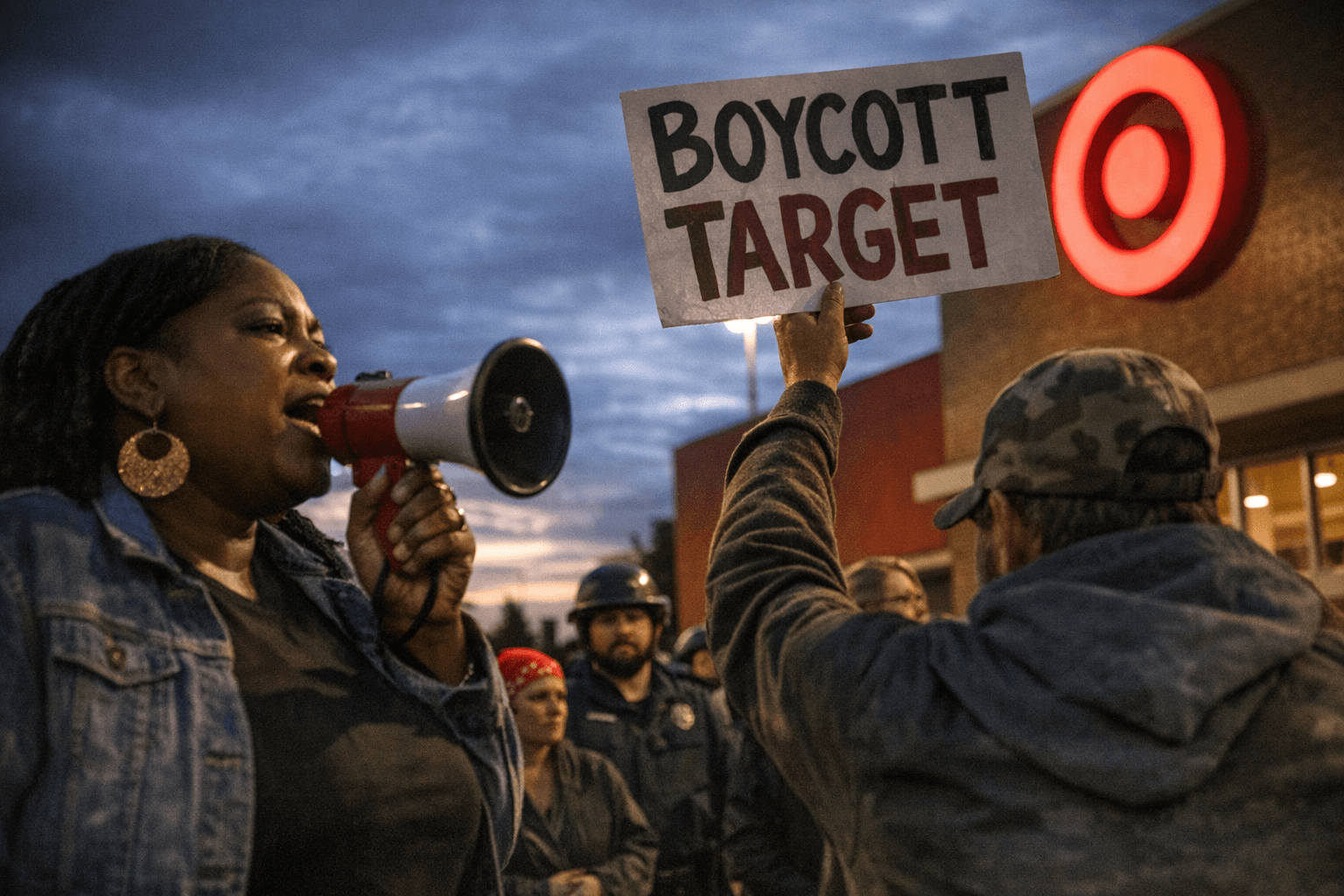
Armstrong framed Target's position as a calculated corporate choice tied to the political moment. "Target's refusal to restore DEI commitments makes it clear: The company is willing to lose Black consumers and women, many already gone, in order to appease its MAGA customer base," she said. "Target made a conscious choice to align with the Trump Administration. We the people made a conscious choice to take our dollars elsewhere." Target's DEI rollback followed an executive order from President Trump directing companies to end certain DEI programs, after which Target and other major retailers scaled back initiatives.
On March 13, Bryant turned to Threads to address what he called misinformation, announcing he would go live on his YouTube podcast at noon. "There's a lot of misinformation that needs clearing," he wrote. The post did little to quiet the dispute.
Cullars-Doty argued that the movement's authority was never concentrated in any single leader. "The power of this movement is in everyday consumers who are refusing to support a company that walked away from its commitments to equity," she said. "Until those commitments are restored, the boycott continues."
Organizers also pointed to what they described as mounting pressure on Target's business: declining revenues, reduced store foot traffic, layoffs affecting more than 2,000 workers, declining stock performance, and leadership upheaval that included a CEO departure. Those claims have not been independently verified, and Target has not confirmed any direct link between the boycott and its financial results.
John Schwarz, founder of The People's Union USA, had already called for a permanent boycott of Target before this week's dispute even surfaced. With the original organizers now pledging escalation and shoppers who haven't entered a Target in over a year showing no sign of returning, Bryant's departure from the campaign appears to have hardened, rather than resolved, the standoff.
This article was produced by Prism’s automated news system from verified source data, official records, and press releases, then run through automated quality and moderation checks before publishing. The system is built and supervised by the people who set the standards it runs under. Read our full AI policy.
Did this article answer your question?