Target CEO Michael Fiddelke Slashes Prices on 3,000-Plus Items
Michael Fiddelke's first major move as Target CEO cut prices on 3,000-plus items, but prior rounds of discounting only produced short-lived sales bumps.
Michael Fiddelke's opening act as Target's new chief executive was an aggressive price-cutting campaign spanning more than 3,000 items, a move framed as an urgent attempt to reverse years of declining customer demand. Whether it holds longer than previous rounds of discounting is the central question hanging over the strategy.
The scale of the cuts is notable, but the timing tells the fuller story. Target reported fourth-quarter revenue of $30.45 billion, slightly below the $30.48 billion analysts had expected, representing a 1.5% drop year-over-year. Earnings per share came in at $2.44, beating estimates, but that bright spot did little to obscure a grimmer trend: the 2025 holiday season marked the fourth consecutive quarter in which both store and website traffic fell. While Target's numbers slipped, rivals Walmart and Costco posted gains.
The price cuts are Fiddelke's direct response to that slide, which by some measures has stretched across roughly four years. But analysts and observers noted that Target has tried discounting before without sustaining a recovery, a pattern prominent enough that Reuters made it the second clause of its headline: "Previous cuts offered short-lived sales boost."
The competitive pressure Fiddelke faces comes from multiple directions at once. On the product side, Target contends with Amazon and Wayfair. On groceries, it faces Walmart, Kroger, and Amazon. Some shoppers have also cited tangible in-store experience issues, including what they described as "sloppier stores," as a reason for pulling back. The company's rollback of its diversity, equity and inclusion programs earlier prompted a boycott that contributed to traffic erosion.
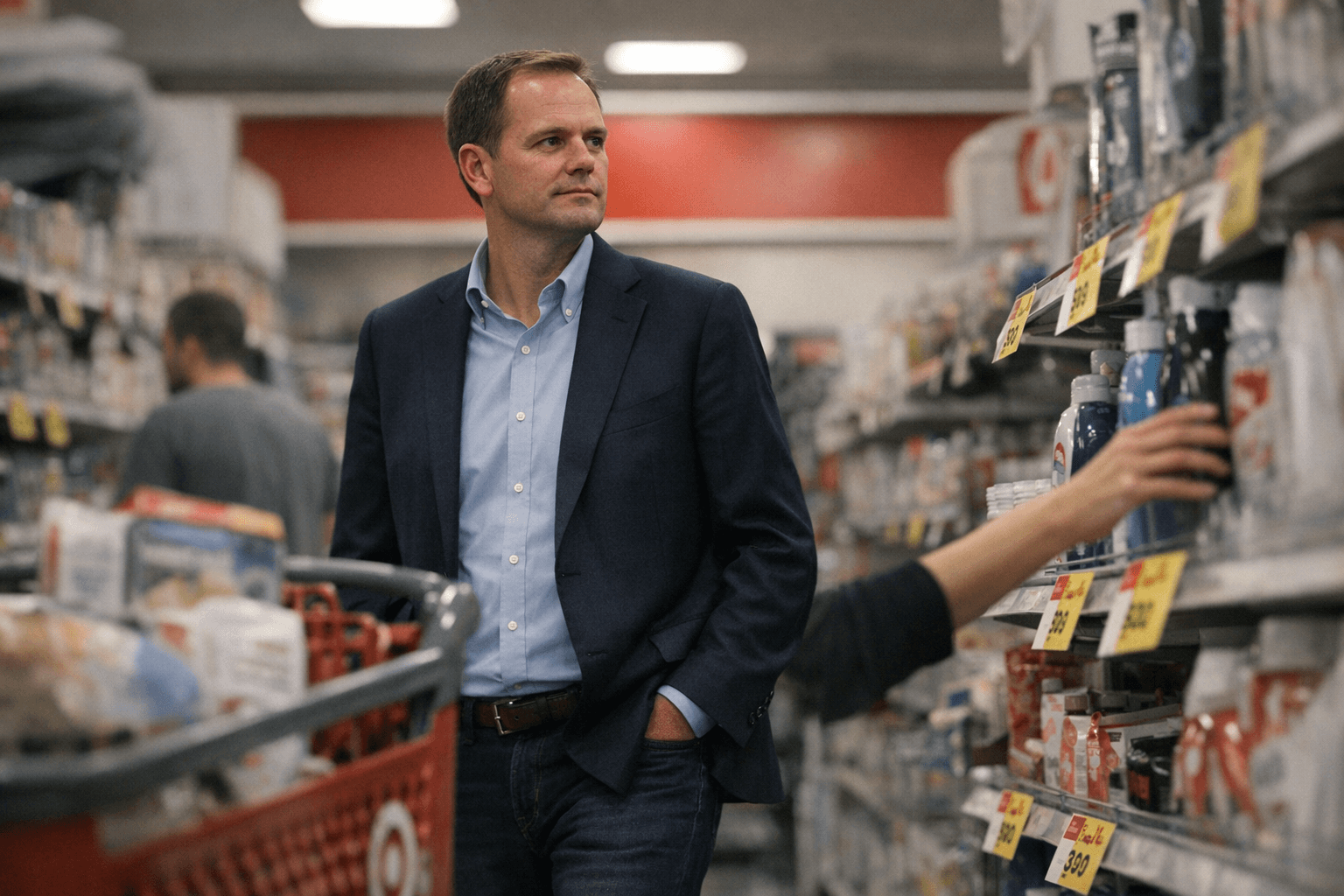
Theresa Dorsey Meis, a marketing professional who weighed in on LinkedIn, captured the strategic tension plainly: "It also raises a question that matters more than any short-term foot traffic bump: what's the actual reason to choose Target?"
That question about identity runs through nearly every piece of outside commentary on the price cuts. LinkedIn user Micah Willbrand, who has 6,000 followers on the platform, argued the chain's core problem is not Walmart but a loss of differentiation. "The quality of products became like everyone else," he wrote. "Feels like the dying days of Kmart and Sears when you walk in now. A store which once had an identity undone by over playing its hand."
For workers inside Target stores, the price-cutting campaign creates immediate operational reality: thousands of updated shelf prices, potential volume-driven traffic if the strategy gains traction, and the pressure of executing a turnaround that four years of attempts have not yet delivered.
This article was produced by Prism’s automated news system from verified source data, official records, and press releases, then run through automated quality and moderation checks before publishing. The system is built and supervised by the people who set the standards it runs under. Read our full AI policy.
Did this article answer your question?