Target Leaning Into Design, House Brands to Drive Growth
Target highlighted its in house toy design workshop at its Minneapolis headquarters, demonstrating how owned brands are central to the retailer's growth plan. The move matters to employees because it shifts more emphasis and resources to creative teams, supply chain partners, and store operations that bring those products to market.

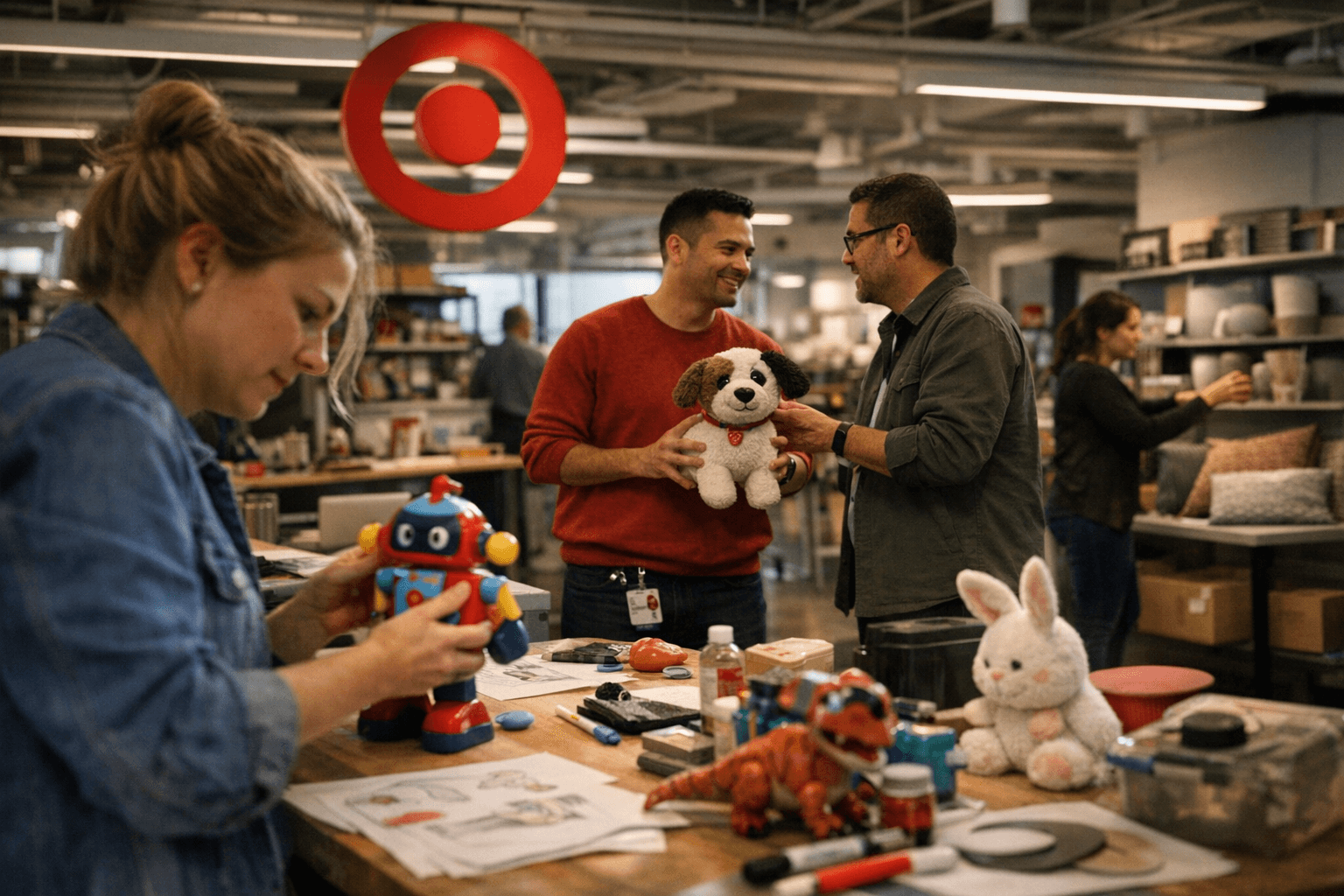
On December 22, 2025 Target opened its Gigglescape toy design workshop at its Minneapolis headquarters to showcase how its owned brands are becoming a strategic growth engine. Company design and product leaders including Jenny Breeden, Jeff Carter and Ellen Rizzardi led a tour that demonstrated how creative teams prototype toys, test concepts with parents and children, and build products that tie into seasonal merchandising and cross category promotions.
Target now operates about 40 owned brands that generate roughly 30 billion dollars in annual sales. Executives have framed those brands as tools to tell broader retail stories and to offer clear price and value choices for customers when discretionary spending is tight. At the workshop, product examples ranged from a plush Yeti under the Gigglescape label to a 100 piece puzzle developed to align with holiday displays, illustrating how design choices are tightly linked to merchandising plans across categories.
For workers the emphasis on owned brands brings operational changes. Design and product teams are seeing expanded roles that require more direct consumer testing and closer coordination with merchandising, marketing and supply chain colleagues. Store teams and fulfillment staff are expected to execute more integrated displays and promotional plans, which can affect scheduling, training and seasonal hiring needs. The focus on proprietary products also means procurement and vendor management teams are adjusting to longer term product road maps and closer collaboration with internal designers.
The strategy is part of a larger turnaround effort that places creative control and private label development at the center of retail execution. That approach can create new career paths for in house designers and product managers, while increasing pressure on frontline operations to deliver consistent execution across thousands of stores and digital channels. Workers who build skills in product storytelling, visual merchandising and cross functional project work may find more opportunities, while others may face changing job expectations.
As Target continues to lean into owned brands, employees across design, supply chain, store operations and corporate merchandising are likely to feel the effects in daily workflows and longer term career planning. The company is betting that tying product creativity to merchandising will drive sales, but delivering on that bet will require sustained coordination across the workforce.
This article was produced by Prism’s automated news system from verified source data, official records, and press releases, then run through automated quality and moderation checks before publishing. The system is built and supervised by the people who set the standards it runs under. Read our full AI policy.
Did this article answer your question?