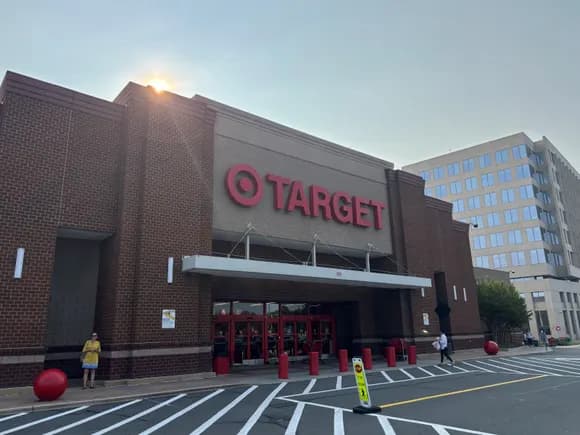
Target proxy outlines strategy shift, leadership priorities, and board changes
Target’s new proxy points to more store change, more tech, and more pressure to deliver, with payroll, training, and leadership pay all in the spotlight.
What the proxy is really saying
Target’s latest proxy filing is not just about a vote on June 10. It is a snapshot of what the company wants the next phase to look like, and that matters if your day job depends on how much labor gets scheduled, how fast remodels land, or how aggressively headquarters pushes new tools into stores. The board is signaling that it wants Target judged less on broad corporate messaging and more on execution: clearer merchandising decisions, a smoother guest experience, faster technology, and stronger investment in team members and communities.
That is the important translation for store leaders, executive team leaders, and HQ teams. When a proxy leans this hard into strategy, governance, and compensation, it usually means the board is setting the terms for what management will be rewarded for next. At Target, those terms now point toward operating discipline, not just growth for growth’s sake.
The strategy behind the filing
The proxy lands alongside Target’s March 3 strategy update, which laid out an incremental $2 billion investment in 2026. More than $1 billion of that is set for additional capital expenditures, and another $1 billion for additional operating investments. The company also said it plans more changes inside stores in 2026 than in any year in the last decade, plus hundreds of millions of dollars in added store payroll and training.
That combination tells you where the strain and the opportunity will show up. More capital spending can mean remodels, fixtures, systems, and store layout changes. More operating investment usually means labor, training, and support functions, which can be good news for teams that have been stretched thin, but it also raises the bar for productivity. If Target is going to pour this much into stores, leadership will want those dollars to show up in guest satisfaction, faster execution, and tighter merchandising.
The company’s four growth priorities, merchandising authority, guest experience, technology acceleration, and strengthening team and communities, are the cleanest way to read the whole plan. In plain English, that means fewer sloppy assortment decisions, fewer friction points for shoppers, more digital and in-store tools, and a louder promise that the workforce will be part of the turnaround rather than just the cost center that funds it.
What that means for your job
For store workers, the practical effect is likely to be felt in the pace and precision of change. When leadership says it wants stronger merchandising authority, that can mean more disciplined choices on what gets space, what gets cut, and how quickly stores are expected to execute new assortment directions. For team leads and ETLs, that may translate into tighter resets, more scrutiny on execution, and less room for local improvisation if headquarters believes the brand needs consistency.
The guest-experience priority also matters beyond the usual corporate language. It can mean pressure to reduce out-of-stocks, clean up clutter, and make checkout and fulfillment less painful for shoppers. But it can also mean leadership will expect stores to do more with the tools already in hand, which is why the technology piece is so important. Faster technology investments, including expanded use of AI, suggest Target wants systems that make shopping easier and more personalized, while giving employees quicker information to work with on the floor.
The labor piece is just as important. Hundreds of millions of dollars in added store payroll and training can sound like a relief for overworked teams, but new money rarely comes without new expectations. More payroll can support coverage, cross-training, and service, yet it can also be tied to productivity goals and more exacting standards for how every hour gets used. In a year when the company says it will make more store changes than it has in a decade, the pressure will be on managers to keep service level up while operations keep shifting underneath them.
Why Michael Fiddelke is central to this plan
The board’s support for Michael Fiddelke is another clue about what leadership values right now. The filing says he is the right leader for this moment because he has experience across merchandising, finance, operations, and human resources. That mix matters because Target’s current challenge is not a single-department problem. It is a companywide coordination problem: the assortments have to make sense, the stores have to run smoothly, the budget has to hold, and the workforce has to be ready for the changes.
For employees, that kind of profile usually points to a leader who is expected to balance cost control with operational cleanup. It also suggests the board wants someone who understands both the numbers and the lived reality of staffing and execution. If the strategy is going to work, it will not be because of a slogan. It will be because merchandising, labor, and operations are finally moving in sync.
The numbers behind the pressure
The filing should also be read against Target’s full-year 2025 results. Net sales came in at $104.78 billion, down 1.7% from the prior year. Operating income was $5.117 billion, down 8.1%. Net earnings fell to $3.705 billion, down 9.4%, and diluted earnings per share were $8.13, down 8.2%.
Those declines matter because they explain why the company is pushing so hard on discipline. Target is guiding 2026 net sales growth of around 2 percent, with adjusted operating income margin about 20 basis points higher than the 4.6 percent adjusted margin it posted in 2025. It also set GAAP and adjusted EPS guidance of $7.50 to $8.50. That is not a comfort-zone forecast. It is a statement that the company expects improvement, but not without pressure on every part of the business to perform better.
For workers, that tends to mean more measurement, not less. When a retailer is trying to lift margin while making heavier investments, leaders often get more selective about labor deployment, inventory discipline, and how quickly teams adopt new processes. The upside is that stores could see better support and better tools. The downside is that everyone from cashiers to district leadership may face sharper accountability if the turnaround does not move fast enough.
Board changes and shareholder oversight
The board refresh is part of the story too. Target said in January that John Hoke, former chief innovation officer at NIKE, Inc., and Steve Bratspies, former chief executive of HanesBrands, Inc., would join the board. Hoke is slated for the Governance & Sustainability and Compensation & Human Capital Management committees. Bratspies is slated for the Audit & Risk and Infrastructure & Finance committees.
That committee placement matters more than the bios alone. Hoke’s role suggests oversight of governance, workforce, and pay questions. Bratspies brings audit, risk, and finance oversight into the boardroom. Together, they reinforce the message that Target wants sharper scrutiny of both how the company runs and how it pays people to run it.
The annual meeting itself is also busier than a routine vote. Shareholders will decide on 12 directors, ratification of Ernst & Young LLP as auditor, say-on-pay, approval of an amended 2020 Long-Term Incentive Plan, and three shareholder proposals involving an independent chair, a pesticide report, and a microfiber-shedding report. A March 5 SEC no-action letter shows that activist shareholder John Chevedden submitted one of those proposals, a reminder that governance pressure is not background noise. It is part of the main event.
What to watch next
The big takeaway for Target workers is simple: the board is backing a strategy built around more store change, more technology, more payroll and training, and more accountability for results. That can create better tools and more support on the floor, but it can also mean faster execution demands and a tighter link between performance and reward.
If you work in a store, in supply chain, or at headquarters, this proxy shows where leadership is placing its bets. The next phase at Target is about making the operation leaner, faster, and more precise without losing sight of the team that has to deliver it.
This article was produced by Prism’s automated news system from verified source data, official records, and press releases, then run through automated quality and moderation checks before publishing. The system is built and supervised by the people who set the standards it runs under. Read our full AI policy.
Did this article answer your question?