Target Pushes Uniforms, Service Standards to Rebuild In-Store Experience
Starting this summer, Target's "10-4" greeting rule and tightened red-shirt policy roll out across 2,000-plus stores, backed by $2 billion in investment. Here's how enforcement works and what to ask your TL now.
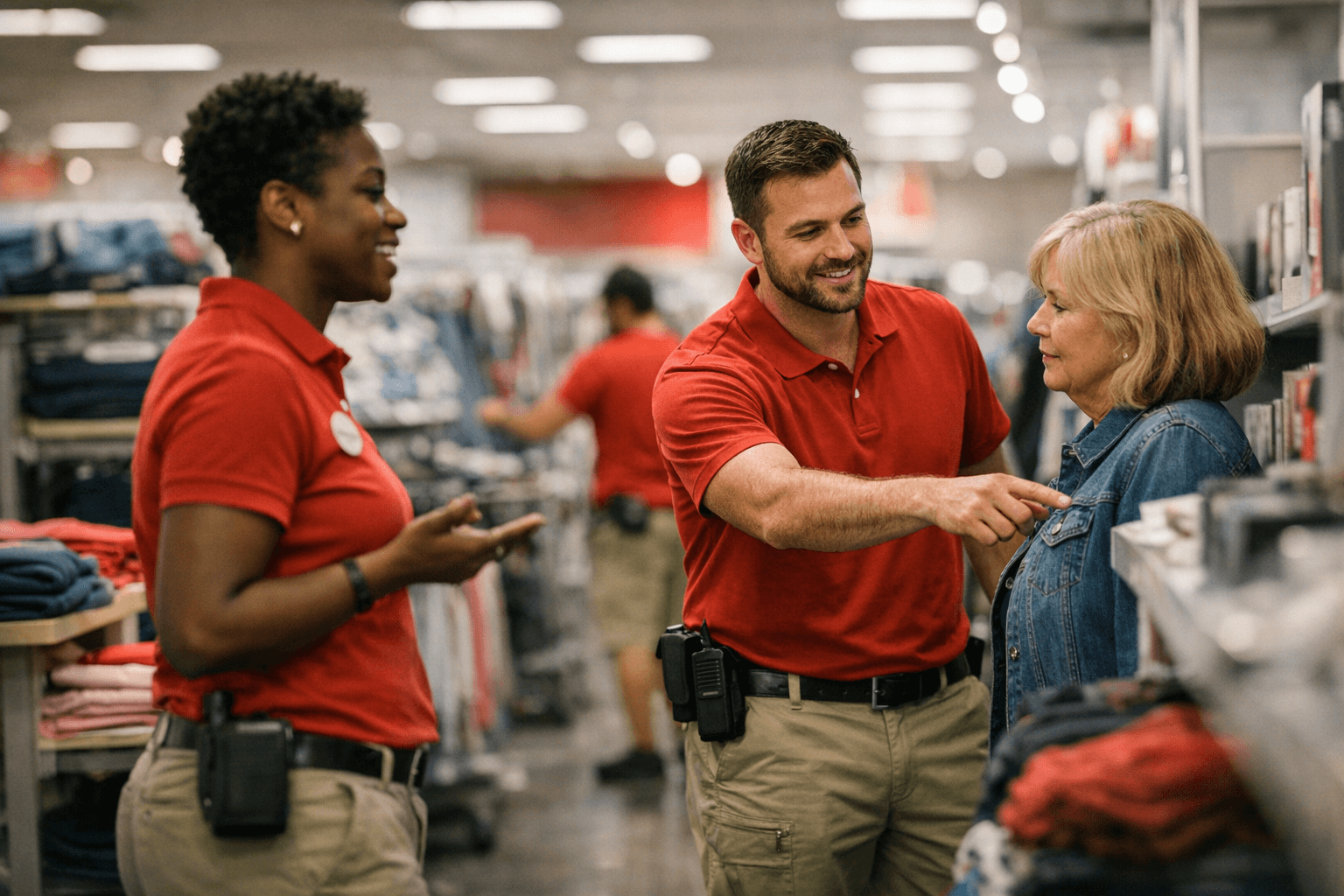
When a guest turns into your aisle and you're three steps away stacking product, the new calculus is simple: you're inside four feet, which means a verbal greeting is expected, not optional. Target's revamped "10-4" guest engagement guideline, reintroduced heading into the 2025 holiday season and now being reinforced as a broader service standard, asks team members to acknowledge any guest within 10 feet and initiate a warm, helpful interaction when that distance closes to four. Understanding exactly what that means for your shift, your appearance check-in, and your performance conversations is now a practical necessity.
The changes land inside a $2 billion overhaul that CEO Michael Fiddelke has described as Target's largest store transformation in a decade. Fiddelke, who took the helm with a mandate to rebuild shopper trust after years of uneven sales and lost ground to competitors like Walmart, has pushed the company back toward the fundamentals that once defined the Target brand: easy-to-find team members, stocked shelves, and stores that feel staffed rather than abandoned. The tightened uniform and service standards are two of the most visible pieces of that reset.
On dress code, the updated policy narrows what counts as an acceptable top. Team members must wear any sleeved red shirt, solid or patterned, or a company-provided red vest worn over any sleeved shirt. What is out: off-red shades like orange or pink, and shirts with large non-Target logos. Bottoms must be blue denim or khaki pants, shorts, or skirts, with the previous policy having left denim color unspecified. Cart attendants and Drive-Up team members retain shorts privileges in warm weather. The full rollout is set for this summer, with July as the implementation target.
To ease the transition, Target is supplying every team member with one free red shirt before the rollout date, plus a one-time 50% off coupon redeemable toward a qualifying denim purchase. Confirm with your team lead when those items will be distributed at your store and do not wait until the week of implementation to find out you are short on compliant bottoms.
On the service side, Target has explicitly framed the 10-4 program as an internal training guideline, not a codified policy. That distinction matters when it comes to enforcement. A team member who misses a greeting because their hands are full or they are mid-task is not automatically in violation of a disciplinary rule, but a consistent pattern of failing to engage guests in the spirit of the program will surface in coaching conversations, and likely sooner rather than later.
Most day-to-day accountability will start as situational coaching, not formal corrective action. People leaders are being positioned as the primary translators of the corporate standard into store reality, which means your ETL or TL will conduct informal observations, raise patterns in huddles, and monitor guest-interaction scores tied to mystery-shop or Net Promoter metrics. A single missed acknowledgment is not a write-up. A documented pattern of disengagement, especially one flagged by mystery-shop results or recurring guest survey feedback, can escalate toward formal performance documentation.
On dress code, the path to formal corrective action typically begins with your direct team lead noting the issue in a coaching conversation. If the pattern continues, your ETL becomes involved and the concern enters your performance file. During the rollout window, most stores are expected to handle first incidents informally, particularly as team members build out compliant wardrobes. After July, arriving in a shirt that reads as pink rather than red, or in clearly non-denim bottoms, is likely to prompt an on-the-spot conversation regardless of the store's tolerance period.
Retail analysts who spoke with the Star Tribune cautioned that training programs perceived as mandatory and scripted can backfire. Store-level judgment and actual staffing investment, they argued, matter more than the rule itself, and when employees are empowered to use that judgment and given adequate time and headcount, service improves alongside morale. That dynamic is worth tracking closely if your store is fielding these standards without additional payroll hours.
Before your next shift, make a direct ask of your team lead or ETL. Find out when your store's 10-4 training session is scheduled, whether the dress-code materials and free shirts have arrived at your location yet, and how feedback will be delivered during the rollout window. Ask specifically whether your store is receiving additional payroll hours to support training coverage or whether coaching will be folded into existing shifts. Pull up Target's current dress-code standards through Workday or your store's internal communications hub and verify the exact language yourself; do not rely on secondhand summaries from a huddle two weeks ago. If you are unsure whether a specific garment qualifies, bring it to your TL and ask before wearing it on the floor.
Document guidance you receive verbally. If your ETL indicates your store is treating July as a soft launch or is giving additional runway before formal enforcement begins, note the date and who told you. If expectations shift, that record protects you.
The dress-code policy includes provisions for reasonable accommodations tied to medical, religious, or disability needs, consistent with federal employment law. Accommodations that have applied at Target stores include alternative footwear, modified uniform elements, and head coverings. If the standard red shirt or specified bottom conflicts with a medical need, a sincerely held religious practice, or a documented disability, initiate the accommodation request through HR well before July, not the week of implementation. The same principle applies if a health condition affects your ability to initiate verbal greetings or maintain certain proximity to guests. Requests should be documented in writing and processed through official channels, not handled as an informal side arrangement with a team lead.
For people leaders carrying the weight of translating all of this into store operations, the credibility of these changes will rest almost entirely on whether team members feel supported rather than policed. The $2 billion investment backing this transformation is substantial, and the ambition, 300 new stores by 2035 and at least 130 full-store remodels, is real. Whether any of it registers with frontline workers as genuine improvement or as one more compliance burden will depend on conversations happening in huddles, one-on-ones, and break rooms between now and the day the new red shirts go on.
This article was produced by Prism’s automated news system from verified source data, official records, and press releases, then run through automated quality and moderation checks before publishing. The system is built and supervised by the people who set the standards it runs under. Read our full AI policy.
Did this article answer your question?