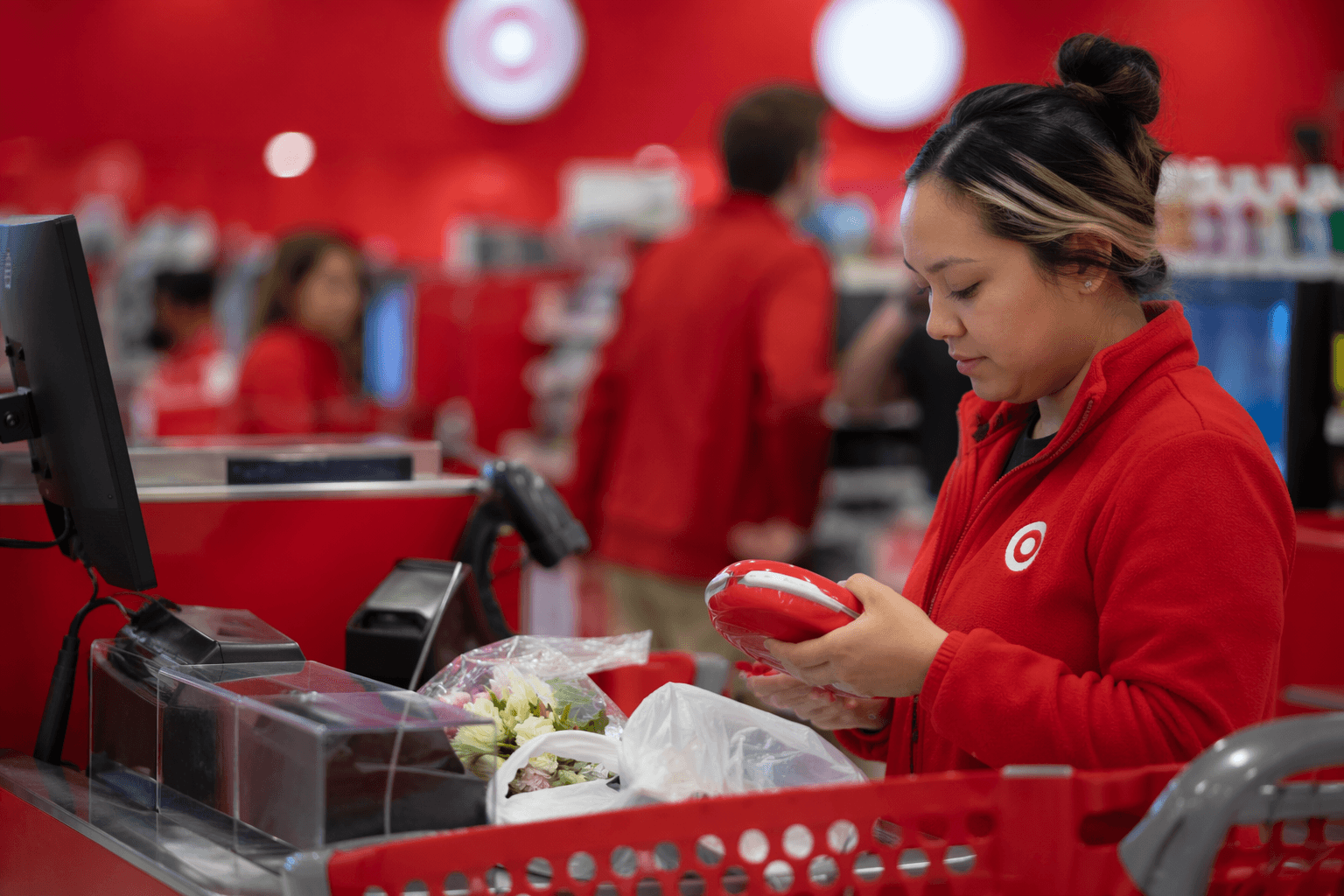
Target updates inclusive design push across stores, products and digital tools
Target is turning inclusive design into a floor-level standard: team members will see it in self-checkout, guest-help workflows, product packaging and digital support.

A custom tactile controller co-developed with Elo is part of Target’s accessible self-checkout system. It changes what team members should expect on the floor: clearer self-checkout tools, more usable product packaging, better digital help, and a stronger expectation that accessibility questions get handled like any other part of guest service. For store teams, that means knowing when to point guests to Aira, what the accessible self-checkout features do, and where friction in signage, app flows or product placement should be escalated.
What changes show up first on the sales floor
The system is designed with and for guests with disabilities, including people who are blind or have low vision. The setup includes braille and high-contrast button icons, a headphone jack with adjustable volume, physical navigation buttons, a dedicated info key, a custom tactile controller co-developed with Elo, and a single audio stream for scanning and payment. The system is built to reduce dependence on a second person standing over the machine and to make the checkout experience more predictable.
If a guest struggles to get through checkout, the right response is not to treat it as a one-off exception. It is to know the features well enough to guide the guest, spot when the checkout lane is not working as intended, and escalate issues before they become a repeated barrier.
How Aira fits into everyday guest help
Guests can use Aira, a live visual-interpretation service, free of charge in stores and online at Target.com. In store, the offer applies automatically when a guest opens the Aira app, and the service is also available for help shopping online.
At the service desk, on the sales floor and in digital support roles, a guest who wants help locating an item or comparing packaging may not need a long workaround if Aira can fill in the gap. Team members should understand that the service exists, that it is free, and that it is meant to reduce the burden on both guests and store staff when visual access is the problem. When a guest asks for help, knowing whether Aira can help is now part of basic floor readiness.
Why products and packaging are part of accessibility, too
Target’s inclusive-design work is not limited to checkout technology. It includes adaptive apparel and sensory-friendly products with easy closures, softer materials, tagless designs and other usability features. Target also works with the Arthritis Foundation and occupational therapists on packaging to make items easier to open, lift and carry.
For merchandising and presentation teams, this is the part to notice on a daily basis. Product placement, shelf organization and package-facing labels can either support the shopper or make the trip harder. If an item is meant to be easier to open or handle, it should still be merchandised in a way that does not defeat that purpose with awkward stacking, cluttered endcaps or inaccessible shelf height. Team members who work freight, zoning or revisions should be watching for the gap between the product design and the way it lands on the shelf.
What Target’s process looks like behind the scenes
Target embeds accessibility early and consistently across product development, merchandising, store environments and digital tools. Cross-functional teams help guide the work, and Target works with advocacy groups, accessibility and usability specialists, and people with disabilities to improve its websites.
For team leads and ETLs, a missing sign, a confusing app flow, a shelf setup that blocks access or a checkout issue should not be treated as isolated noise. It should be routed through the same operational discipline the store uses for inventory, safety or service recovery. With more than 2,000 stores in the United States and 400,000-plus team members, the only way accessibility stays consistent is if the information reaches the right people fast.
How the earlier checkout rollout set this up
This update builds on Target’s earlier accessible self-checkout rollout, which began during the 2025 holiday season and continued into early 2026 across stores nationwide. Target described the system as a first-of-its-kind experience and identified Steve Decker, Target’s senior manager of user experience accessibility, as a leader on the project. Decker, who is blind, helped lead the work, which gave the rollout a built-in test of whether the design actually worked for the people it was meant to serve.
This article was produced by Prism’s automated news system from verified source data, official records, and press releases, then run through automated quality and moderation checks before publishing. The system is built and supervised by the people who set the standards it runs under. Read our full AI policy.
Did this article answer your question?