Target, Walmart set to receive tariff refunds after Supreme Court ruling
Target could get about $2.2 billion back in tariff refunds, but store workers may never see that money in pay, staffing, or prices.

Target’s expected $2.2 billion tariff refund could ease some pressure on the chain’s pricing and inventory decisions, but for store teams the bigger question is simpler: does any of it actually reach the sales floor, the schedule, or the paycheck?
U.S. Customs and Border Protection opened its tariff refund portal Monday through the Consolidated Administration and Processing of Entries system, starting the first phase of claims for importers that paid duties under the Trump administration’s now-invalidated emergency tariff authority. Approved refunds are expected in 60 to 90 days, but the agency said claims will move in phases, with the earliest refunds focused on more recent payments.
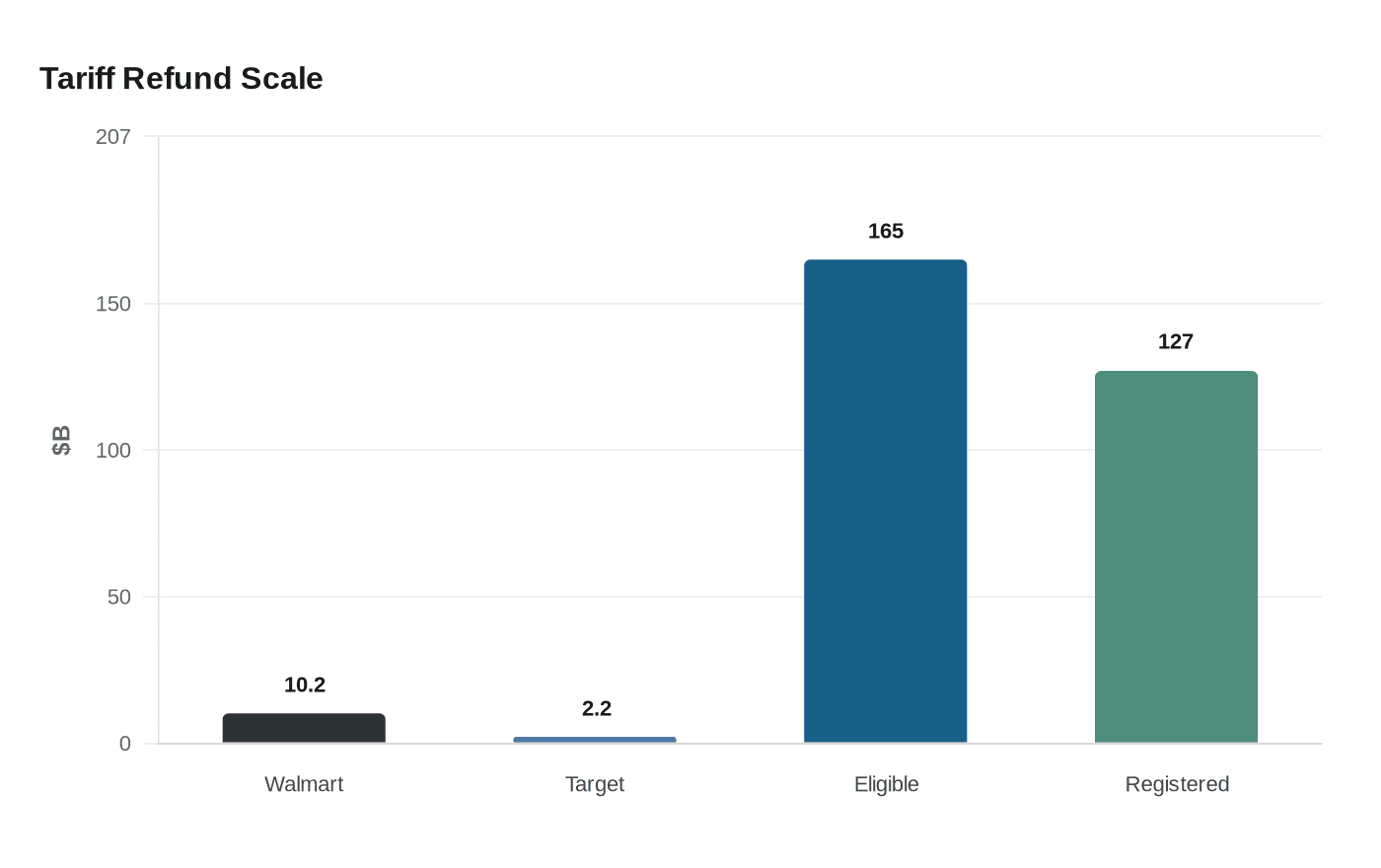
The scale is large enough to matter across retail. Citi has estimated Walmart could receive about $10.2 billion and Target about $2.2 billion, while other major chains including Nike, Kohl’s, Gap and Macy’s also stand to recover significant amounts. More than $160 billion in tariffs were paid before the Supreme Court struck down the policy in a 6-3 ruling on February 20, 2026, saying Donald Trump lacked the authority under the 1977 International Emergency Economic Powers Act to impose the sweeping rates.
For Target employees, the practical impact is less about the legal fight and more about whether the refund changes the pressure inside stores and across the supply chain. Tariffs fed directly into import costs, and that cost pressure has been part of the backdrop for pricing, merchandise planning and inventory buys at a time when retailers are still managing tight margins. If Target gets a multibillion-dollar refund, it could help offset those costs, but there is no sign the money will translate into immediate wage gains or extra hours on the schedule.
James Clyburn has questioned why consumers who absorbed higher prices get nothing, a point that lands with workers who have spent months explaining price changes to shoppers on the floor. Trump, meanwhile, said he would “remember” companies that do not seek refunds.
The numbers show how broad the tariff burden became. The Budget Lab at Yale estimated the 2025 tariffs raised inflation-adjusted customs revenue by $214.7 billion above the 2022 to 2024 average, with the effective tariff rate reaching 10.6% in January 2026 and roughly $165 billion potentially eligible for refund. More than 330,000 importers paid about $166 billion on over 53 million shipments, and as of April 14, 56,497 importers had registered for refunds totaling $127 billion, including interest.
Trade lawyers have warned the claims process could still face bureaucratic hurdles, system glitches and delay. For Target workers watching from the store level, that means the real test is not the headline refund number, but whether it changes what customers see, what the buying team orders, and what the front end feels in the weeks ahead.
This article was produced by Prism’s automated news system from verified source data, official records, and press releases, then run through automated quality and moderation checks before publishing. The system is built and supervised by the people who set the standards it runs under. Read our full AI policy.
Did this article answer your question?