Target workers’ real pay slipped as inflation outpaced wages
Target pay can look steady on paper, but April inflation still cut real wages and left frontline workers with less buying power at the register and the gas pump.

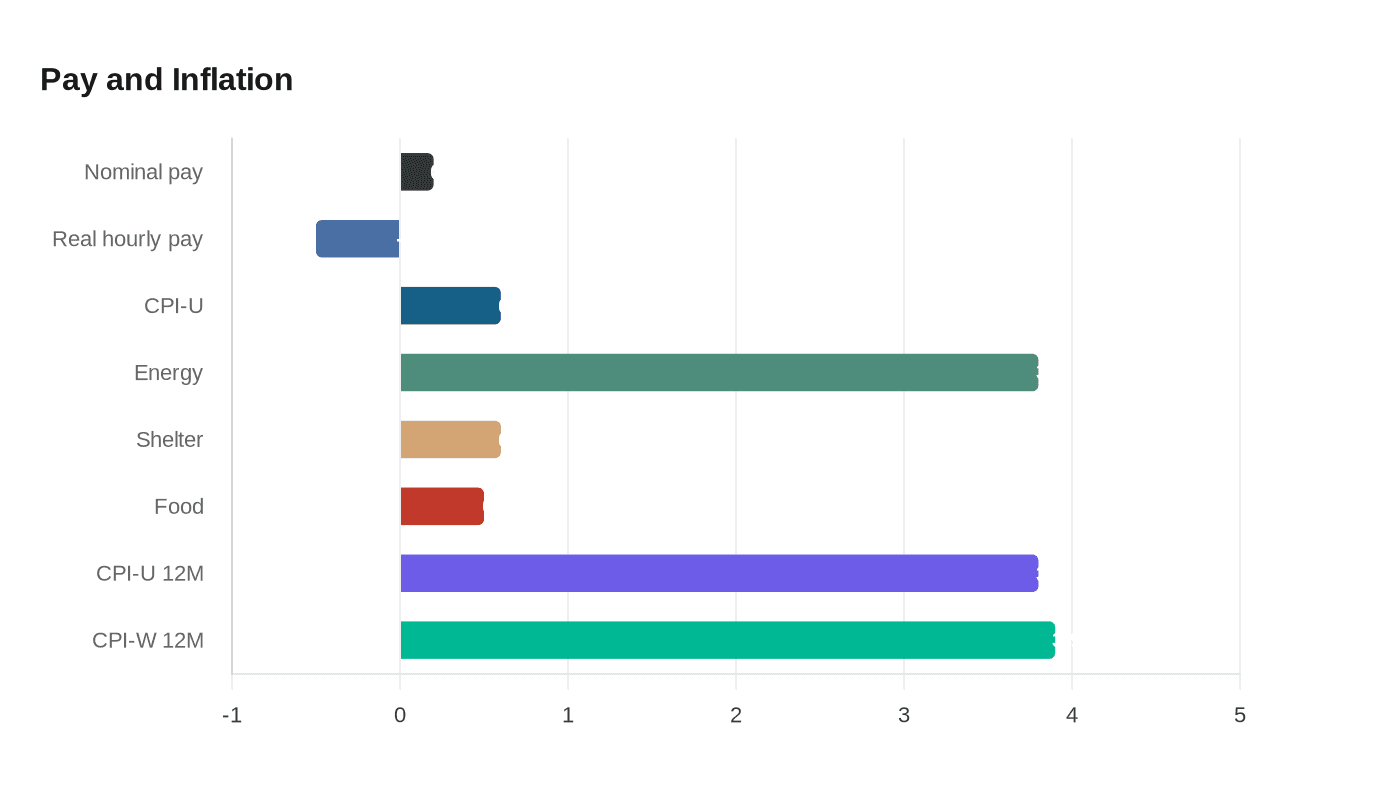
The paycheck may say one thing; the grocery bill, rent notice and gas pump say another. The Bureau of Labor Statistics said real average hourly earnings fell 0.5 percent from March to April even after nominal wages rose 0.2 percent, because the Consumer Price Index for All Urban Consumers climbed 0.6 percent in the same month.
For Target workers, that gap is the whole story. A wage can stay flat, or even tick up, and still buy less if prices move faster. The BLS said real average hourly earnings for production and nonsupervisory employees, the group that captures many frontline retail roles, fell 0.3 percent in April and were down 0.2 percent from a year earlier. Real average weekly earnings for that group also dropped 0.3 percent as the average workweek held steady.

The inflation pressure was broad enough to hit the items that matter most in a retail household budget. Energy prices rose 3.8 percent in April, shelter rose 0.6 percent and food rose 0.5 percent. Over the past 12 months, CPI-U was up 3.8 percent and CPI-W, which tracks a different slice of workers, was up 3.9 percent. That means posted pay rates have to clear a moving target just to preserve the same buying power.
Target has spent years trying to stay ahead of that pressure. The company says its frontline team members are among the best compensated in retail, with a starting wage range of $15 to $24 depending on role and location, and an average frontline wage above $18.50. It also says eligible team members can use DailyPay to access earned but unpaid wages, plus medical, vision and dental coverage, virtual care and Dream to Be education assistance from day one for U.S. team members.
Those offers matter, but they do not erase the squeeze. Target raised its minimum hourly wage to $11 in 2017, committed to $15 by the end of 2020, then permanently moved its minimum from $13 to $15 starting July 5, 2020. In 2022, it widened the hourly range again to $15 to $24 for store, supply chain and headquarters workers. The company has kept pushing the hourly headline higher; inflation has kept pushing everyday costs higher too.
That is why real earnings, not just posted wages, are the number Target employees should watch. A raise that looks solid in Minneapolis can feel smaller once it runs through rent, food and energy costs. In this economy, a competitive wage still has to compete with the bill total.
Know something we missed? Have a correction or additional information?
Submit a Tip