Walmart and Target earnings spotlight new CEOs Furner, Fiddelke and frontline workers
Watch Walmart's Feb. 19 call and Target's March 3 report as CEOs John Furner and Michael Fiddelke, both installed Feb. 1, outline AI, margins and the "Target of the future" for store teams.

Store leaders and hourly associates should tune to Walmart’s fiscal fourth-quarter call on Feb. 19 and Target’s March 3 results for the clearest signals on how new CEOs John Furner and Michael Fiddelke plan to translate digital and margin strategies into store-level changes; both executives assumed their roles on Feb. 1, 2026. CNBC warns investors “may quickly brush off those results” in favor of assessing the retailers’ futures under new leadership and the U.S. consumer outlook for 2026.
Walmart’s most recent quarter, covering the period ending Jan. 31, produced revenue of almost $191 billion, up about 5.6% year over year, with operating income climbing to nearly $9 billion, topping 10% growth; earnings per share fell on a GAAP basis but rose on an adjusted basis, and full-year revenue rose nearly 5%, adding $32 billion over the prior year. The Globe and Mail and Barchart identify Feb. 19, 2026 as the date tied to that fiscal fourth-quarter reporting, which will also reflect the final quarter of Doug McMillon’s 12-year tenure.
John Furner, 51, who began as an hourly associate at Walmart in 1993 and most recently led Walmart U.S., has been positioned to prioritize digital expansion and margins; Goldman Sachs analyst Kate McShane cited his success on the digital front as a factor in his selection. Furner told Yahoo Finance, “The future is fast, convenient, and personalized.” Neil Saunders of GlobalData framed Furner’s mandate succinctly: his job is "to keep the ship steady," while Saunders said Michael Fiddelke must "sell the Target of the future."

Furner is pushing AI as a commercial lever. Retail Dive relayed Furner’s company data showing “customers using the retailer’s AI assistant Sparky have an average order value that’s about 35% higher than non-Sparky customers.” Walmart also posted its first profitable quarter for its e-commerce business in the U.S. and globally in May, and under Doug McMillon the company delivered 14 earnings and revenue beats in the past 16 quarters and EPS gains of 44.08% and 26.18% over the last two years, momentum Furner will be expected to sustain.
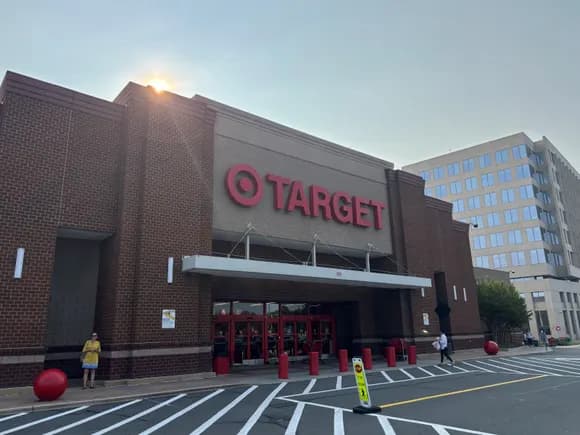
Target’s new CEO Michael Fiddelke, who moved from the company’s COO role, faces what The Globe and Mail calls “a more challenging landscape to navigate” after taking over on Feb. 1; Target will report results on March 3, 2026. Neither the collected coverage nor the executives’ quoted remarks in these reports provided Target financials for the period or specific operational commitments tied to hourly pay, scheduling, or staffing under Fiddelke’s leadership.

Consumer trends raised repeatedly in the coverage underscore why store-level effects matter: Furner told Retail Dive that “the majority of our share gains came from households making more than $100,000,” while adding that “for households earning below $50,000 we continue to see that wallets are stretched and, in some cases, people are managing spending paycheck to paycheck,” and that lower-income households are “emphasizing convenience nearly as much as price.” Those income-segmentation dynamics feed into decisions about in-store assortments, staffing, and convenience services.
Analysts flagged conservative forward guidance and a pivot to profitability as strategic priorities; Yahoo Finance noted Walmart’s shift to prioritize profitability and to accelerate AI-inflected retail as evidence that the company is “effectively executing on those ambitions,” even as Amazon leads on revenue. What frontline workers will experience in schedules, workloads, training and pay remains undefined in the available public remarks, so the Feb. 19 and March 3 investor updates are the next concrete opportunities for Furner and Fiddelke to spell out store-level plans. The answers those reports provide will shape store operations and hourly roles across 2026.
Know something we missed? Have a correction or additional information?
Submit a Tip