Albertsons pushes AI search ads, raising the bar for Trader Joe's crews
Albertsons is putting sponsored product discovery inside AI search, and that may make Trader Joe’s crew know-how more valuable on the floor.

Albertsons Media Collective deepened its push into AI-driven shopping on June 23, when it integrated Criteo into Albertsons’ conversational search so sponsored product discovery can surface inside search results. The setup is meant to help shoppers plan meals, discover products, compare options and build baskets, which means grocery discovery is moving from a static search box toward a guided conversation.
The scale behind that bet is not small. Albertsons said it operated 2,270 retail stores as of February 22, 2025, and later investor materials listed 2,244 stores and $83.2 billion in sales on a trailing 12-month basis for fiscal Q4 2025. Criteo has been explicit that retail media is moving beyond the search bar and digital shelf into new AI-powered shopping surfaces, and said it is testing conversational ads and sponsored products inside retailer chatbots. That turns grocery search into another place where brands can pay to be seen at the moment of intent.

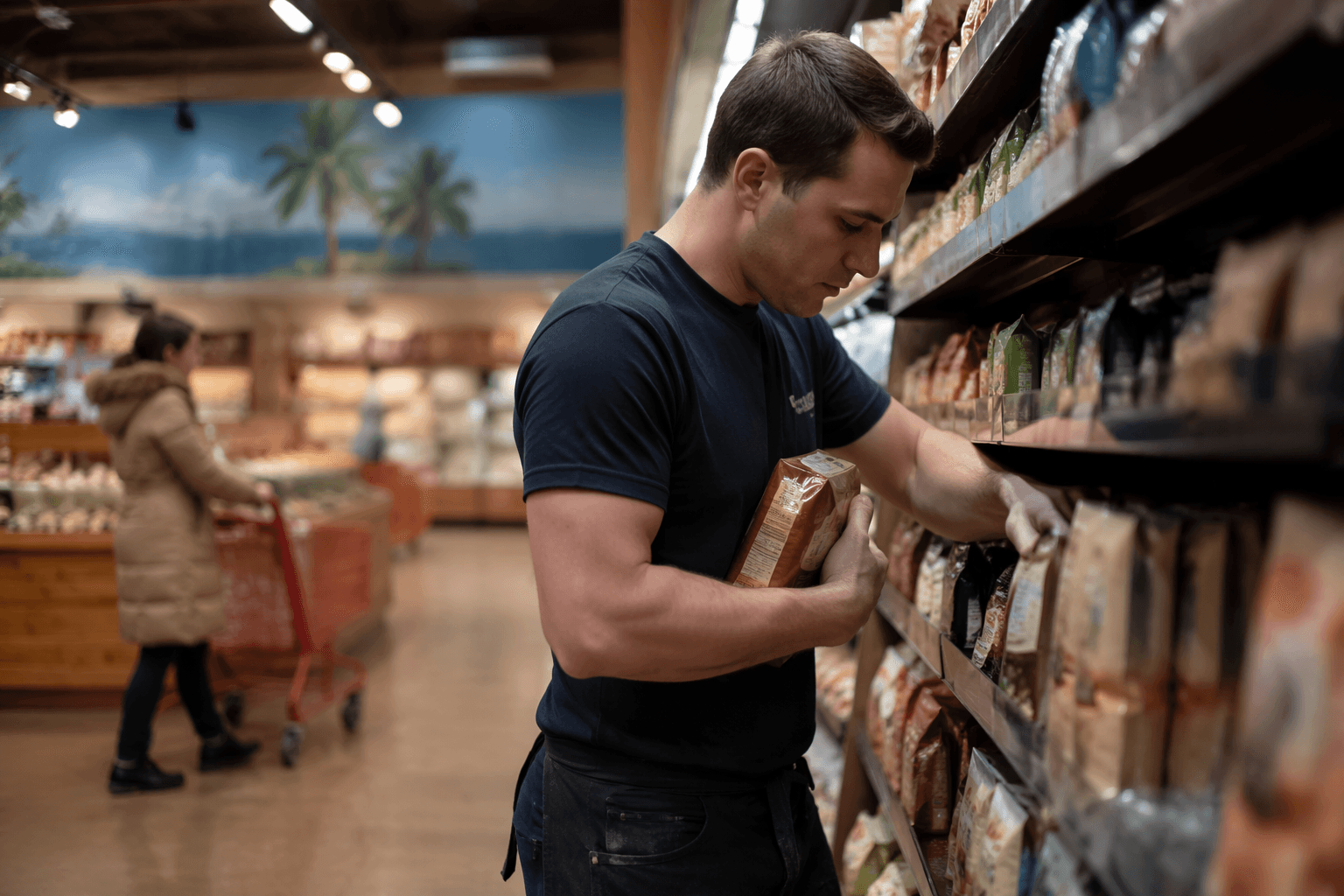
For Trader Joe’s crews, the shift matters because it makes the chain’s old strengths look more, not less, important. Trader Joe’s FAQ says it does not sell products online, offer curbside pickup or delivery, or work with third-party delivery services such as Instacart or Dumpling. On the Inside Trader Joe’s podcast, marketing leaders Tara Miller, Matt Sloan, Bryan Palbaum and Peyton Bigora have said the company would rather put money into products and people than screens, and the podcast transcript calls screens in regular grocery stores an “admission of defeat.”
That leaves Trader Joe’s with a sharper contrast than many competitors. Public reporting in 2025 and 2026 described the chain as having roughly 580 to more than 600 stores while it kept expanding, but its value proposition still rests on the in-store experience rather than digital commerce. If shoppers become used to asking an AI assistant what to cook, what to compare and what to buy next, the job on the floor gets more exacting: crew members have to explain why an item exists, how it tastes and what it pairs with, fast enough to match the pace of a conversation.
That is a merchandising question as much as a service question. In a chain built on limited assortment and private-label storytelling, product knowledge is not a side skill. It is the mechanism that turns a small, curated shelf into discovery, and it is the part of the shopping trip an AI search ad cannot fully replace.
This article was produced by Prism’s automated news system from verified source data, official records, and press releases, then run through automated quality and moderation checks before publishing. The system is built and supervised by the people who set the standards it runs under. Read our full AI policy.
Did this article answer your question?