Trader Joe's faces pressure as grocery shopping shifts online
Trader Joe's is holding to its store-only model while digital grocery habits reshape what crews are asked to know and deliver.
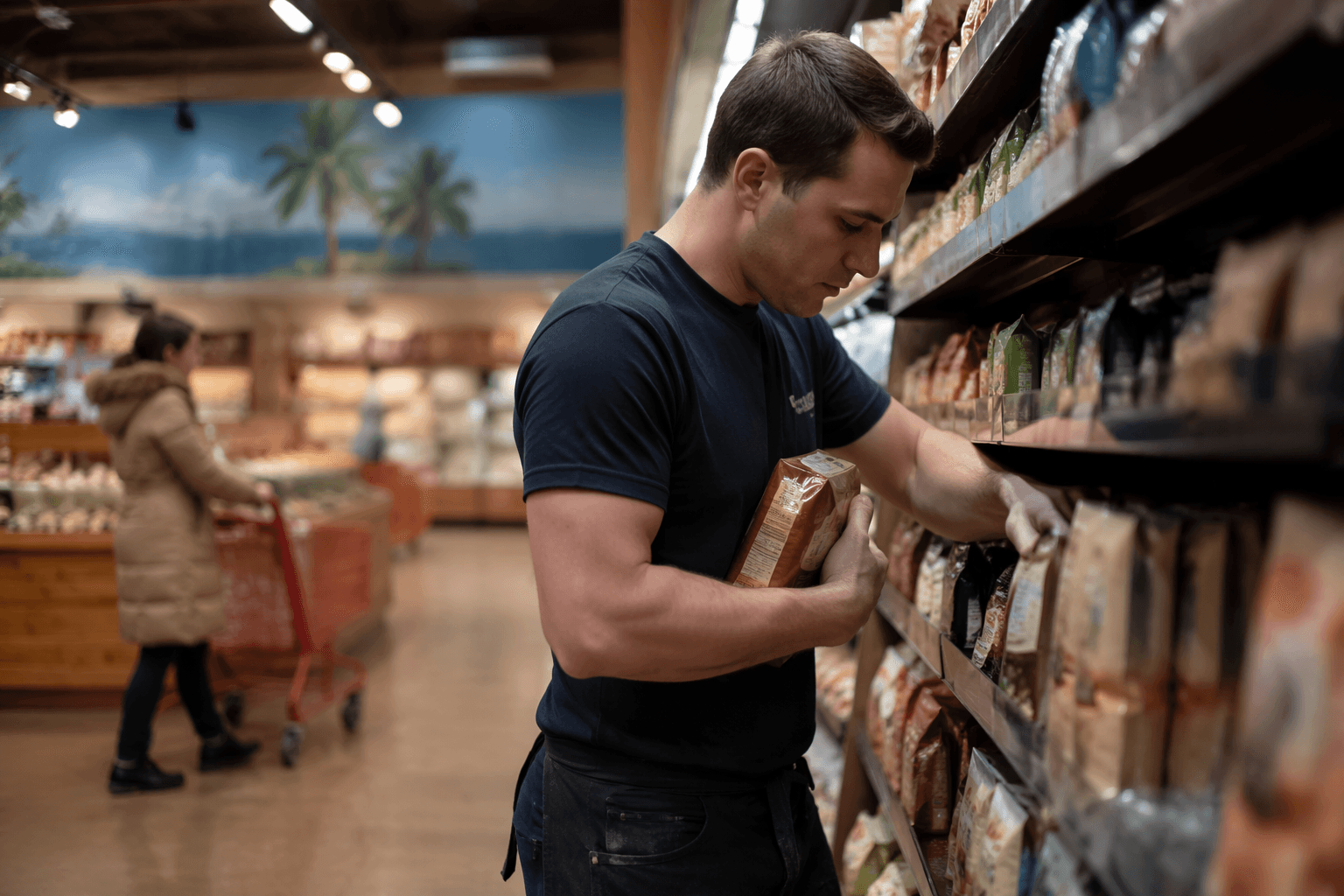
Trader Joe's does not sell products online, offer curbside pickup or delivery, or work with third-party delivery services such as Instacart or Dumpling. That choice keeps the chain's crew culture and in-store experience at the center, but it also means every store has to absorb the pressure created by app-driven discovery, digital comparison shopping, and higher expectations for speed and product knowledge.
The shopping journey is moving before the cart ever does
The grocery trip now starts on screens more often than at the front door. Apps, marketplaces, loyalty tools, personalization engines, and retail media now shape the category, and NielsenIQ and FMI said online grocery accounted for nearly 75% of total grocery dollar growth in 2025. Customers walk in having already seen the product online, heard about it from a creator, or compared it against something else in a feed.
For Trader Joe's crew members, that means the most useful service is still the most human one. Shoppers want to know what is seasonal, what is limited, what pairs well, and what is worth trying, which puts product knowledge and quick recommendations at the center of the job.
Trader Joe's is resisting the standard omnichannel playbook
In its FAQ, Trader Joe's also says it does not issue or accept printable or digital gift cards, and that its only online customer communication runs through its website and email newsletter.
That is a different strategy from the chain of apps that try to be the whole grocery trip at once. Trader Joe's is not trying to compete on checkout convenience, loyalty mechanics, or delivery routing, but on the in-store experience that crew members create every day. The company still uses digital channels, just in a tightly controlled way: product pages, recipes, store search, the Fearless Flyer, and the Inside Trader Joe's podcast all shape what shoppers notice before they arrive.
On its podcast, Trader Joe's said building online shopping or delivery infrastructure is a massive undertaking that takes months or years and substantial resources. It said those resources have gone into people instead of systems designed to eliminate the need for people.
The numbers show why the pressure is not going away
FMI and NielsenIQ said on April 22, 2026, that ecommerce drove nearly three-quarters of total grocery dollar growth in 2025, and they projected online grocery sales would reach $452 billion by 2028. FMI also said nearly 94% of grocery shoppers in 2025 bought both online and in-store.
By March 31, 2026, the chain had opened two stores, had announced 17 upcoming stores, and planned to open more than 20 stores in 2026. The company opened 34 stores in 2024 and 43 in 2025. JLL said Trader Joe's added more than 450,000 square feet of new space through 34 new locations in 2024. Openings include Miller Place, New York, and Hamden, Connecticut.
What that means on the floor
For crew members, the work is becoming less about processing online demand and more about absorbing its effects. Shoppers arrive with specific expectations shaped by social posts, search results, and product chatter, then turn to the crew for the final verdict on whether a limited item is actually worth the hype. That makes shelf execution, fast restocking, and informed conversation part of the same job.
For managers, the challenge is to keep the store feeling simple while the environment around it gets more complex. Digital grocery tools are pushing competitors to promise more visibility, more personalization, and more convenience, but Trader Joe's is betting on curated assortment, strong crew interaction, and a shopping trip that feels discoverable in person.
This article was produced by Prism’s automated news system from verified source data, official records, and press releases, then run through automated quality and moderation checks before publishing. The system is built and supervised by the people who set the standards it runs under. Read our full AI policy.
Did this article answer your question?