Aldi’s expansion intensifies pressure on Trader Joe’s value strategy
Aldi is adding more than 180 U.S. stores in 2026, plus new distribution centers in three states. That sharpens pressure on Trader Joe’s value pitch and labor model.
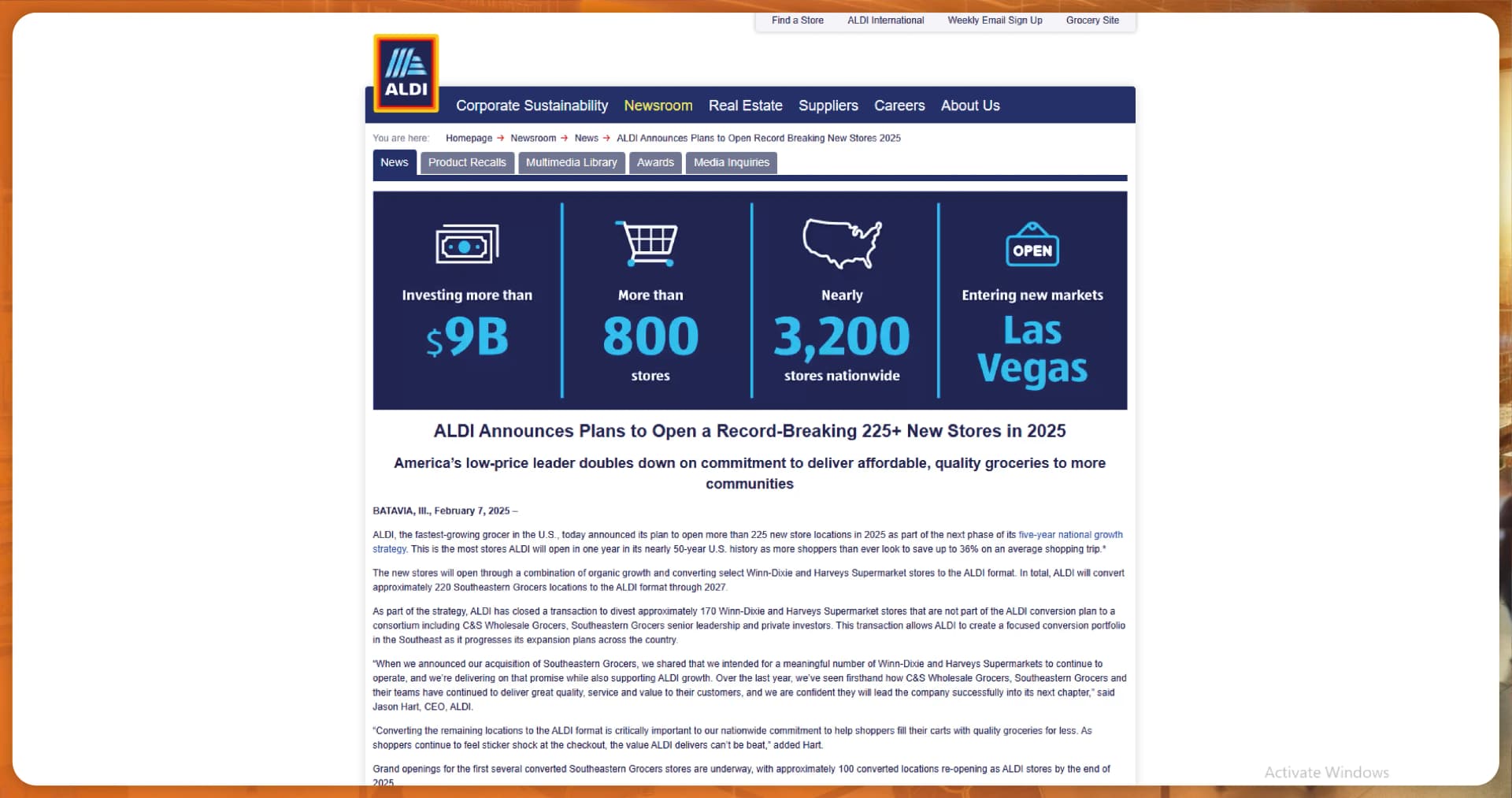
Aldi’s $9 billion U.S. expansion plan is turning one of Trader Joe’s sharpest value competitors into an even bigger presence in neighborhood grocery. On Jan. 12, Aldi said it plans to open more than 180 U.S. stores by the end of 2026 and invest in new distribution centers in Florida, Arizona and Colorado. By Dec. 31, 2025, the chain had 2,614 U.S. stores, making it the third-largest grocer in the country by store count, behind Walmart and Kroger.
That matters for Trader Joe’s because both chains sell shoppers on value and private-label-heavy baskets, even if they get there in different ways. Trader Joe’s says it is committed to “best quality products at the best everyday prices” and says it has been transforming grocery shopping since 1967. The company also says it plans to open dozens of additional stores in 2025, which keeps its footprint moving even as Aldi’s growth rate raises the bar in the discount aisle.

For crew members and managers, the pressure shows up in everyday conversations at the register and the demo table. When Aldi adds stores, Trader Joe’s has to explain its more curated assortment, its discovery-driven mix and why some shoppers still treat a trip to Trader Joe’s as worth more than a quick price comparison. That competition also reaches hiring. New Aldi stores in more markets mean more competition for the same labor pools, at the same time Trader Joe’s relies on staffing, scheduling and advancement to keep stores running smoothly.
Trader Joe’s workers have also been organizing. Trader Joe’s United describes itself as an independent labor union founded and led by crew members, and the organizing effort has extended to multiple stores since 2022. In a tighter value market, pay, hours and internal mobility can become part of the sales pitch just as much as product curation.
The shopper data still favors Trader Joe’s strength with its base. A 2026 market analysis said Trader Joe’s had a 35% retention rate four quarters after a first purchase, ahead of Aldi and Wegmans, and that many specialty grocery shoppers split their budgets between Trader Joe’s and other specialty grocers. That leaves Trader Joe’s with a familiar but tougher job: keep loyal customers feeling they are getting real value while a discount rival keeps opening stores and pressing the whole market to justify every price tag.
This article was produced by Prism’s automated news system from verified source data, official records, and press releases, then run through automated quality and moderation checks before publishing. The system is built and supervised by the people who set the standards it runs under. Read our full AI policy.
Did this article answer your question?