California food-date law aims to cut Trader Joe's customer confusion
California is replacing confusing food-date labels with two terms, and Trader Joe's crew may field fewer shelf questions as the law takes effect July 1.
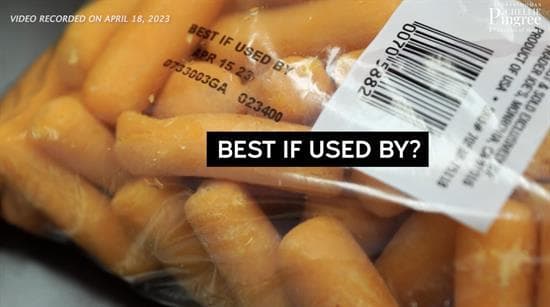
California is forcing grocery stores to swap confusing package dates for two labels, a change that will hit Trader Joe's crew conversations about freshness, returns and waste. Gov. Gavin Newsom signed Assembly Bill 660 on Sept. 28, 2024, and the law takes effect July 1, 2026, making California the first state to require this kind of standardized food-date labeling.
Under the new system, manufacturers must use best if used by for quality and use by for safety. The California Department of Food and Agriculture says the law bans consumer-facing sell-by dates, while smaller packages and some beverages can still use coded marks such as BB and UB. California had already moved in this direction with AB 954 in 2017, which asked the department to encourage voluntary uniform date language across food products.
For Trader Joe's, the biggest shift will be at the shelf and the register, where date labels are one of the most common triggers for customer questions. A shopper who mistakes a quality date for a safety warning may throw away good food, ask for a refund or hesitate to buy a product that is still usable. Trader Joe's says customers can return items for a refund or exchange if they are not satisfied, and the chain also says customer and crew feedback guides its efforts to improve. That makes clearer date language a day-to-day operations issue, not just a packaging change.
The stakes are especially high in refrigerated and fresh categories, where stores manage shrink, markdowns and fast-moving inventory every day. The U.S. Department of Agriculture says, except for infant formula, food dates are generally about quality rather than safety and are not required by federal law. Food-waste advocates have long argued that confusion drives avoidable losses: a 2025 survey found 84% of consumers discard food near the package date at least occasionally, and more than one-third wrongly believed date labels were federally regulated. A Harvard Law School Food Law and Policy Clinic analysis estimated that standardizing date labels could help divert 398,000 tons of food annually.
Trader Joe's has already started moving ahead. On April 9, 2026, the company told employees it was phasing out Sell By dates on nearly all packaging nationwide, with some milk and egg products still subject to region-specific labeling rules. For crews, that means fewer explanations about what a date does and does not mean, and a simpler shelf script when shoppers ask whether food is safe, still good, or just past its peak quality.
This article was produced by Prism’s automated news system from verified source data, official records, and press releases, then run through automated quality and moderation checks before publishing. The system is built and supervised by the people who set the standards it runs under. Read our full AI policy.
Know something we missed? Have a correction or additional information?
Submit a Tip