June labor data shows a steady, cautious job market for workers
Payroll growth slowed to 57,000 in June while unemployment held at 4.2%, leaving Trader Joe’s crew with options but not a frenzy.

Payroll growth slowed to 57,000 jobs in June, and unemployment held at 4.2 percent, a mix that leaves Trader Joe’s crew with options but not a surge in easy job switching. The Bureau of Labor Statistics said labor force participation slipped to 61.5 percent and the employment-population ratio edged down to 59.0 percent, while 7.1 million people were unemployed.
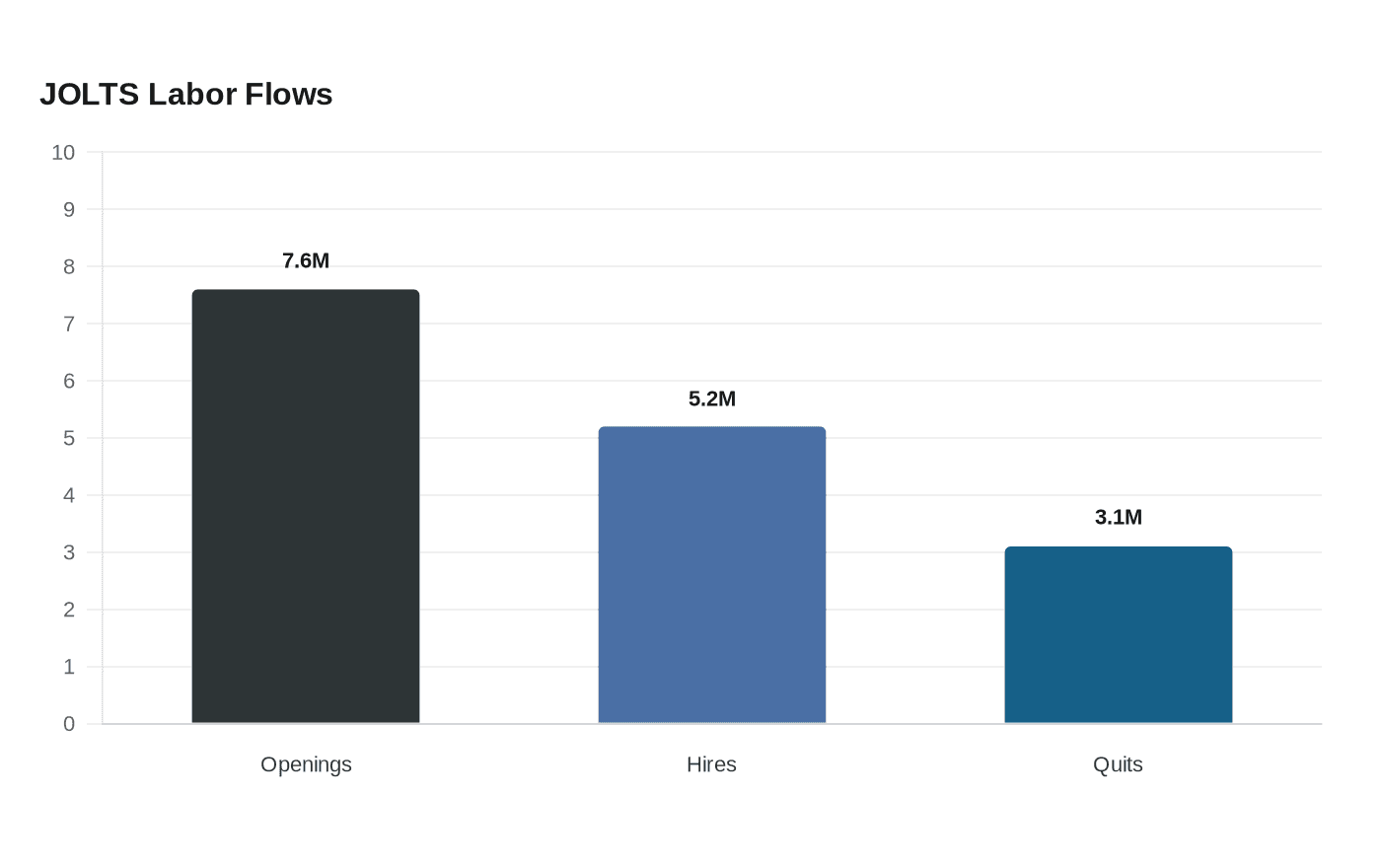
For Trader Joe’s stores, that is the kind of labor backdrop that matters on the floor. June’s report showed leisure and hospitality losing jobs, while professional and business services, social assistance and health care kept trending up. That means grocery is still competing for workers against a market that is not frozen, but also not so hot that every employee can quit into a better offer overnight. The May JOLTS data backed that up: openings held at 7.6 million, hires were unchanged at 5.2 million, and quits stayed at 3.1 million, a sign that workers still had mobility even as hiring steadied.
Inside Trader Joe’s, that balance translates into leverage in specific places. Crew members who are shopping around for higher pay or more stable hours still have a labor market that can reward a move, especially because Trader Joe’s says hourly pay is not the same at every store. The company also says crew members get performance reviews twice a year and can receive an average 7 percent annual increase, which makes internal raises and promotions part of the retention pitch rather than a side benefit. The company’s 401(k) plan adds another layer, but pay growth and schedule consistency are likely to matter more when outside options remain available.
The Chicago union election at Trader Joe’s East Inc. shows how tight those dynamics can get. The National Labor Relations Board case page listed 154 eligible voters, with 140 ballots counted. The result was 70 votes for the union and 70 against, plus one challenged ballot, a near-even split that shows how closely workers are weighing pay, scheduling and voice on the job.
The broader market is cooler than it was in 2024, when payroll employment rose by 2.2 million over the year and retail trade added jobs in December. That slower pace does not erase worker leverage, but it does make the next move more deliberate. For Trader Joe’s crew, that usually means a store can still lose people if pay or schedules slip, yet managers may not have to backfill every opening at the same speed they did during the busiest post-pandemic hiring stretch.
This article was produced by Prism’s automated news system from verified source data, official records, and press releases, then run through automated quality and moderation checks before publishing. The system is built and supervised by the people who set the standards it runs under. Read our full AI policy.
Did this article answer your question?