NLRB order against Amazon signals leverage for Trader Joe's unions
A federal labor judge ordered Amazon to bargain hours before Prime Day, a reminder that the NLRB can still force employers to the table.
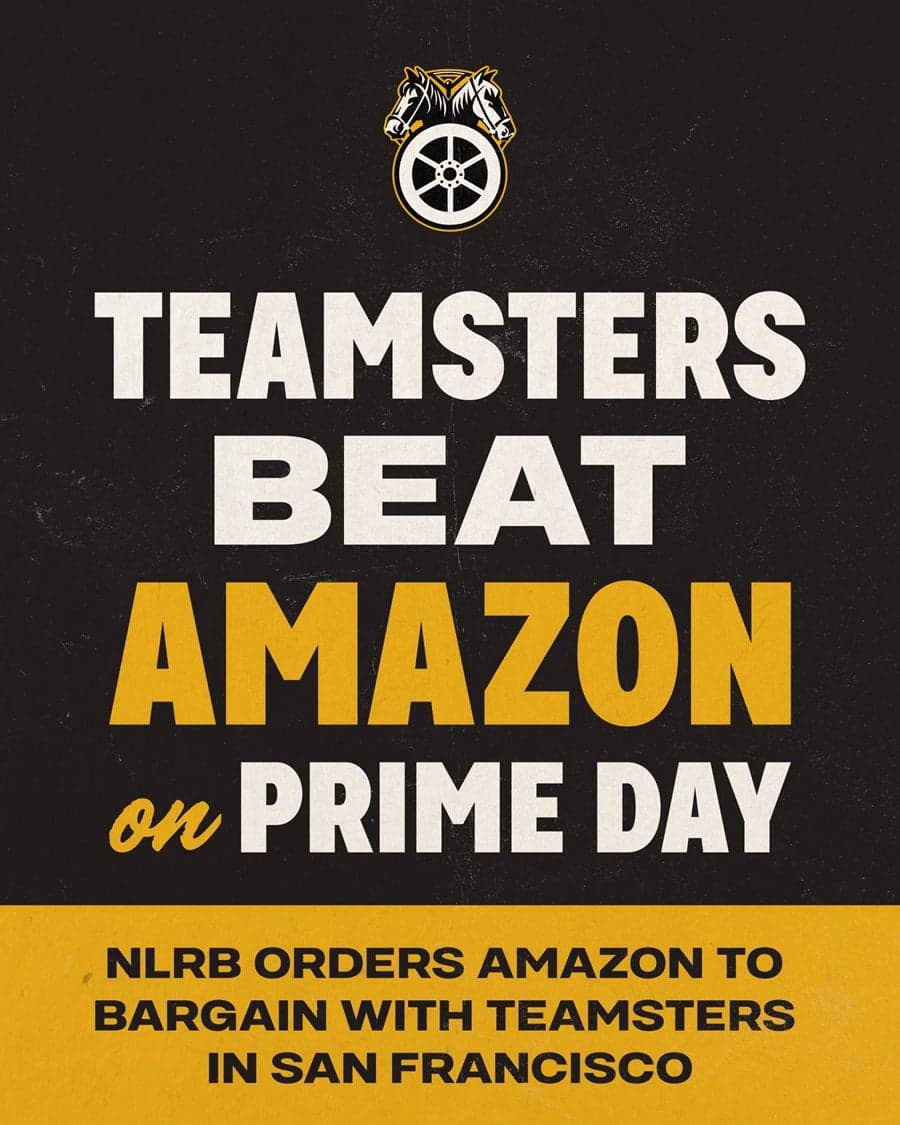
A National Labor Relations Board administrative law judge ordered Amazon on June 23 to bargain with Teamsters-represented workers at its DCK6 facility in San Francisco, landing only hours before Prime Day began. The ruling gave Amazon a second bargaining order in less than three months and showed that even sprawling retailers and logistics companies can be pushed into negotiations when workers have already demonstrated majority support.
At DCK6, Teamsters say roughly 100 Amazon workers formed a union in October 2024 and became the first Amazon warehouse workers to seek recognition outside the NLRB election process. The union then pressed for recognition publicly, and Amazon said it disagreed with the ruling. Prime Day 2026 ran June 23 to June 26, making the timing especially pointed as one of the company’s biggest sales events unfolded under a fresh labor order.
For Trader Joe’s workers, the signal is less about Amazon’s fulfillment network than about how long labor fights can drag on before a legal remedy lands. Trader Joe’s United and other organizing efforts have spent years testing whether the company will bargain in good faith, and the Amazon order reinforced a point crew members know well from their own stores: a company can resist, but that does not erase the NLRB’s power to compel action after workers organize.
That matters in a chain where the first unionized store, in Hadley, Massachusetts, won its election 45-31 in July 2022. That vote made Hadley the first Trader Joe’s location with an employees union, after workers raised pay, benefits and safety concerns. Since then, Trader Joe’s has faced NLRB allegations involving retaliation, interrogation, captive-audience meetings and an unlawful dress code, the same kind of issues that shape whether crews feel protected enough to organize openly.
The Houston case has remained active into 2026, with appellate docket activity listed in April. For Trader Joe’s managers, the Amazon ruling is a reminder that extended delay is not the same as resolution. For crews weighing whether union momentum still has leverage, the answer from San Francisco was clear: labor board orders can still turn majority support into a bargaining obligation, even for a company as large as Amazon.
This article was produced by Prism’s automated news system from verified source data, official records, and press releases, then run through automated quality and moderation checks before publishing. The system is built and supervised by the people who set the standards it runs under. Read our full AI policy.
Did this article answer your question?