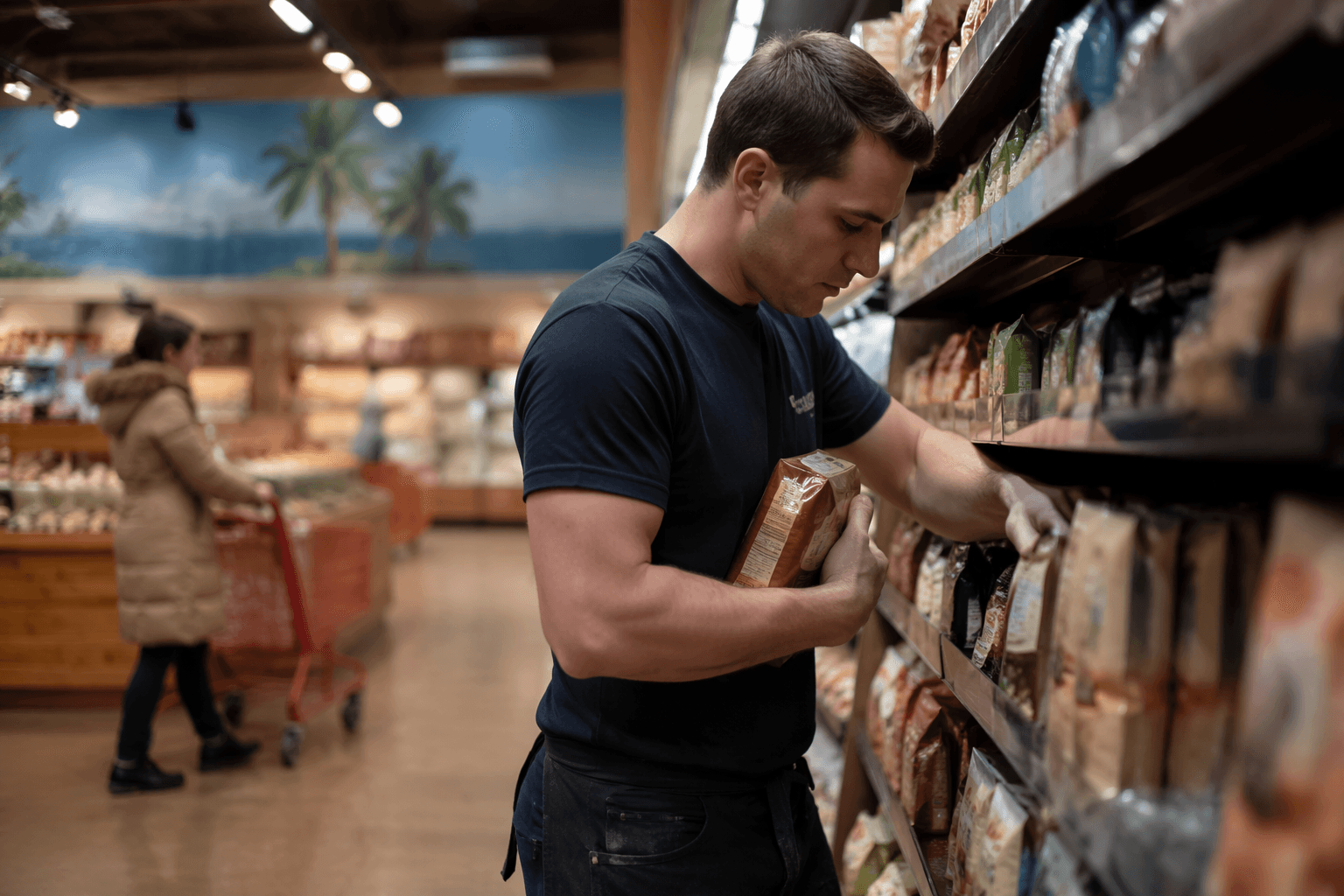
OSHA says Trader Joe's forklifts need daily inspections, trained operators
OSHA’s forklift rules land hard in Trader Joe’s backrooms: inspect daily, train operators, and pull unsafe trucks before a pallet moves.
Daily checks are the first line of defense
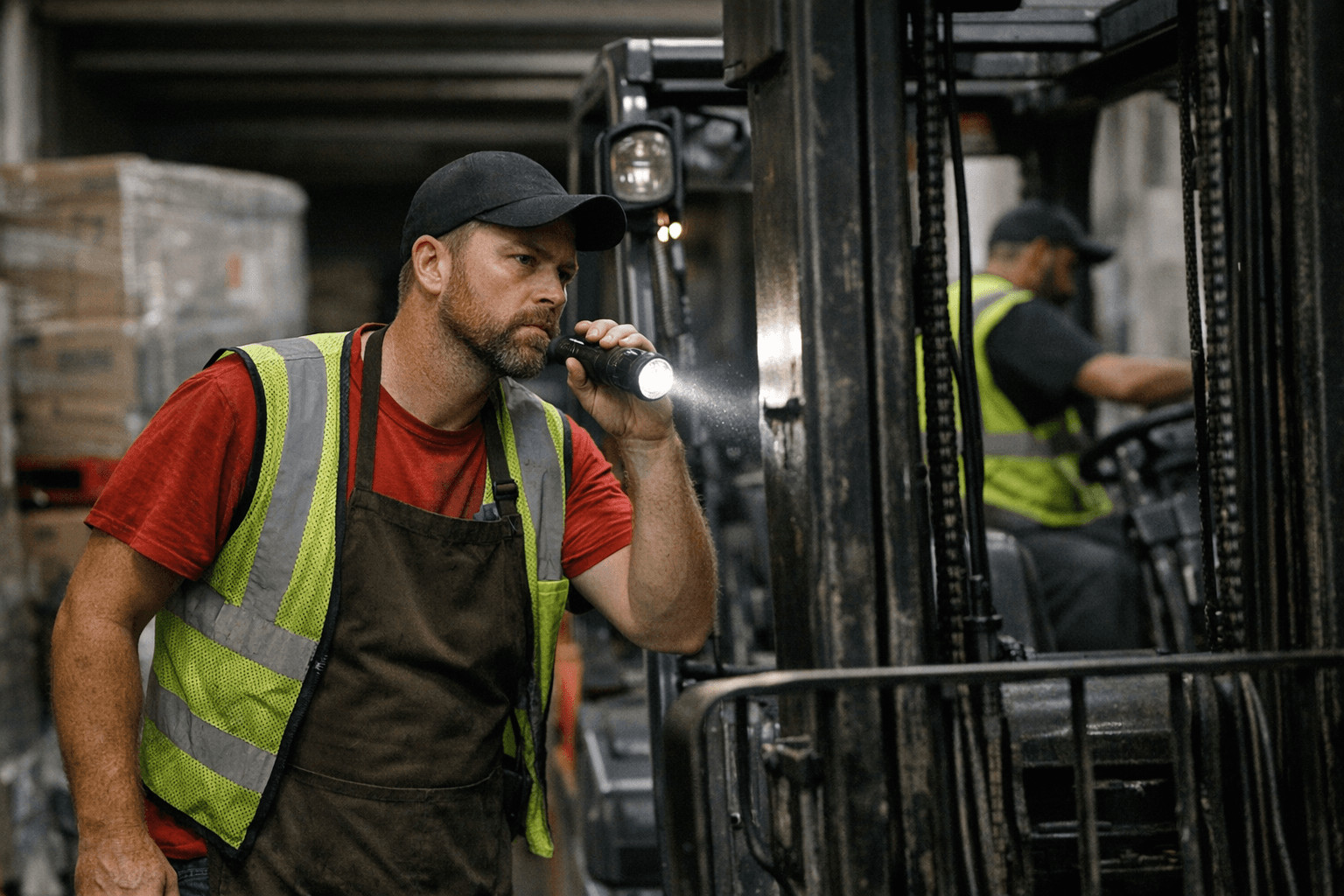
At Trader Joe’s, the forklift is not just a piece of equipment. It is the hinge point between a busy receiving area and a store floor that still has to look calm, stocked, and on time. OSHA’s message is blunt: before a powered industrial truck goes into service, it has to be examined at least daily, and trucks running around the clock need another check after each shift.
That matters because the fastest way to turn a routine unload into a bad day is to skip the few minutes that catch a problem early. OSHA says any truck that is defective or unsafe should be removed from service immediately, the issue recorded on a log, and a supervisor told right away. In a store where backroom space is tight and product needs to keep moving, that is not a paperwork detail. It is the line between a controlled stop and a delay that can ripple through the rest of the shift.
What the inspection should actually cover
OSHA’s sample daily checklist is meant to guide the process, not replace judgment. The agency says the checklist should be adjusted for the truck type and paired with the manufacturer’s instructions. For crew members and managers, that means the inspection is supposed to be specific and practical, not a quick glance from across the dock.
A pre-operation check can include:
- leaks
- cracks
- hydraulic hoses
- mast chains
- tire condition
- forks
- warning decals
- nameplates
- seat belt
- load backrest
- the operator manual, which should be on board and legible
That list sounds ordinary until something is missing. A worn fork, a damaged hose, or a missing manual can turn a rushed morning receiving run into a serious hazard. OSHA’s point is that a truck should not be treated as cleared just because it started up and rolled forward.
Training is not optional, and refreshers are part of the job
OSHA also draws a hard line on who can run powered industrial trucks. Only trained and competent operators are allowed to use them, and employers have to certify that each operator has been trained and evaluated. That evaluation is not a one-and-done task. OSHA says operators must be re-evaluated at least once every three years, and sooner if unsafe performance is observed.
For Trader Joe’s, that is especially important in a store culture that depends on speed, multitasking, and people jumping between jobs as traffic changes. A seasoned crew member may know the rhythm of the backroom well, but that does not substitute for current forklift authorization or a documented evaluation. The expectation is simple: before equipment moves, management should be able to show that the operator is qualified, current, and still being checked.
Why the rules matter in a Trader Joe’s backroom
OSHA’s warehousing guidance puts forklift risk in the broader context of a fast-moving industry. The agency says warehouses and distribution facilities face hazards tied to powered industrial trucks, ergonomics, material handling, hazardous chemicals, slip and trip hazards, and robotics. It also says the most common injuries are musculoskeletal disorders and being struck by powered industrial trucks and other materials-handling equipment.
That is the real-world environment many Trader Joe’s teams work in when product is arriving, pallets are stacked tight, and receiving has to happen without slowing the store. A forklift issue does not stay isolated in the back. It can create cleanup work, re-routing, delayed stocking, and extra labor at exactly the moment the team is already under pressure. OSHA’s National Emphasis Program on Warehousing and Distribution Center Operations, which began inspections on October 13, 2023, shows that federal attention on these workplaces is active, not theoretical.
The injury numbers show why the scrutiny is intense
The statistics behind forklift safety are hard to ignore. The U.S. Bureau of Labor Statistics says that from 2011 to 2017, 614 workers died in forklift-related incidents, and more than 7,000 nonfatal injuries with days away from work occurred every year. In 2017 alone, forklifts were involved in 74 fatal occupational injuries and 9,050 nonfatal injuries or illnesses with days away from work.
OSHA’s own severe-injury data adds another warning sign. The agency says 1,190 forklift-related severe injuries were reported in 2022 and 2023 combined. For workers and managers in retail operations, those numbers explain why a pre-shift inspection is treated as a core control, not an administrative chore. A skipped check can be the difference between a normal receiving cycle and an injury that takes someone off the schedule for weeks or longer.
Trader Joe’s history makes the guidance especially relevant
This is not an abstract compliance lesson for Trader Joe’s. OSHA said on April 10, 2024, that the company was fined nearly $217,000 after a December 2023 inspection at its Greenwood Village, Colorado store found unsafe forklift operations and a lack of forklift training. OSHA also said Trader Joe’s had already been cited for the same standards in three earlier inspections in Pennsylvania, Maine, and Massachusetts.
The underlying March 4, 2024 citation record adds more detail: 25 employees were exposed, and OSHA said the company had not ensured that all powered industrial truck operators were evaluated at least every three years. That record listed an initial proposed penalty of $126,764, later settled at $85,000. OSHA also said Trader Joe’s was cited for repeatedly blocking and rendering electrical equipment inaccessible in multiple states, which reinforces the larger point that backroom discipline and equipment access are not small issues when inspectors are looking at an operation.
What crew should expect before anyone gets on the truck
For store teams, the safest expectation is also the clearest one. Before a forklift is used, there should be a real inspection, not a rushed signature. If a defect shows up, the truck should be pulled, logged, and reported. If the operator has not been trained and evaluated, the truck should stay parked.
That is the standard OSHA has laid out, and it is the standard Trader Joe’s now has to live with under a brighter spotlight. In a business built on moving product quickly without making the sales floor feel chaotic, forklift discipline is part of the job, not a side note. When it works, nobody notices. When it fails, the cost lands on the crew first.
This article was produced by Prism’s automated news system from verified source data, official records, and press releases, then run through automated quality and moderation checks before publishing. The system is built and supervised by the people who set the standards it runs under. Read our full AI policy.
Did this article answer your question?