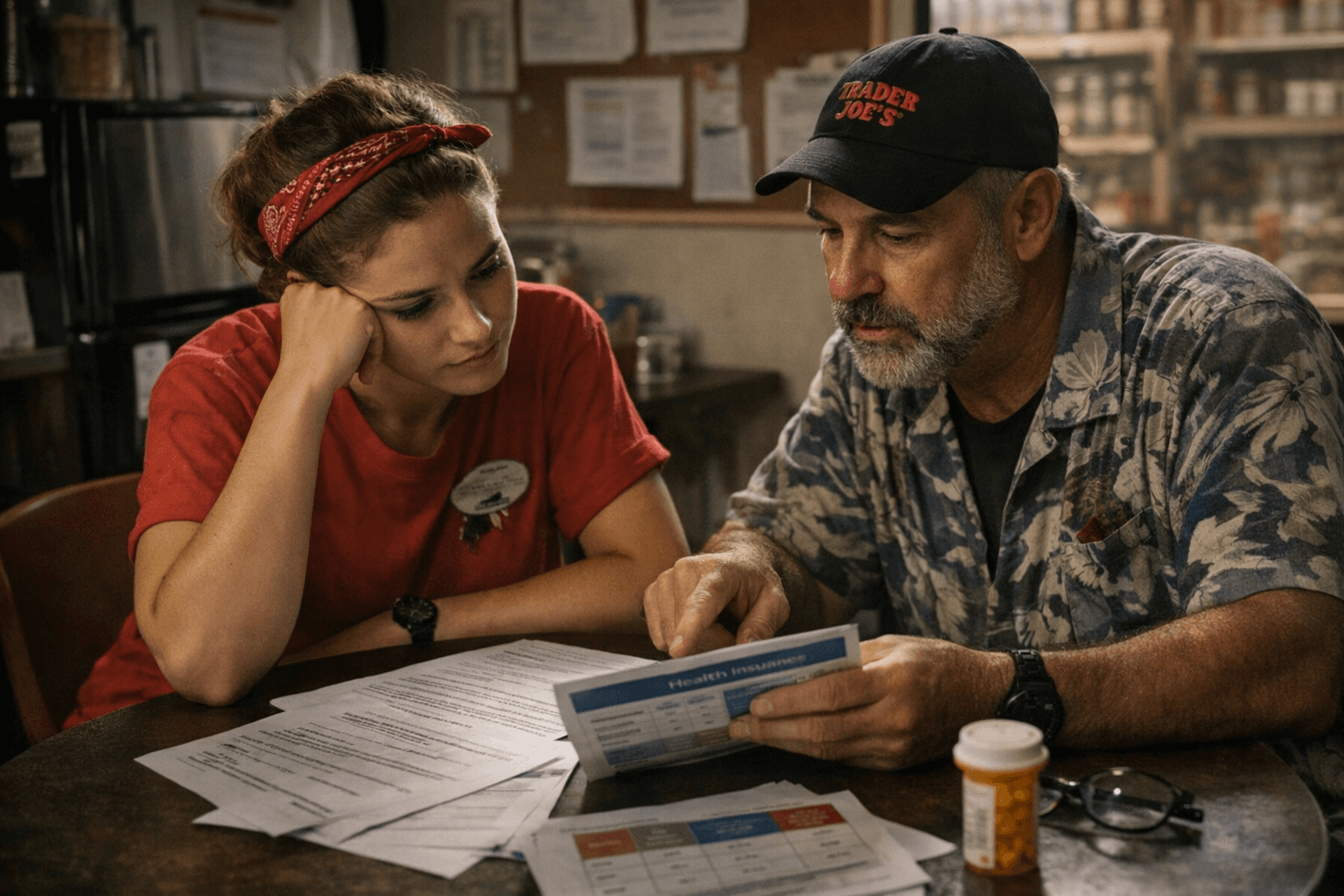
Trader Joe's applicant privacy notice reveals collected data and rights
Trader Joe’s applicant files can include far more than a resume. Knowing what the company collects, and how to correct it, gives workers real leverage.

The application already creates a record
Your Trader Joe’s application can already contain a paper trail of your address, phone number, resume, education, references, and even third-party background-check material. That matters because privacy in retail often feels abstract until you can name the records, and the application stage is where many of those records first get created.

Trader Joe’s California applicant privacy notice says applicants may submit a name, email address, phone number, address, resume, educational history, professional licenses and certifications, employment history, and references. It also says the company may receive information from third parties tied to certifications, licenses, background checks, and references. In other words, the hiring file is not just what you type in once. It can also include outside verification that follows you into the process.
The company says that applicant information is sent to its online career portal provider, Avature, for evaluation purposes. Interview visits may also involve security footage in public areas of stores, which is a reminder that the hiring process is not only digital, it can also be captured on camera once you step into a store.
What the notice gives you, and what it does not
Trader Joe’s says the type and amount of information collected is the minimum necessary for reasonable business purposes. That is the company’s public standard for applicant data, and it is the phrase workers should keep in mind when they are deciding whether to fill out a form, upload a document, or answer a request that seems out of step with the job.
The practical point is simple: use official systems only, and be careful about where your information goes. Trader Joe’s own careers FAQ shows how much of the process depends on digital accounts, including help for incomplete applications and account issues tied to email addresses or phone numbers. If an application gets stuck, that is not just an inconvenience. It can become a clue that the company’s hiring pipeline depends on accurate contact information and tightly controlled portal access.
That also means you should be suspicious of messages that look like HR, payroll, or benefits outreach but ask you to move fast, click a link, or re-enter your details. Retail workers are often juggling shifts, customers, and phone notifications at the same time, which makes them easy targets for phishing. A fake message that asks for login credentials or personal documents can create a much bigger problem than a lost application.
Your rights if the file is wrong, outdated, or more than you want shared
Trader Joe’s applicant privacy rights form says applicants may request access, deletion, or correction of their personal information. The form lists two contact methods, including a phone number, 833-670-4649, and an email contact listed on the form. It also says requests may take up to 45 days to fulfill.
That gives applicants a concrete playbook. If a resume is outdated, a credential is wrong, or a contact detail no longer works, you do not have to treat that error as permanent. You can ask to see what the company has, ask for a fix, and ask for deletion where the form allows it.
This is especially useful if you applied through more than one channel, reused a phone number across accounts, or are worried about documents that were uploaded in the wrong place. In a fast-moving retail hiring process, small mistakes can linger longer than they should. The right move is to correct them early, while the trail is still easy to untangle.
After the application, the privacy questions do not stop
The public applicant materials make one thing clear: Trader Joe’s is willing to explain what it collects during hiring, but its public-facing documents do not spell out every internal rule about retention, visibility, or access once a worker is in the system. That is the point where onboarding, scheduling, payroll, emergency contacts, and performance records become the next set of questions.
If you are hired, ask which information is kept in the employee file, who can see attendance or performance notes, and how long records stay in company systems after you leave. If a store uses digital scheduling or communication tools, make sure you know whether your personal phone number is visible to coworkers, whether messages are archived, and what happens to your account when you transfer or resign. Those are not theoretical questions in retail. They shape how much of your work life stays tethered to your personal device.
Payroll deserves the same attention. Pay statements, direct-deposit details, and tax forms can be useful targets for fraud if they are shared carelessly or accessed through reused passwords. The safest habit is to protect every account tied to work, keep passwords unique, and double-check that any form asking for a bank account or identity document is coming through an official company channel.
Why this hits different at Trader Joe’s
Trader Joe’s has built a reputation around crew culture, above-market pay, and a store-floor identity that feels distinct from other grocery chains. That is part of why privacy matters here. A company that asks for a lot of trust from workers should be clear about who sees worker records, how long they are kept, and how much of your work life is being tracked through software, messages, and uploaded documents.
The labor context matters too. Trader Joe’s United describes itself as an independent labor union founded and powered by workers, and its organizing has put more attention on how power works inside the company. When crews are already asking who controls scheduling, communication, discipline, and workplace voice, privacy becomes part of the same conversation. Data rules are not separate from workplace power. They are one of the ways that power shows up.
Trader Joe’s broader privacy policy says the company does not buy or sell customers’ personal information, and that it uses service providers to help maintain databases, process payments, gather analytics, and distribute newsletters, with those providers barred from using personal information for other purposes. That policy is written for shoppers, not workers, but it shows how publicly the company thinks about data handling: vendor control, limited use, and no selling.
For crew members and applicants, the lesson is practical rather than abstract. Use the official portal, keep your login secure, review the records attached to your application, and ask for corrections when the file is wrong. In a retail workplace that depends on speed, privacy is one more form of self-protection, and the workers who keep their records clean are usually the ones who have the most control over what happens next.
What to do now
- Check every application account you have used with Trader Joe’s, especially if you saw an “Incomplete Application” status.
- Review the personal details you submitted, including address, phone number, references, licenses, and employment history.
- If something is wrong, use the rights process to request access, correction, or deletion.
- Treat any message asking for credentials, documents, or payroll details as suspicious until you confirm it came from an official company system.
- Once hired, ask who can see your scheduling, payroll, performance, and emergency-contact records, and what happens to them if you leave.
Know something we missed? Have a correction or additional information?
Submit a Tip