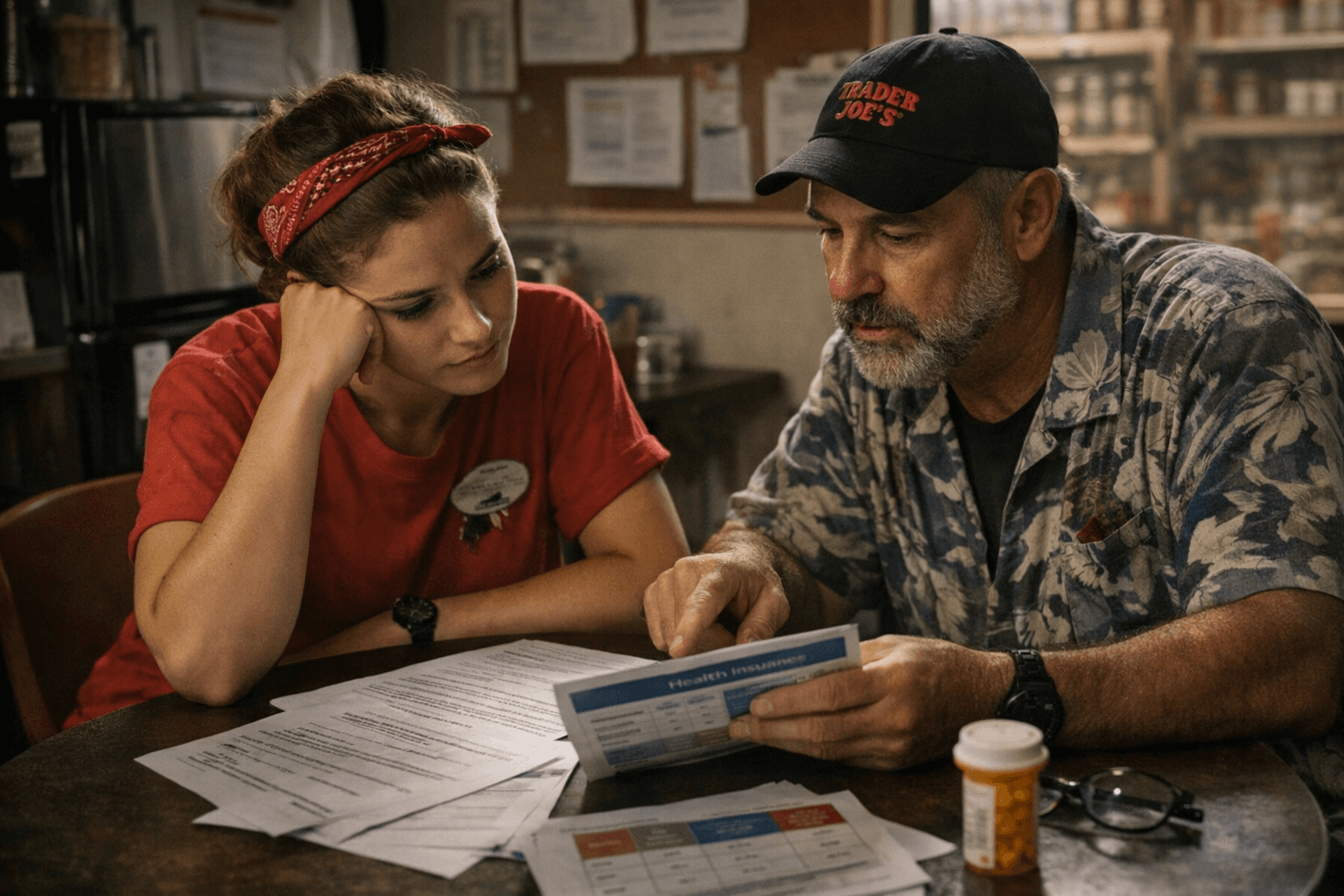
Trader Joe's workers urged to check pay stubs, Dayforce records for payroll errors
Trader Joe’s crew can catch paycheck mistakes fast by matching every stub line to Dayforce, from hours and overtime to taxes and PTO balances.

Start with the numbers that drive your paycheck
The safest habit is also the simplest: check your pay stub every payday before you assume the deposit is right. For Trader Joe’s crew, the first pass should confirm your name, employee ID, pay period, hourly rate, total hours, overtime if any, and any premiums or adjustments tied to holidays, late shifts, or store-specific scheduling rules.

That matters because grocery work moves fast, and payroll mistakes usually start with something ordinary: a missed punch, a shift swap that was not recorded cleanly, or a manager correcting a timecard after the fact. A small error in hours or a missed differential can quietly shave money off a check, especially when the schedule changes week to week.
Make the first post-payday review a routine
The best time to catch a problem is right after the pay period closes, while the shift is still fresh in your mind. Compare the hours on the stub with your actual schedule, then check whether each shift was paid at the correct rate. If you worked a late shift, holiday, or other premium-eligible assignment, look for the extra pay line instead of assuming it was folded into the total.
If anything looks off, document it before you ask for a fix. Write down the date, the shift, the expected amount, and what the stub shows instead. That simple record gives store leadership or payroll a clean starting point and can speed up the correction.
Use Dayforce as your backup file, not just a login screen
Dayforce is more than a place to check a current balance. Its employee help materials say workers can open the Earnings feature to view and print pay statements, and use the Year End Forms tab to view and print tax forms such as W-2s, T4s, and 1099s. The platform also shows pay dates and summaries that break down earnings and deductions.
That makes Dayforce especially useful if your schedule changes often. Save screenshots or PDFs of each statement so you have a record if a corrected shift needs to be verified later. If the pay stub says one thing and the portal history says another, the paper trail becomes the fastest way to separate a data entry problem from a missed correction.
What to check first on every pay stub
A pay stub can look routine until one line is wrong. The key is to review the fields in the same order every time, so a missing detail stands out quickly.
1. Your identity details
Confirm your name and employee ID are correct. If those are wrong, other payroll information may be attached to the wrong record.
2. Pay period and pay date
Make sure the dates match the week or two-week cycle you actually worked. This helps you catch a shift that was pushed into the wrong period.
3. Hourly rate and hours worked
Check that your base rate is right and that the total hours match your schedule and punches. If you are new to the job, this is the clearest way to confirm you were hired at the rate you expected.
4. Overtime and premiums
Review any overtime line and any premium tied to late shifts, holidays, or other scheduling rules. If you worked extra hours in a busy week, this is where a mistake often shows up.
5. Deductions and taxes
Separate pre-tax deductions from after-tax deductions so you know what is reducing your taxable wages and what is not. If a benefit premium changed after open enrollment, this is where it should appear.
6. Time-off balances
Track your paid time off balance and compare it with your own records. Trader Joe’s says paid time off increases with tenure and that the money is yours from the moment you earn it, so the balance should move in a way that matches your service.
Understand the difference between a payroll issue and a benefits issue
Not every change on a paycheck is an error. Some changes are tied to benefits, tax withholding, or a legitimate shift in your elections. That is why it helps to know whether a deduction is pre-tax or after-tax, whether a benefit premium changed after open enrollment, and whether your overtime should have triggered in a busy week.
For crew members trying to budget rent, gas, childcare, or other monthly bills, the difference is not academic. A pay stub that is technically correct but confusing can still throw off your planning if you do not know what changed and why.
Why this matters even more at Trader Joe’s
Trader Joe’s talks often about pay, benefits, and internal advancement, which raises the stakes for getting payroll right. The company says crew receive performance reviews twice a year and have the potential to receive an average 7% annual increase. It also says eligible crew members can receive medical, dental, and vision coverage with contributions as low as $25 a month, a 401(k) option, and up to a 20% store discount.
That package can make the paycheck feel more stable than in much of retail, but it also means each line on the stub matters more. If your compensation changes with reviews, benefits elections, or tenure-based paid time off, you need a clean record to know whether the company is applying those changes correctly.
Trader Joe’s also says 78% of Mates started as Crew and 100% of Captains were promoted from the Mate role. In a workplace built around internal promotion, payroll accuracy is not just about one week’s deposit. It follows you across the career ladder, through raises, benefits changes, and the years when you are trying to build trust in the system.
Know where to go when something is wrong
Dayforce’s help center says questions about payroll, earning statements, timecards, employee self-service, or tax forms should be directed to the employer’s HR or payroll department. That means the portal is the record, but the fix usually comes through the company’s internal payroll channel.
Before you reach out, collect the basics: the pay period, the shift date, the hours worked, the rate that should have applied, and a copy or screenshot of the statement. If you can point to the exact line that does not match your schedule, the correction is easier to make and harder to dismiss.
A simple worker check that pays off
The strongest paycheck habit is not complicated. Check the stub, compare it with Dayforce, and save the proof before the details fade. If you do that every pay period, you are far more likely to catch a missing punch, a bad rate, a missed differential, or a benefit deduction that should not have landed.
For Trader Joe’s crew, that is basic financial self-defense. A paycheck should reflect the work you actually did, and the only way to make sure it does is to read the stub like it matters, because it does.
Know something we missed? Have a correction or additional information?
Submit a Tip