Trader Joe’s bell code keeps stores moving without overhead announcements
Trader Joe’s bell code is a tiny store language that tells crew when to ring in backup, find items, or call a manager.
Trader Joe’s bells do more than add personality at the checkout lane. They function as a working language on the sales floor, signaling when the store needs another cashier, when someone should fetch an item, and when a manager needs to step in. That simple system keeps the pace moving without constant overhead announcements, which is exactly why it has lasted.
How the bells work
The code is straightforward, and that is part of its power. One bell means another cashier is needed. Two bells mean someone should find an item. Three bells mean a manager is needed. Trader Joe’s own FAQ calls the system “Trader Joe’s Morse code,” which captures the idea that the bells are a shared signal crew members are expected to understand, not just a quirky sound in the background.
That clarity matters in a store where speed and friendliness have to coexist. Instead of stopping the room with a public address announcement, the bells let crew move help where it is needed while keeping the floor feeling open and conversational. For shoppers, the sound is a signal that something is happening. For crew, it is a shortcut that helps preserve flow.
Why Trader Joe’s kept a low-tech system
The transcript explaining the bells says Trader Joe’s used them in part because they were cheaper than a public address system. That detail says a lot about the company’s operating style. Trader Joe’s has never tried to build a store culture around elaborate equipment or heavy-handed communication. It has leaned into tools that are simple, understandable, and easy to use in the middle of a busy shift.
That approach fits the retailer’s wider labor model. The bells are not just decorative; they are a form of staffing flexibility in action. A bell can pull a cashier back to the register, send someone to retrieve a product, or bring in a manager without creating confusion on the floor. The result is a store that can respond quickly to demand while still feeling intimate and neighborhood-oriented.
The company’s public framing reinforces that idea. Trader Joe’s describes the bells in the language of shared knowledge, which suggests the system is part of day-to-day operations rather than a gimmick for customers. That is an important distinction for workers: the bells define expectations for how help gets routed and how quickly a crew member is supposed to react.
What the bells teach new hires
The clearest sign that the code is part of the job is how it shows up in training. In the podcast transcript, new employees are asked to interpret the bells while stocking shelves for a store opening. The scene takes place at a brand-new Trader Joe’s in Middletown, New Jersey, and the speakers are Tara Miller, Trader Joe’s director of words and phrases and clauses, and Matt Sloan, the company’s culture and innovation guy. That setting makes the point plainly: learning the bells is part of day one, not an insider joke reserved for veterans.
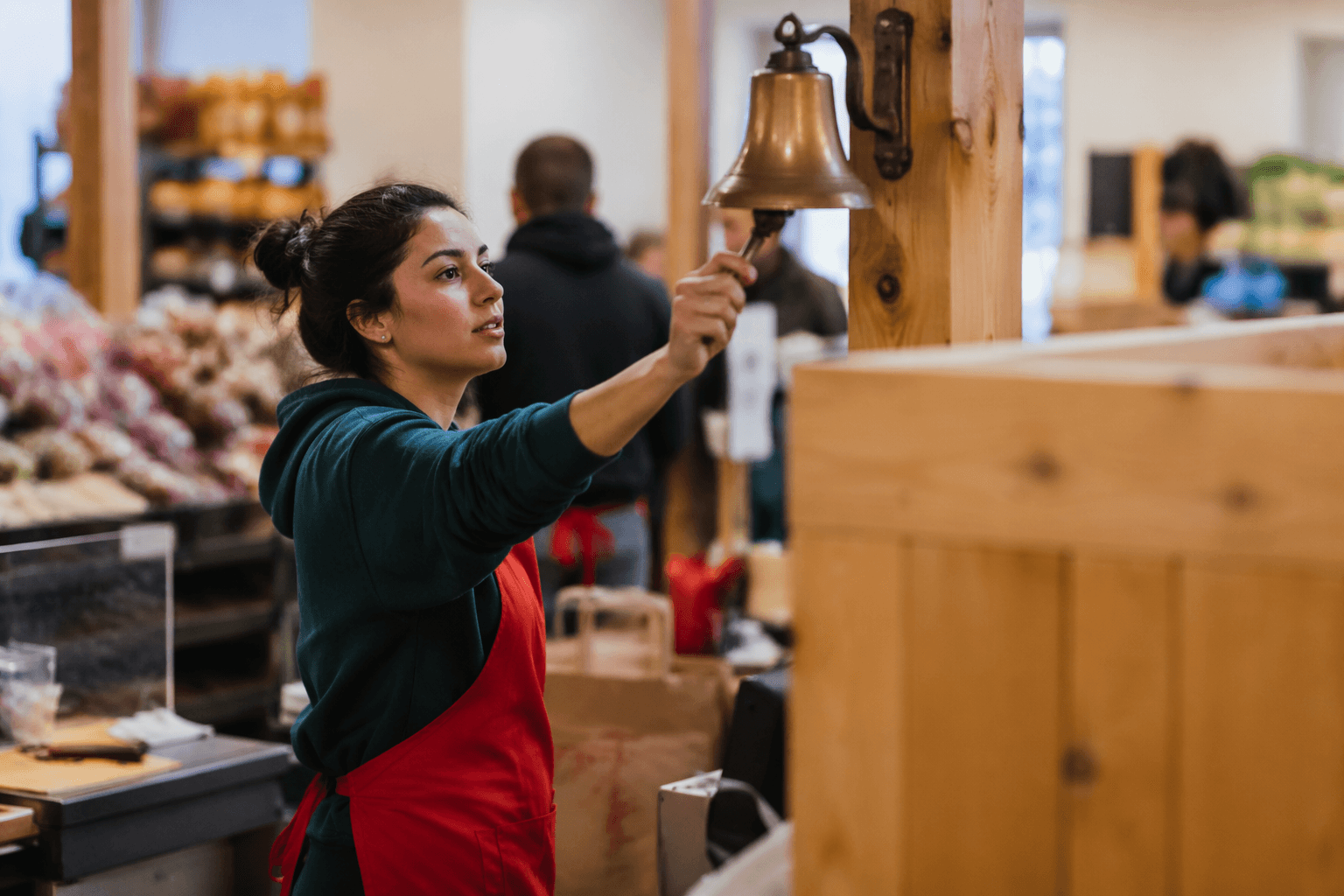
For crew members, that means the bells are part of the store’s operating rhythm from the start. A new hire is not just learning product locations and register basics. They are also learning how to read the room, how to respond to a signal, and how to help keep the floor moving without overcomplicating communication. In a company known for crew culture and strong internal pride, that kind of practical fluency is part of belonging.
It also reveals how Trader Joe’s manages service with a lighter touch than many retailers. The bells create a common language that reaches across departments and job duties. Cashiers, stockers, and managers can all hear the same signal and know what kind of response is expected. That saves time, reduces confusion, and keeps the atmosphere from turning into a stream of shouted instructions.
A code that matches the brand
The bell system also makes more sense when you place it inside Trader Joe’s broader identity. The company says the bells fit its nautical theme, and that theme still shows up in 2026 store-opening announcements that use words like “Captain” and “Crew.” In other words, the bells are not a random holdover. They belong to a larger brand language that has shaped how Trader Joe’s talks about itself for years.
The origin story helps explain why. Trader Joe’s says its earliest stores had a nautical theme because the brand was once run by people described as “traders on the high seas,” so ship bells were a natural fit for signaling and communication. Independent reporting has also compared Trader Joe’s bells to maritime ship bells that have been used for centuries for alarms, timekeeping, and ceremonial purposes. That history gives the system a practical logic and a cultural one. It feels playful, but it also feels rooted.
For workers, that is part of the appeal and part of the pressure. A bell system can sound charming from the outside, but on the floor it becomes an expectation: respond quickly, know the code, and help the store work as one unit. It is one more example of how Trader Joe’s combines its cult-favorite personality with a disciplined retail operation.
Why the code still matters as the chain grows
The bell system has also proved durable as Trader Joe’s has expanded. Grocery Dive reported on March 31, 2026, that the chain planned more than 20 store openings in 2026 after opening 34 stores in 2024 and 43 stores in 2025. Trader Joe’s also announced a West Palm Beach, Florida opening for Friday, June 12, 2026. As the chain adds more locations and more new hires, the fact that the bell code remains in use suggests it has become a portable piece of institutional knowledge.
That portability matters because expansion can dilute a company’s culture if the basic operating rules are too complicated to repeat. Trader Joe’s has chosen the opposite route. It relies on a compact code that scales from one store to the next, keeps checkout backup moving, and gives managers a clear signal when the floor needs more help. In a business built on pace, product curation, and crew teamwork, the bells show how a small policy can carry a lot of weight.
This article was produced by Prism’s automated news system from verified source data, official records, and press releases, then run through automated quality and moderation checks before publishing. The system is built and supervised by the people who set the standards it runs under. Read our full AI policy.
Did this article answer your question?