Trader Joe's explains how costs shape prices and value
Trader Joe’s says prices move with costs, not slogans. Its olive oil example shows how supply shocks, value, and trust all meet in the aisle.
Trader Joe’s is trying to reframe a question every grocery shopper asks: not whether prices go up or down, but why they move at all. The company’s answer is that price is part of value, and value only works when quality and cost stay in balance. For crew members and managers, that is more than a talking point. It is a script for explaining why some items get pricier, why others can come down, and why the store’s promise is built around everyday pricing rather than constant promotion.
How Trader Joe’s defines value
Trader Joe’s says its aim is to provide “the best quality products at the best everyday prices,” and its private-label products are positioned as “great quality fare for exceptional, everyday prices.” That framing matters because it puts the emphasis on the full experience, not just the sticker on the shelf. The company is telling shoppers that a fair price is the result of a buying model, not a random markdown or a temporary deal.
The structure behind that model is unusually important. Trader Joe’s says more than 80% of what it sells is private label, and it says it does not collect slotting fees. In grocery, those two facts help explain why the chain can keep a tighter grip on costs than retailers that depend more heavily on branded goods, promotional allowances, and constant price noise. For the people on the floor, that means value is not supposed to feel like a flash sale. It is supposed to feel like a steady promise.
When costs change, prices change
The clearest line in Trader Joe’s pricing explanation is also the simplest: retail prices do not change unless costs change. That is a useful distinction in a retail world where shoppers often assume prices are arbitrary, sticky, or permanently inflated once they rise. Trader Joe’s is saying something more specific. When supply gets tight and demand stays strong, costs go up, and prices usually have to follow. When costs ease, prices can come down too.
That logic is easy to miss because a lot of grocery commentary treats price changes as one-way traffic. Trader Joe’s is arguing for a more disciplined system, one in which pricing is tied to inputs rather than habit. For crew members answering questions at the register or in the aisle, that matters because it gives a concrete explanation for why a number on a tag changed. It also helps make the case that lower prices are not a fantasy, they are part of the same value equation when costs allow it.
Why olive oil makes the point so clearly
Trader Joe’s uses olive oil as its example for a reason. Olive oil is a product where global supply conditions show up quickly at the shelf, and the market has been volatile enough to make the chain’s explanation feel real rather than theoretical. The U.S. Department of Agriculture said the European Union faced a second consecutive short olive-oil crop in marketing year 2023/24, while its reporting later said Spain’s 2024/25 production could revert toward average levels and reach nearly 1.3 million metric tons.
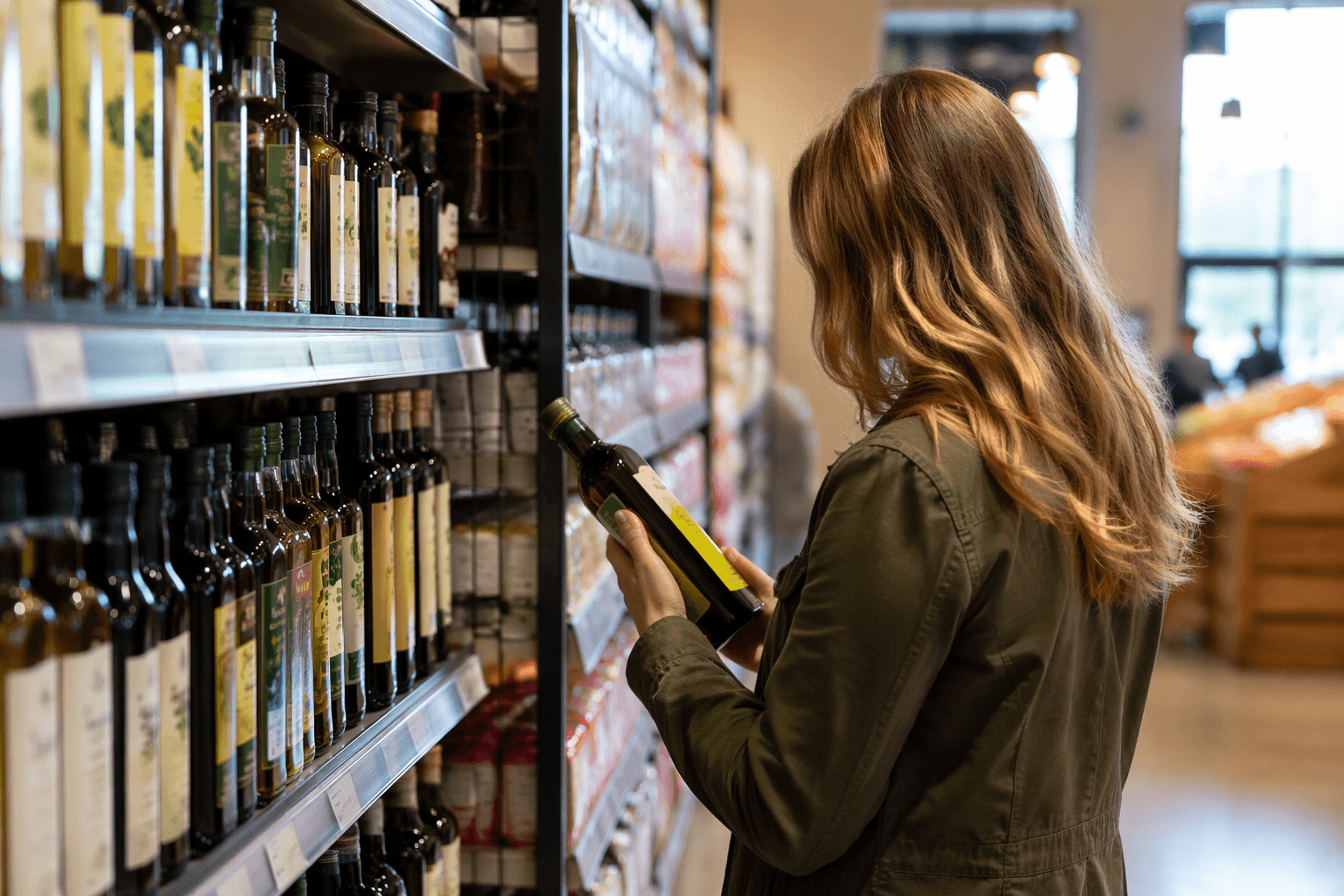
That broader backdrop lines up with a more global picture from the International Olive Council, which estimated world olive-oil production for the 2024/25 crop year could reach 3,375,500 tonnes, up 32% from the previous year. Those numbers help explain why a bottle of olive oil can swing in price even when nothing about the store itself has changed. For a Trader Joe’s crew member, the lesson is practical: what looks like a local pricing decision is often the retail end of an agricultural story playing out across the Mediterranean and beyond.
What this means for the floor
This is where Trader Joe’s pricing philosophy becomes a workplace issue, not just a consumer one. Customers are more value-conscious now, and general food inflation has kept pressure on how people judge every grocery trip. The USDA’s Economic Research Service said the all-food consumer price index rose by an average of 2.6% per year in 2024 and 2025, which helps explain why shoppers are scrutinizing prices more closely than they did when inflation was quieter.
For crew members, the upside of Trader Joe’s approach is that it gives you a coherent answer instead of a defensive one. If a shopper asks why a product costs more than it did, the explanation can be grounded in cost, supply, and quality rather than vague corporate language. If a shopper notices a price drop, that can be framed as proof that the company is willing to pass savings along when conditions allow. That turns a difficult conversation into a trust-building moment, which is a big deal in a store culture that depends on product knowledge and credibility.
Managers have a different angle on the same issue. A disciplined pricing system is easier to defend than a noisy promotional one, especially when shoppers are comparing everything more aggressively. The store wins when crews can connect quality, cost, and price in a way that feels specific and honest. In that sense, pricing is part of the customer experience just as much as samples, service, or product recommendations.
A philosophy built for a growing chain
Trader Joe’s is also trying to scale this message while it keeps expanding. The company said it opened 34 stores in 2024, and industry reporting in 2025 put it at roughly 579 stores across 42 states and Washington, D.C., with 21 more stores announced for the next six months. That kind of growth puts pressure on any operating philosophy, because more stores mean more chances for inconsistency if the message is not clear.
The chain’s long-term history suggests this is not a new invention. Former CEO Dan Bane said Trader Joe’s grew from 150 stores in 2001 to 547 stores in 2023, which shows how far the business has stretched while keeping its value pitch intact. The bigger the footprint gets, the more important it becomes for crew members to understand that the company is not just selling cheap goods or premium goods. It is selling a specific bargain between cost, quality, and trust, and that bargain only holds if the explanation stays as clear as the price tag.
This article was produced by Prism’s automated news system from verified source data, official records, and press releases, then run through automated quality and moderation checks before publishing. The system is built and supervised by the people who set the standards it runs under. Read our full AI policy.
Know something we missed? Have a correction or additional information?
Submit a Tip