Trader Joe’s faces margin pressure as producer prices jump again
Producer prices jumped 1.1% in May, tightening the margin math behind Trader Joe’s ordering, inventory, and shelf decisions.

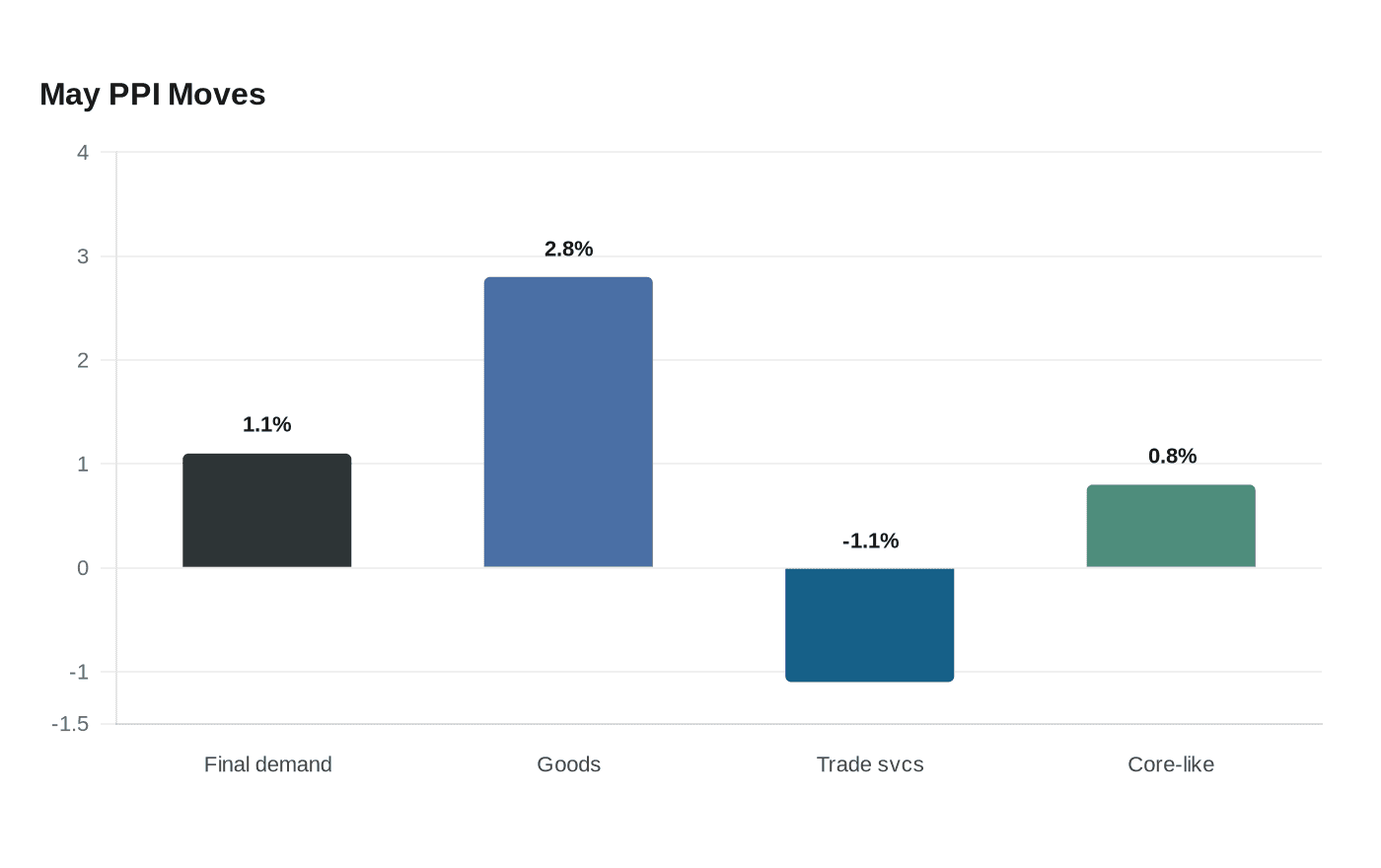
A new jump in producer prices is the kind of upstream squeeze grocery crews feel before shoppers do. The U.S. Bureau of Labor Statistics said final-demand prices rose 1.1 percent in May and 6.5 percent over the prior 12 months, the largest annual increase since November 2022. Nearly 80 percent of the monthly increase came from a 2.8 percent rise in goods prices, while final-demand trade-services margins fell 1.1 percent.
That trade-services drop matters because the index measures the margins wholesalers and retailers receive. In store terms, it points to tighter ordering, more scrutiny of shrink and labor hours, and more pressure on what gets featured in the weekly mix when every extra case has to earn its space. The BLS also said the core-like measure excluding foods, energy and trade services rose 0.8 percent in May, the largest gain since March 2022, and was up 5.1 percent over 12 months, the biggest rise since October 2022.

Economists surveyed by Dow Jones had expected a 0.7 percent monthly increase, CNBC reported, and Reuters tied part of the surprise to higher energy costs linked to Middle East tensions. For Trader Joe’s, where the selling story rests on value, private label, and a tightly edited assortment, that kind of cost pressure can show up quickly in ordering discipline, promo timing, and how much room a store has to absorb price changes without testing customer patience.
Trader Joe’s says it has been transforming grocery shopping since 1967, it does not sell many branded items, and more than 80 percent of what it sells is private label. The company also says it does not collect slotting fees, which makes upstream cost swings even more important in a model built on its own buying decisions and tasting-panel process. With 34 new stores opened across the country in 2024 and third-party location data putting the chain above 650 U.S. stores by late May, margin pressure now reaches a larger crew base, with California still its biggest market and workers often first to see the ripple effects in inventory, availability, and the tone of customer conversations at the register.
This article was produced by Prism’s automated news system from verified source data, official records, and press releases, then run through automated quality and moderation checks before publishing. The system is built and supervised by the people who set the standards it runs under. Read our full AI policy.
Did this article answer your question?