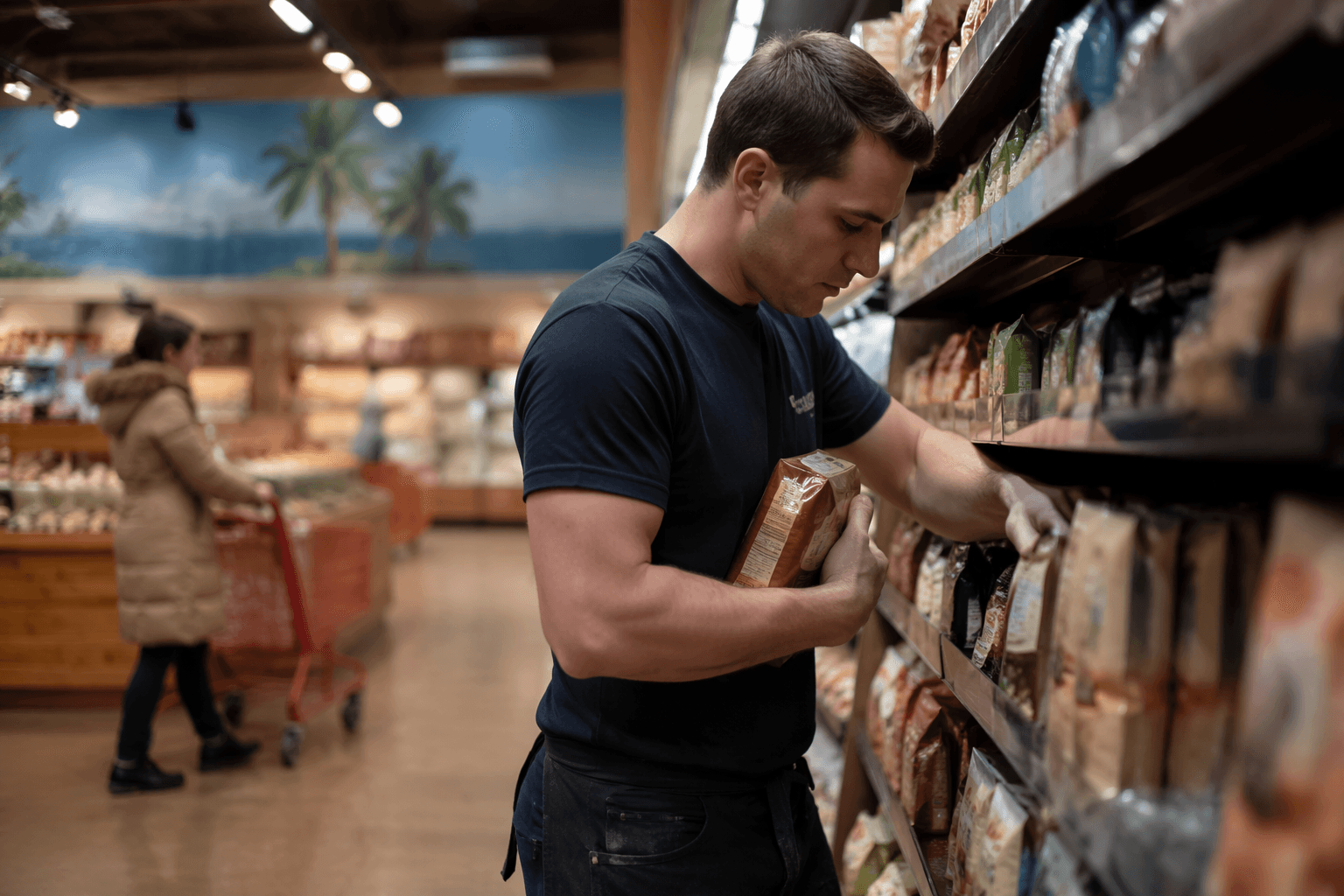
Trader Joe’s guides help crew turn products into meal ideas
Trader Joe’s Guides and Entertaining pages do more than sell products. They give crew a script for turning private-label items into meals, parties, and repeat customer conversations.

Why the guides matter on the floor
Trader Joe’s has always sold more than groceries. The company says it has been transforming shopping into a welcoming journey full of discovery and fun since 1967, and its Guides and Entertaining pages show how that promise works in practice. These pages do something a conventional circular usually does not: they translate a shelf of items into a finished dinner, brunch, BBQ, or casual gathering, which is exactly the kind of thinking crew members use every day on the floor.
That matters because Trader Joe’s merchandising depends on interpretation. A bottle of olive oil is not just oil when it is part of a dessert. A sauce is not just a condiment when it cuts a weeknight dinner from scratch work to something close to a shortcut. A basket of groceries is not just a basket; it is a solved meal or a solved party. The Guides pages give crew a ready-made vocabulary for that kind of selling, which makes product education part of customer service rather than an extra task.
How the format helps crew sell the store, not just the item
The Guides page turns products into use cases. In the current lineup, Trader Joe’s highlights an upside-down cake story and a congee guide, which is telling because neither one is a basic product pitch. Both ask the customer to imagine the item inside a meal, a technique that gives crew something concrete to say when a shopper only knows the product by name.
The Entertaining page does the same thing at the occasion level. Instead of asking shoppers what single product they want, it pushes them to solve a bigger problem: how to choose food for a BBQ or another gathering. That framing is useful on the sales floor because it matches the way many customers actually shop. They are not always hunting for one ingredient. They are trying to pull together a brunch spread, a weekend cookout, or a low-stress dinner that still feels like a plan.
For crew members, that means the guide pages can function like a conversation starter. A recommendation does not have to end at “try this.” It can become “here is how this fits with that,” which is often the difference between a fast transaction and a stronger basket.
Why private label makes this approach even more important
Trader Joe’s says more than 80 percent of the products it sells are private label, and the company’s product FAQ says it tastes everything before putting its name on it and offers only what it feels is extraordinary. That model gives the brand tight control over what lands on shelves, but it also means Trader Joe’s has to do more of the explaining itself.
When so much of the assortment carries the Trader Joe’s name, the company is not just a middleman between national brands and shoppers. It is the author of the product story. Guides and Entertaining pages fill that role by showing what a product does, where it fits, and why it belongs in a cart. That is one reason this style of content feels so different from a conventional supermarket ad, where the assumption is often that the shopper already knows the category and only needs a price.
The company’s own structure reinforces that point. Trader Joe’s says its office crew in Monrovia and Boston supports stores through merchandising, marketing, operations, HR, IT, and finance. In other words, the home office is part of the same machinery that shapes how products are presented, explained, and sold. The guides are not side content. They are part of the merchandising system.
What this means for daily customer conversations
The best use of the guide format is simple: borrow its logic in real time. A crew member who knows how to connect an item to a recipe or an occasion can move more naturally from cashiering to recommendation to sampling conversation. That is especially useful in a store where the assortment is curated, the private-label share is high, and the brand expects employees to be guides as much as sellers.
A practical floor conversation often looks like this:
- Start with the meal or event, not the item.
- Name the product’s role, such as shortcut, base, finish, or centerpiece.
- Add one or two companion items that complete the plan.
- Keep the pitch tied to a real use case, such as breakfast, weeknight dinner, BBQ, or a party spread.
That approach reflects how the company already tells its own story. The homepage highlights unique groceries, recipes, and shopping tips as part of a fun, welcoming experience. The guides simply give that same experience a more usable form for the aisle.
The company is building a bigger storytelling machine
This content strategy is not happening in a vacuum. Trader Joe’s said it opened 34 new stores in 2024, and the chain continues to expand nationwide. At the same time, it published the 17th annual Customer Choice Awards winners in January 2026, which shows how systematically it turns products into stories customers can follow. The awards do not just identify popular items. They reinforce the same logic as the guides: the product matters because of how people use it and why it fits their lives.
That also helps explain why guide-style content has momentum. A growing chain needs a way to help customers understand unfamiliar items fast, especially when many of those items do not have the brand recognition of national labels. The more stores Trader Joe’s opens, the more valuable that interpretive work becomes. The more the company leans on house brands, the more it has to show customers how those products assemble into actual meals.
The larger lesson for crew is straightforward. The guides are not just marketing fluff sitting online for shoppers to browse at home. They are a model for how to talk about the assortment in the store, one product at a time and one meal at a time. In a chain built around discovery, that is not decoration. It is the job.
This article was produced by Prism’s automated news system from verified source data, official records, and press releases, then run through automated quality and moderation checks before publishing. The system is built and supervised by the people who set the standards it runs under. Read our full AI policy.
Did this article answer your question?