Trader Joe’s safety culture depends on reporting hazards, training crew members
Trader Joe’s safest stores are the ones where crew members flag small hazards fast, because the ordinary tasks are where the injuries start.
The hazards hide in plain sight
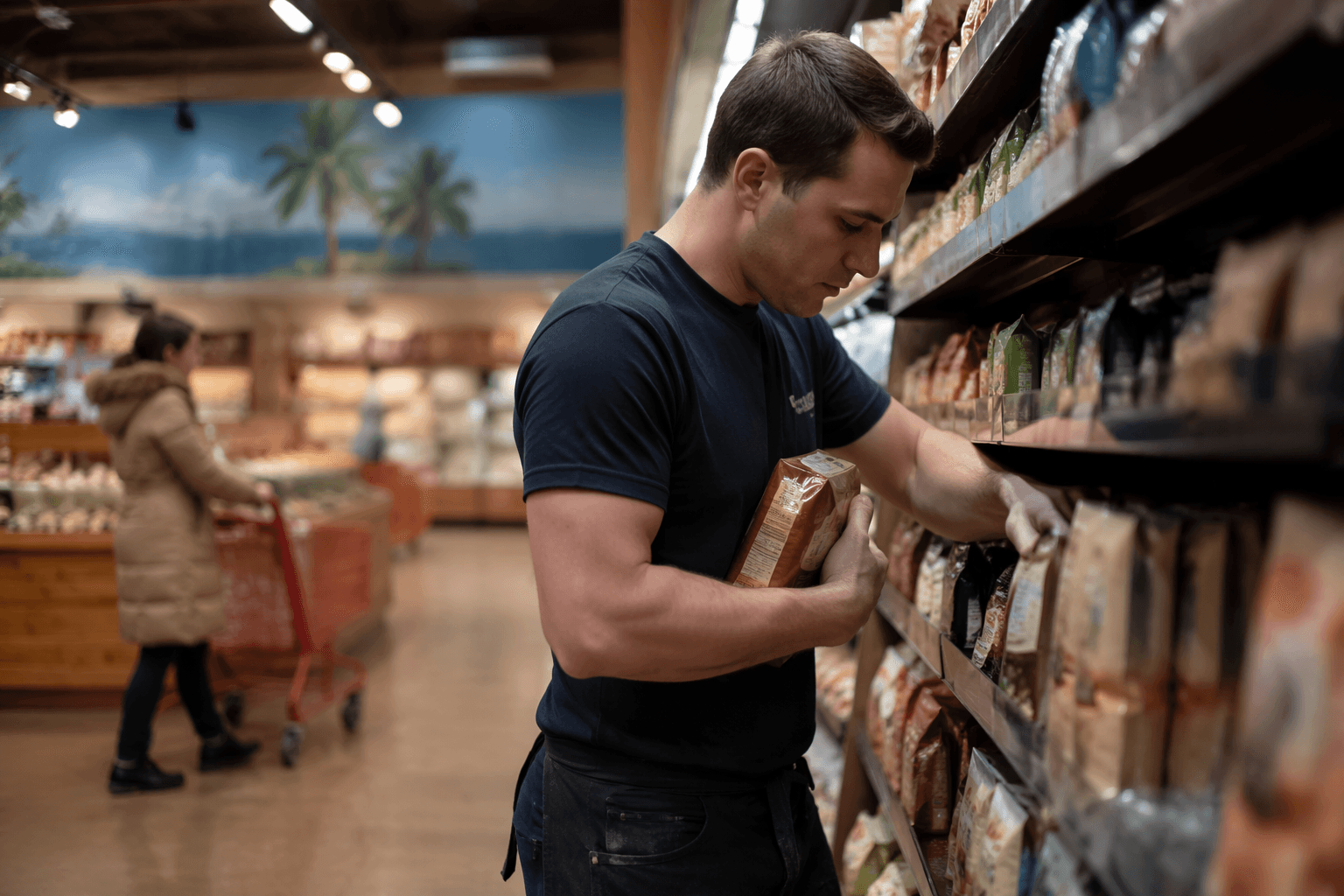
Trader Joe’s work looks routine until you count how much of the day happens on your feet, under time pressure, and in tight spaces. Crew members spend hours lifting boxes, moving carts, stocking shelves, navigating wet floors, and working around sharp tools, refrigeration units, and crowded aisles. That mix makes grocery work less dramatic than construction or warehouse labor, but not less safety-critical.
The injuries that most often show up on the floor are the ones people underestimate. Back strain can come from a bad lift done in a hurry. Slips and trips can start with a spill, a piece of clutter, or a pallet left where it should not be. Repetitive stress builds quietly through scanning and stocking until a shoulder, wrist, or lower back starts sending warning signs. Food-safety mistakes can also become workplace problems, creating hygiene issues, customer complaints, and extra cleanup that slows the whole crew down.
Report the small problem before it becomes the big one
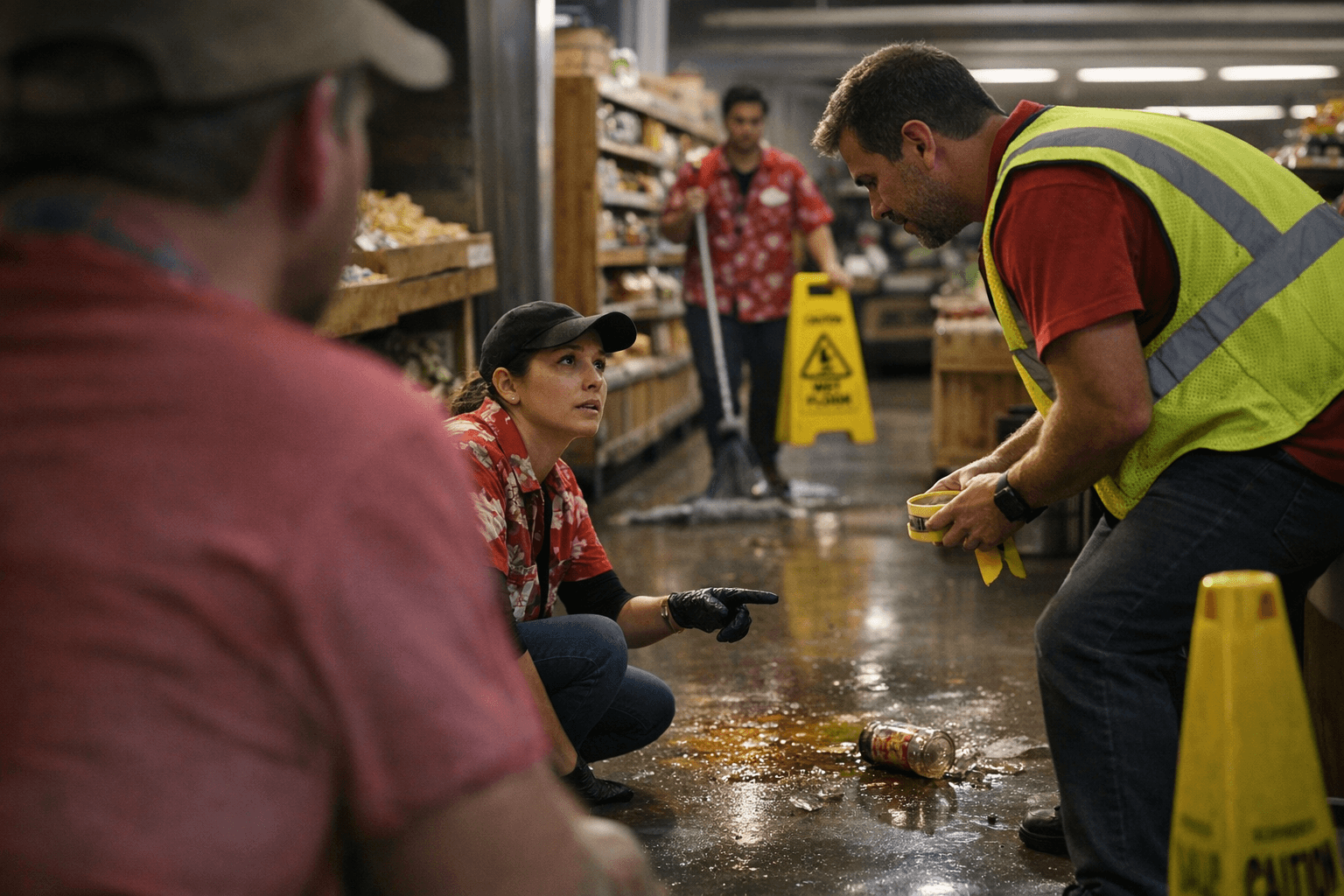
A strong safety culture starts with speaking up early. If a box is stacked badly, a spill is not fully cleaned, a pallet blocks an aisle, or a cooler door is malfunctioning, do not assume someone else will catch it. In a busy store, that kind of silence is often what turns a minor issue into an injury, a damaged product, or a schedule disruption.
The safest stores make reporting feel normal, not dramatic. They understand that hazards do not need to be serious to matter. A wet patch near the dairy cooler, a wobbly stack in the back room, or a blocked pathway in a crowded stock area can create the exact kind of moment where someone twists wrong, drops a case, or takes a fall.
- A spill that has not been fully cleaned and dried
- A box stack that looks unstable or too high
- A pallet or cart blocking an aisle or exit path
- A cooler, freezer, or refrigeration door that is not working correctly
- A sharp tool, damaged package, or broken item that could cut or contaminate
- Any back-of-house walkway crowded enough to force awkward movement
Report it quickly when you see:
Speaking up early protects your body and your schedule. The longer a hazard sits there, the more likely it is to create an injury that keeps someone off the floor.
Training is what turns speed into safe work
Speed matters in grocery, especially in a store built on quick turns, busy aisles, and constant stocking. But safety should never be sacrificed to save a few minutes. The crew member who is trained to slow down for one task often saves the whole team from an incident that would cost far more time later.

New employees need clear, repeatable instruction on the basics. Proper lifting technique matters when cases are heavy or oddly shaped. Asking for help matters when a box is too bulky, too awkward, or too high to manage safely alone. Ladder use matters because rushing up and down one-handed is how small mistakes become falls. Even minor injuries on the floor need a response plan, because a cut that is ignored can become a bigger problem for both the employee and the store.
Repetitive stress deserves the same attention as the obvious hazards. Scanning, stocking, and handling merchandise for long stretches can wear down joints and muscles that never get a full break during a shift. Training should teach crew members not only how to move product, but how to recognize fatigue before it becomes a strain that lingers for days.
Food handling is part of safety, not separate from it
In a grocery store, product safety and worker safety overlap every day. If an item is damaged, temperature-sensitive, or contaminated, there are procedures for isolating it and discarding it. Following those rules protects customers, but it also keeps crew members from handling questionable product twice, moving it through the store unnecessarily, or cleaning up a preventable mess later.
That discipline matters in the small decisions that happen constantly. A product that has been warmed, punctured, or exposed should not be pushed back into the case as if nothing happened. Temperature-sensitive items need to stay within the right range. Damaged packages need to be separated quickly. Crew members who understand those rules help prevent the kind of hygiene issue that can turn into a complaint, a refund, or a more serious store problem.
Personal habits matter too. Good footwear reduces the risk of slips and fatigue. Hand hygiene protects both the crew and the food. Clear walkways in back-of-house areas make it easier to move quickly without twisting around hidden obstacles or carrying a box through a bottleneck.
A safe store is one where people can work hard without getting hurt
Trader Joe’s culture depends on crews that can move fast, stay sharp, and take pride in doing the job well. That kind of pride holds up only when the store treats safety as part of the work, not an afterthought. The best protection is not a slogan. It is a habit: learn the store’s procedures, use them consistently, and raise the alarm the moment something looks off.
That is especially true for injuries. Never treat pain, cuts, strains, or near-misses as just part of the job. A workplace earns trust when people know they can work hard without getting hurt, and when the response to a hazard is quick enough to prevent the next one. In a busy Trader Joe’s store, that standard is not extra credit. It is the baseline that keeps the crew moving.
This article was produced by Prism’s automated news system from verified source data, official records, and press releases, then run through automated quality and moderation checks before publishing. The system is built and supervised by the people who set the standards it runs under. Read our full AI policy.
Did this article answer your question?