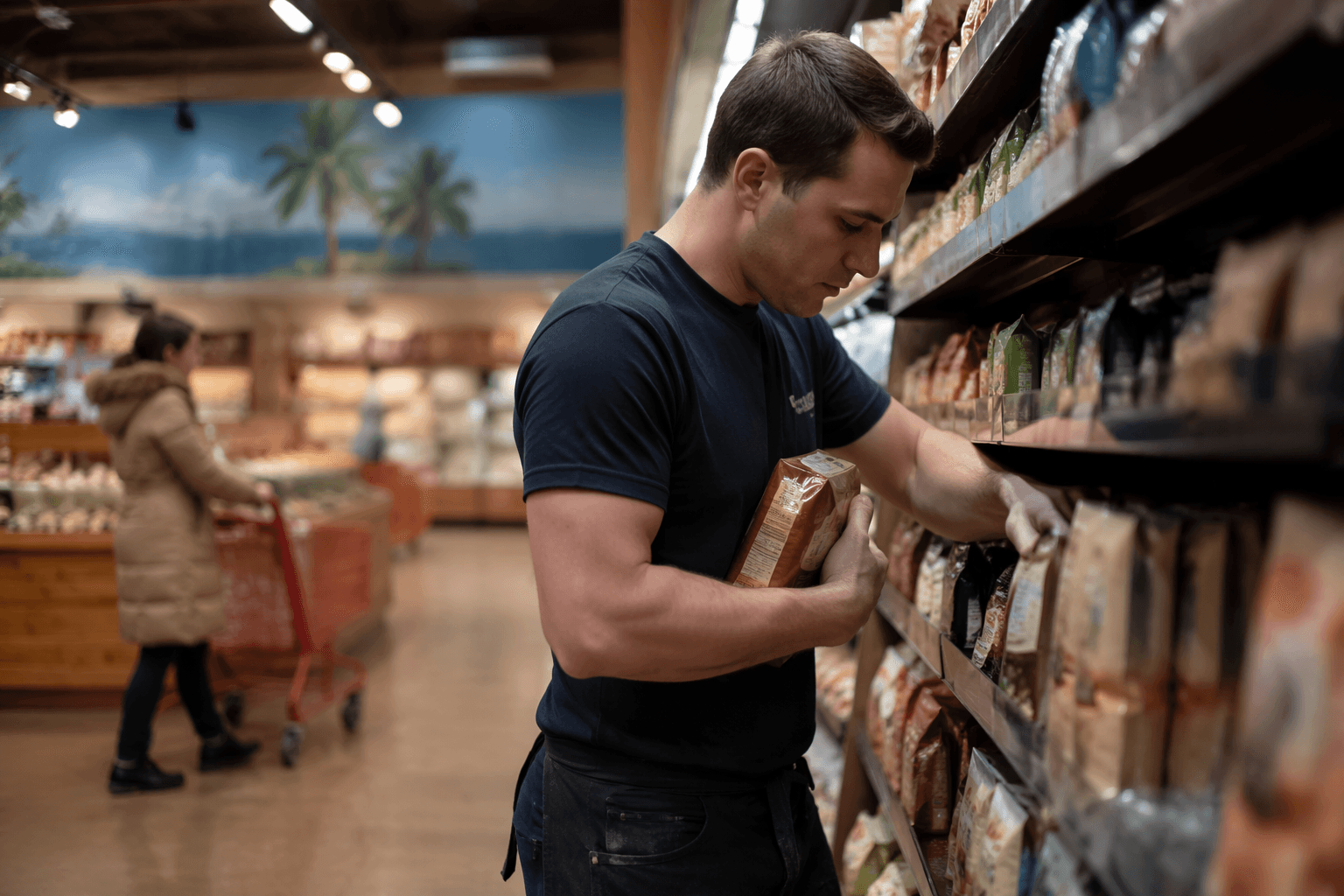
Trader Joe's store personality still matters as shoppers mix channels
Trader Joe’s personality is a business requirement, not a branding flourish. FMI’s latest shopper data shows why crew interaction, curation, and speed now shape loyalty.
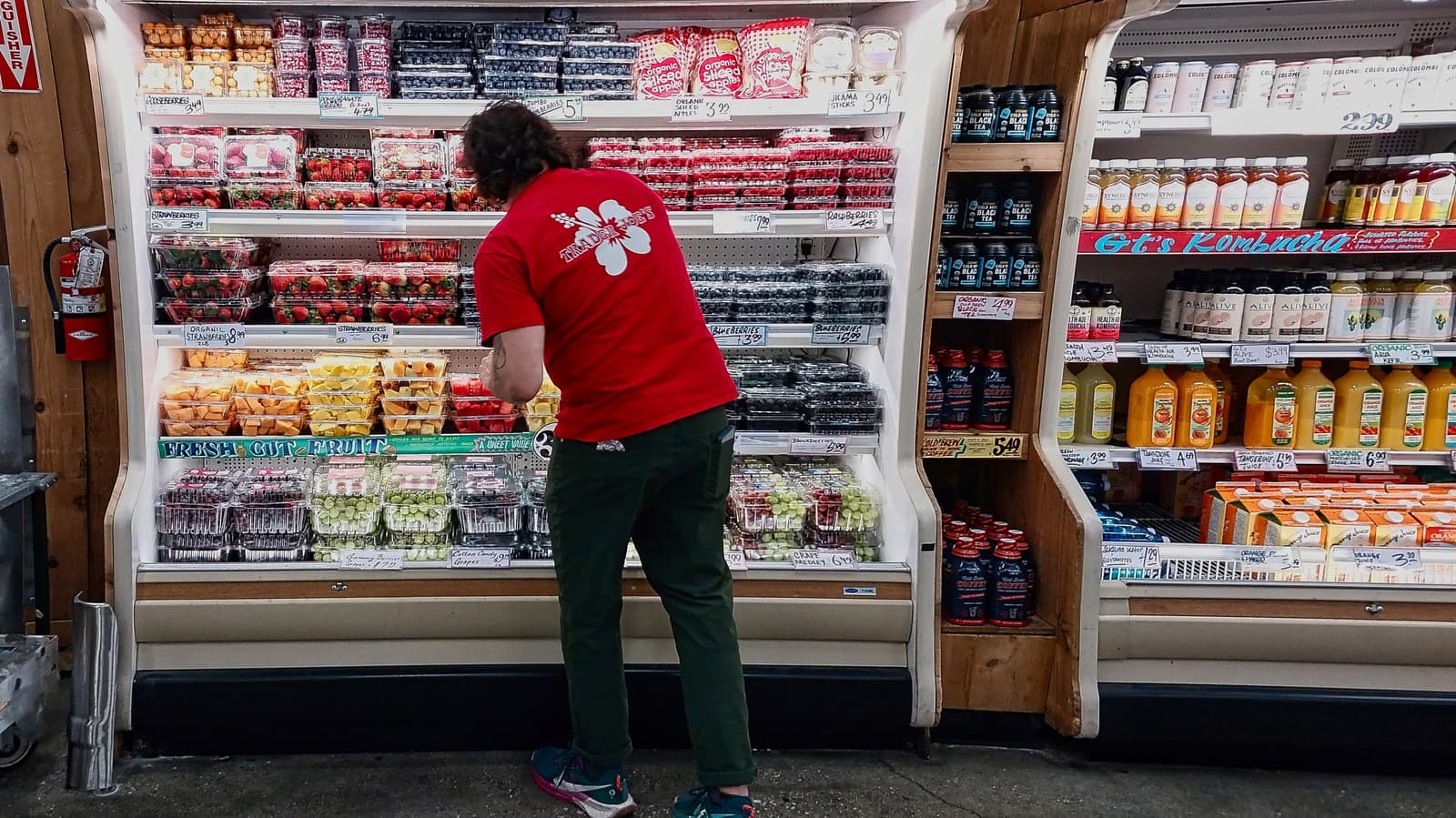
Personality is now part of the operating model
Trader Joe’s has always sold more than groceries, and FMI’s latest shopper data helps explain why that still works. The trade group says consumers visit more than five separate grocery banners on average each month, which means shoppers are comparing stores constantly and gravitating toward the ones that feel useful, distinctive, and easy to navigate.
That is where Trader Joe’s gets an advantage, but it also takes on a responsibility. If the store’s appeal rests on personality, then crew members and managers are the ones who have to deliver it in a measurable way: through helpful interactions, clear signage, fast enough service, and a floor that feels curated rather than generic. In Trader Joe’s terms, personality is not decoration. It is part of the job.
What FMI says shoppers still want from the physical store
FMI’s 2026 Grocery Shopper Trends report, released on May 20, says the physical store is not disappearing. Shoppers still find meaning, enjoyment, control, and efficiency in shopping in person, especially in fresh departments like produce and meat. The report also says 77% of grocery shoppers use digital technology before shopping and 71% use it while shopping, which shows how blended the trip has become: shoppers research online, then still want the store to do something the screen cannot.
The clearest sign of that is what people say they would miss if they could not shop in person. FMI says the biggest loss would be selecting products, cited by 48% of shoppers. Human connection and enjoyable experiences were each at 22%, followed by store selection at 21%, lower cost at 20%, discovery at 17%, and ease of shopping at 15%. That list reads like a direct challenge to retailers: if the store is going to matter, it has to offer more than inventory.
Why Trader Joe’s is built for this moment
Trader Joe’s has spent decades leaning into exactly those in-store advantages. The company says it has been transforming grocery shopping into a welcoming journey full of discovery and fun since 1967. It also says it does not use sales, coupons, loyalty programs, or membership cards, and instead relies heavily on its own label, creative signage, and friendly crew members to create a sense of adventure, humor, and community.
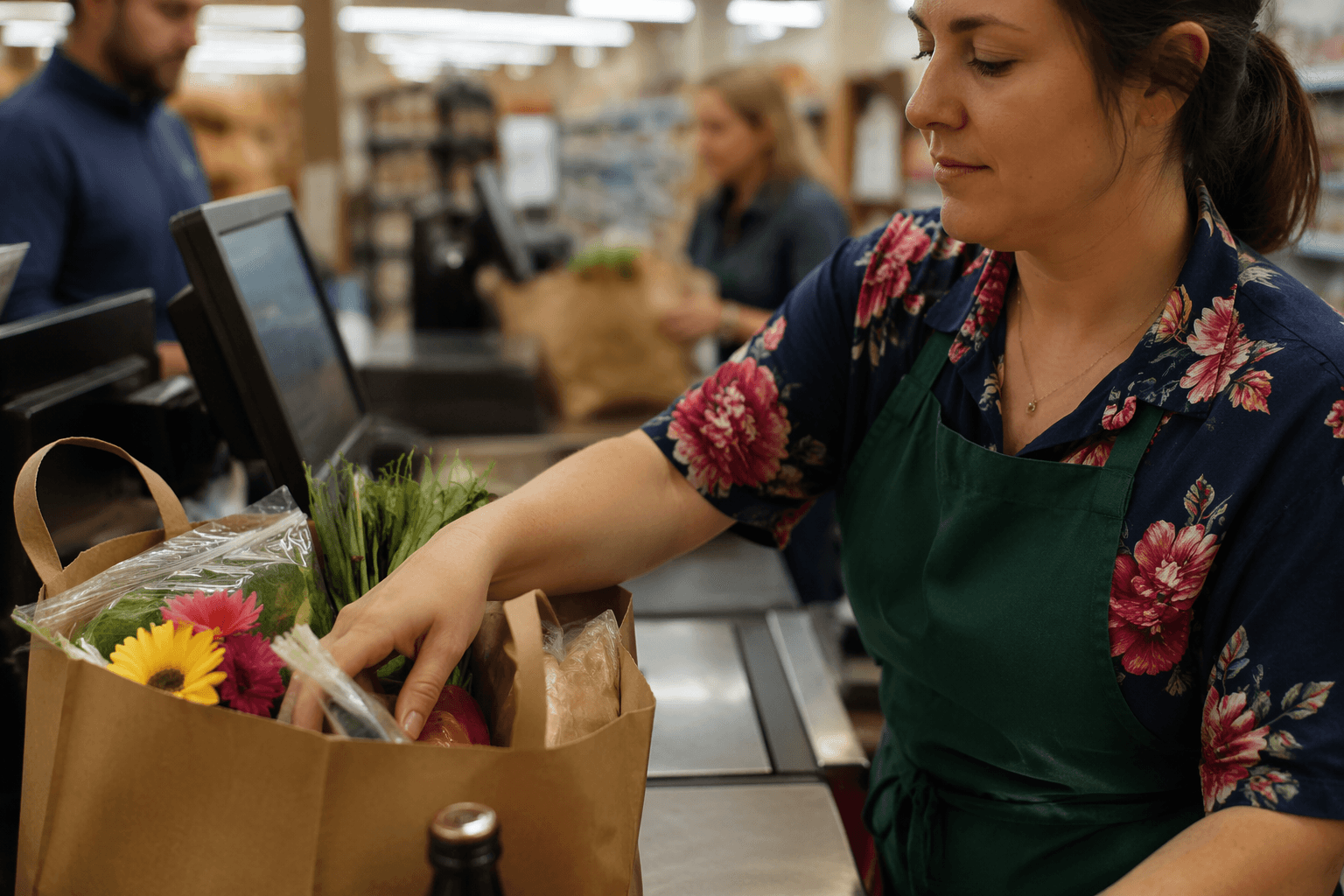
That model lines up neatly with what FMI says shoppers still value. Trader Joe’s does not win by offering every brand on the shelf or by making the trip feel like a generic stock-up run. It wins when crew members can explain products, suggest pairings, and make the store feel like a place where discovery is easy. In a market where shoppers are bouncing between more than five banners each month, that human layer can decide whether Trader Joe’s becomes a routine stop or just a novelty visit.
What “store personality” actually demands from crew
For workers, personality sounds soft until it hits the floor. At Trader Joe’s, it means the store has to function as a highly legible, high-touch environment, even when the assortment is smaller and the format is compact. Crew members are expected to keep the experience warm without letting it get chaotic, to answer questions quickly, and to make limited selection feel intentional instead of sparse.
That creates real workplace expectations. Crew members need enough product knowledge to talk through unfamiliar items, enough floor presence to help shoppers find what they need, and enough consistency in tone that the store feels welcoming across shifts. Managers, in turn, have to balance service with labor, because a personality-driven store still depends on staffing levels that let people be available, not just present.
The FMI findings make that balance more important. If shoppers prize efficiency, confidence, and control in store, then a crowded floor, missing signage, or overextended crew can erase the very thing that differentiates the chain. Trader Joe’s personality only works if the team can keep it steady during peak traffic.
Why the model still depends on curation, not just charm
Trader Joe’s appeal also comes from how tightly it curates the shopping trip. The chain’s heavy use of private label products, limited assortment, and informative signage creates a store where crew recommendations matter more than a sprawling aisle of choices. That is a strength, but it also means the customer experience is unusually dependent on execution.
If shoppers are using digital tools before and during the trip, they are not entering the store blind. They have already compared prices, checked lists, or searched for specific items, and they are looking for the store to close the loop. Trader Joe’s has to deliver the part digital cannot: product discovery, quick human help, and the sense that the store knows what it is about.

That is also why the chain’s tone matters. A well-run Trader Joe’s store is not just clean and stocked. It feels coherent. The signage has to be informative, the crew has to sound confident, and the pace has to stay brisk enough that the experience feels easy rather than theatrical.
Growth makes the personality test harder
Trader Joe’s has been expanding fast enough that consistency is becoming a bigger operational issue. Progressive Grocer reported that the chain opened 34 stores in 2024 and planned dozens more in 2025, with new locations in multiple states and Washington, D.C. ScrapeHero estimated that Trader Joe’s had 647 U.S. stores as of May 15, 2026, with California alone accounting for 208.
That scale matters because personality gets harder to preserve as a chain spreads. A small-format retailer can rely on local culture and crew energy when it has fewer stores, but 647 locations means the company has to reproduce the same feel across more markets, more hiring pools, and more management teams. The bigger the footprint, the more the personality has to be trained, not assumed.
The broader grocery mix still favors stores that feel distinct
FMI’s separate digital-engagement research adds another layer to the picture. The group says grocery shopping is increasingly a blend of store and screen, but in-store still accounts for about 80% of grocery sales while ecommerce is expected to drive most of the growth through 2028. That is not a story about the death of the store. It is a story about the store becoming the place where a brand proves itself.
For Trader Joe’s, that is the core test. Shoppers do not just want a transaction, they want a store with a point of view. If the company can keep crew interaction sharp, staffing adequate, and the floor consistent with its promise of discovery and fun, then personality stays a competitive advantage instead of a marketing line. In an era of mixed channels and constant comparison, that may be the clearest definition of loyalty the grocery aisle has left.
This article was produced by Prism’s automated news system from verified source data, official records, and press releases, then run through automated quality and moderation checks before publishing. The system is built and supervised by the people who set the standards it runs under. Read our full AI policy.
Did this article answer your question?