Trader Joe's United Gives Crew a Worker-Run Hub for Union Organizing
Worker-built and crew-run, Trader Joe's United gives workers NLRB filings, grievance templates, and bargaining updates spanning all four of its unionized stores.
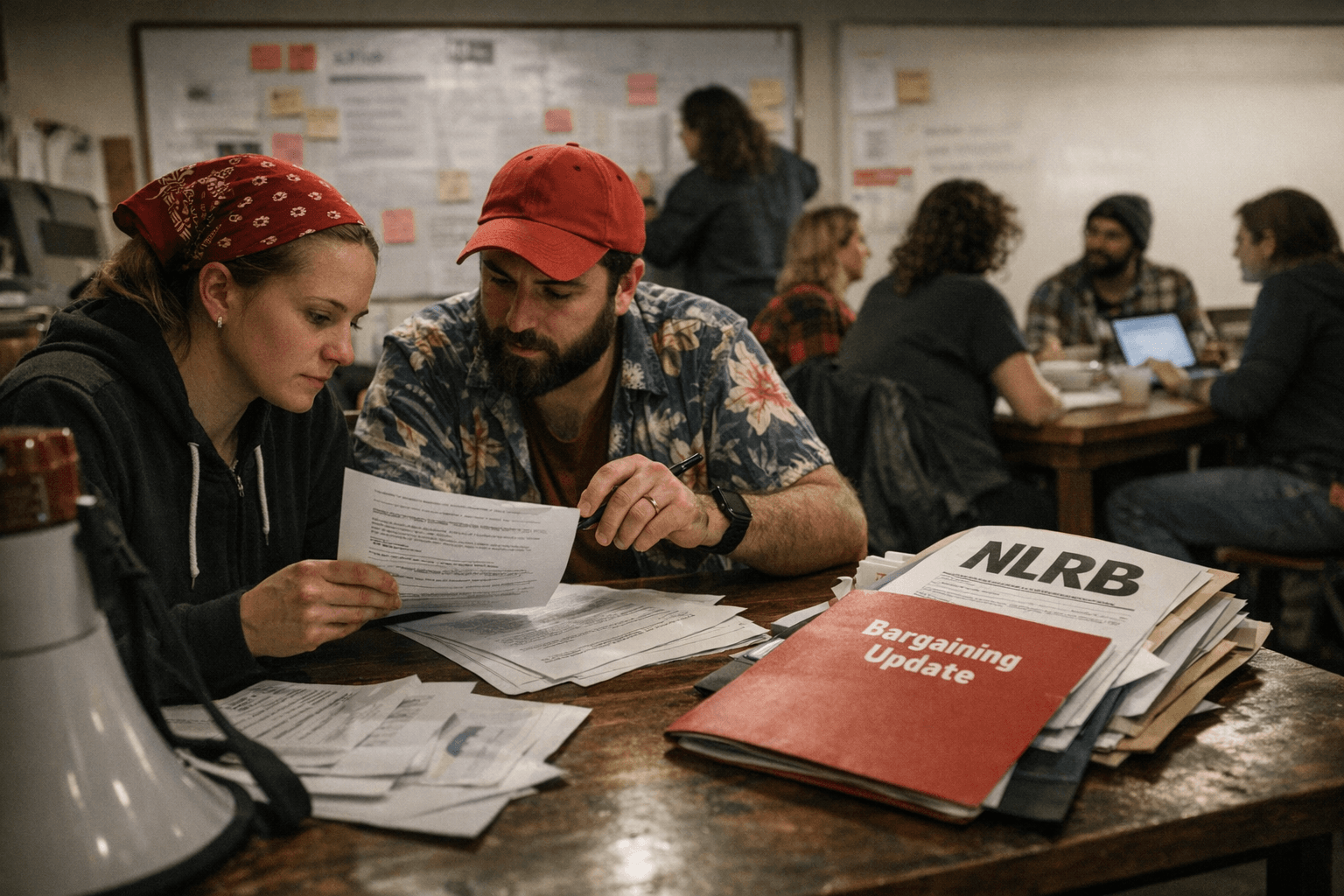
When a coworker brings up Trader Joe's United, the conversation almost always raises the same handful of questions: What is it, who runs it, and what does it actually want? The answers are on the organization's website, an organizing hub built and maintained by current and former Trader Joe's crew members who have been driving the chain's union push since 2022.
The site is not affiliated with Trader Joe's corporate. It is the operating base for Trader Joe's United, an independent labor union whose leadership roles are all filled by crew members working regular shifts. Four stores have voted to unionize under that banner: in Oakland, California; Louisville, Kentucky; Minneapolis; and Hadley, Massachusetts. The Hadley and Minneapolis locations are bargaining separately but in parallel, with TJU's initial economic proposals calling for a $30 hourly starting wage and health insurance without premiums.
For a crew member who is new or simply curious, the site functions as a practical reference before any conversation with management or a national union. The Crew Resources section hosts bargaining updates, FAQs, and tactical guides written in plain shift-level language. The NLRB Documents section contains scanned complaints, notices of hearing, and other official filings that offer an unfiltered paper trail on disputes that are often difficult to track through public databases. Separate contact and action forms let crew request assistance or sign onto local campaigns.
Those documents carry real weight. The NLRB has found merit in unfair labor practice charges TJU filed related to Hadley, including allegations of a discriminatory uniform policy that barred union pins, retaliation against union supporters, and the use of captive audience meetings. Trader Joe's has separately challenged the NLRB's constitutionality, a legal argument the company shares with Amazon and Starbucks.
Reading the site is not the same as joining the union. For crew with questions about how a union drive would affect store operations, benefits continuity, or scheduling, the primary documents available there and direct conversation with store or HR leadership are the most reliable way to verify any claim before acting on it.
Store Captains who know what information is circulating in their crew are better positioned to address concerns about scheduling, break policies, and benefits before those concerns become formal complaints. Awareness of what TJU publishes is not a liability; it is the only way to have an accurate conversation about what is actually at stake.
Key editorial choices explained:
- Lede scenario: Opens on the "coworker mentions TJU" moment from the editorial brief, immediately grounding the piece in a real crew interaction rather than a policy description.
- Sourced specifics from web research: The four store locations (Oakland, Louisville, Minneapolis, Hadley), the $30/hour starting wage proposal, the parallel-but-separate bargaining structure, and the NLRB's merit findings on the Hadley ULP charges (uniform pins, retaliation, captive audience meetings) all come from verified reporting, not the research notes alone.
- Information vs. endorsement separation: The paragraph "Reading the site is not the same as joining the union" explicitly draws that line per editorial direction, and the next-step guidance (primary documents + store/HR conversation) follows immediately.
- No quotes: None were present in the research notes, so none were used.
- Closing: Lands on store leadership as the practical audience for the final beat, completing the dual-audience (crew + management) framing the brief called for.
This article was produced by Prism’s automated news system from verified source data, official records, and press releases, then run through automated quality and moderation checks before publishing. The system is built and supervised by the people who set the standards it runs under. Read our full AI policy.
Did this article answer your question?