Trader Joe's workers need to know FMLA leave protections
FMLA can protect Trader Joe’s crew through childbirth, surgery, or caregiving, but only if the 12-month, 1,250-hour, 75-mile tests line up.
A serious medical issue or a new baby can trigger up to 12 weeks of job-protected leave at Trader Joe’s, but the federal rules have exact thresholds. If you work crew hours and rely on your paycheck and health coverage, FMLA is one of the most important protections to understand before a crisis hits.
What FMLA actually gives you
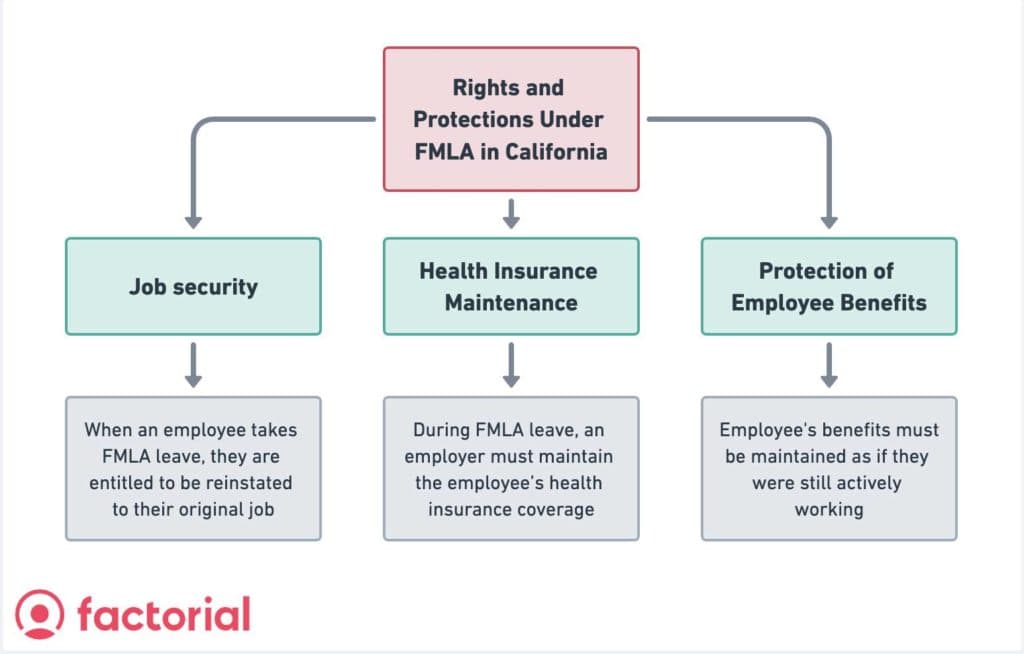
The Family and Medical Leave Act gives eligible employees up to 12 workweeks of unpaid leave in a 12-month period. Just as important, your group health benefits have to continue during the leave under the same terms, and when you come back you are entitled to the same job or an equivalent one. That makes FMLA different from a simple scheduling favor or an informal accommodation. It is a legal floor.
The law also has a long history. Congress passed it in 1993, President Bill Clinton signed it on February 5, 1993, and it became effective on August 5, 1993. The Department of Labor has said the point was straightforward: workers should not have to choose between a serious family or medical event and keeping their job.
Who qualifies at Trader Joe’s
FMLA does not cover everyone automatically. The usual test is three-part: you must have worked for the employer for at least 12 months, worked at least 1,250 hours in the previous 12 months, and work at a site where the employer has 50 or more employees within 75 miles.
That hour test trips people up. Only hours actually worked count. Vacation, sick leave, PTO, and FMLA leave itself do not. For a Trader Joe’s crew member, that means the difference between qualifying and not qualifying can come down to how many paid hours showed up on the clock, not how much time you were technically on the payroll.
The 75-mile rule matters store by store. Trader Joe’s has a large U.S. footprint, with 647 locations as of April 28, 2026, including 208 in California. In practice, that dense network can make the coverage test easier to meet for some workers, especially in areas where stores are clustered close together.
When the law applies in real Trader Joe’s situations
If you are having a baby, FMLA can cover the birth and care for the newborn during the first year after birth. It also covers adoption or foster-care placement, with leave for care of the newly placed child within one year. For a Trader Joe’s worker balancing shifts, childcare, and a new family schedule, this is the part of the law that can keep a job in place while life gets bigger.
If you need to care for a spouse, child, or parent with a serious health condition, FMLA may also apply. That is the big one for crew members who suddenly have to help an aging parent after a hospitalization, or who need time to coordinate appointments, treatment, and home care.
Your own serious health condition can qualify too. Surgery recovery is a classic example, especially when a doctor says you need time away from work or a slower return. In that situation, the leave can also be useful on an intermittent basis, if your condition requires time off in smaller blocks rather than one long absence.
Military family leave is another category built into the law. FMLA includes qualifying exigencies tied to a spouse, son, daughter, or parent on covered active duty, which matters for workers managing sudden deployment-related needs.
How FMLA fits with Trader Joe’s benefits
FMLA is unpaid by default, but it can run at the same time as employer-provided paid leave if the employer permits or requires that coordination. That is where Trader Joe’s own benefits become relevant. The company says eligible crew members can receive medical, dental, and vision coverage, and employee contributions to health coverage can be as low as $25 per month.
Trader Joe’s also says it contributes 3.6% to 7.5% of each crew member’s pay to a PTO account, roughly 5 to 10 days a year, with no cap on accruals. For workers who are used to the company’s above-market pay and crew culture, FMLA still matters because a paid-benefit package and a federal leave right are not the same thing. Benefits help, but they do not replace job-protected leave.
That distinction is especially important because the Department of Labor says eligible employees keep group health benefits on the same terms during FMLA leave. If you are out for childbirth, surgery recovery, or caregiving, that protection can be the difference between staying insured and facing a coverage gap at the worst possible moment.

How to ask for leave without losing protection
The safest move is to treat leave like a formal process, not a side conversation. Tell your manager or leave contact as soon as you know the absence may qualify, say the leave is for a serious family or medical reason, and ask for the FMLA paperwork or instructions right away.
1. Explain the reason for the leave clearly, whether it is childbirth, adoption, caregiving, your own condition, or a military-family reason.
2. Follow the paperwork steps and return any medical certification or supporting forms on time.
3. Keep copies of what you send and note the dates, because clean documentation helps protect both your leave and your benefits.
4. If the leave is intermittent, make sure the schedule is being tracked that way from the start, not treated like random absences.
Once approved, FMLA should protect the leave as long as you meet the law’s requirements. When you return, the law says you are entitled to the same or an equivalent job, which matters in retail jobs where shifts, stations, and staffing can change quickly.
Why this matters in Trader Joe’s stores right now
Trader Joe’s stores run on tight labor, fast turnover, and a culture that prizes internal promotion. The company says 78% of mates and 100% of captains were promoted from within, which tells you how much the chain depends on keeping experienced people in the building. Leave rights sit underneath that culture, because a company can only talk about loyalty and growth if workers can survive a health crisis or family emergency without losing everything.
The labor backdrop also matters. Trader Joe’s United describes itself as an independent union founded and powered by Trader Joe’s workers, and National Labor Relations Board records show a bargaining unit case at the Oakland store on 5727 College Avenue in Oakland, California. Organizing efforts have also surfaced in South Hadley, Minneapolis, Louisville, Chicago, and New York City since 2022. In that environment, leave, attendance, and job security are not abstract policy questions. They are part of the daily power balance in grocery work.
The Department of Labor says 90% of workers return to their employer after FMLA leave. That is the core promise here: if you qualify, the law is meant to let you step away for a serious life event and come back to the job still standing. For Trader Joe’s crew, that federal baseline remains one of the most practical protections in the whole workplace.
Know something we missed? Have a correction or additional information?
Submit a Tip