Walmart's strong sales keep value pressure on Trader Joe's chains
Walmart’s $165.6 billion quarter shows shoppers are still chasing value, a signal that could sharpen price questions and workload pressure on Trader Joe’s crews.

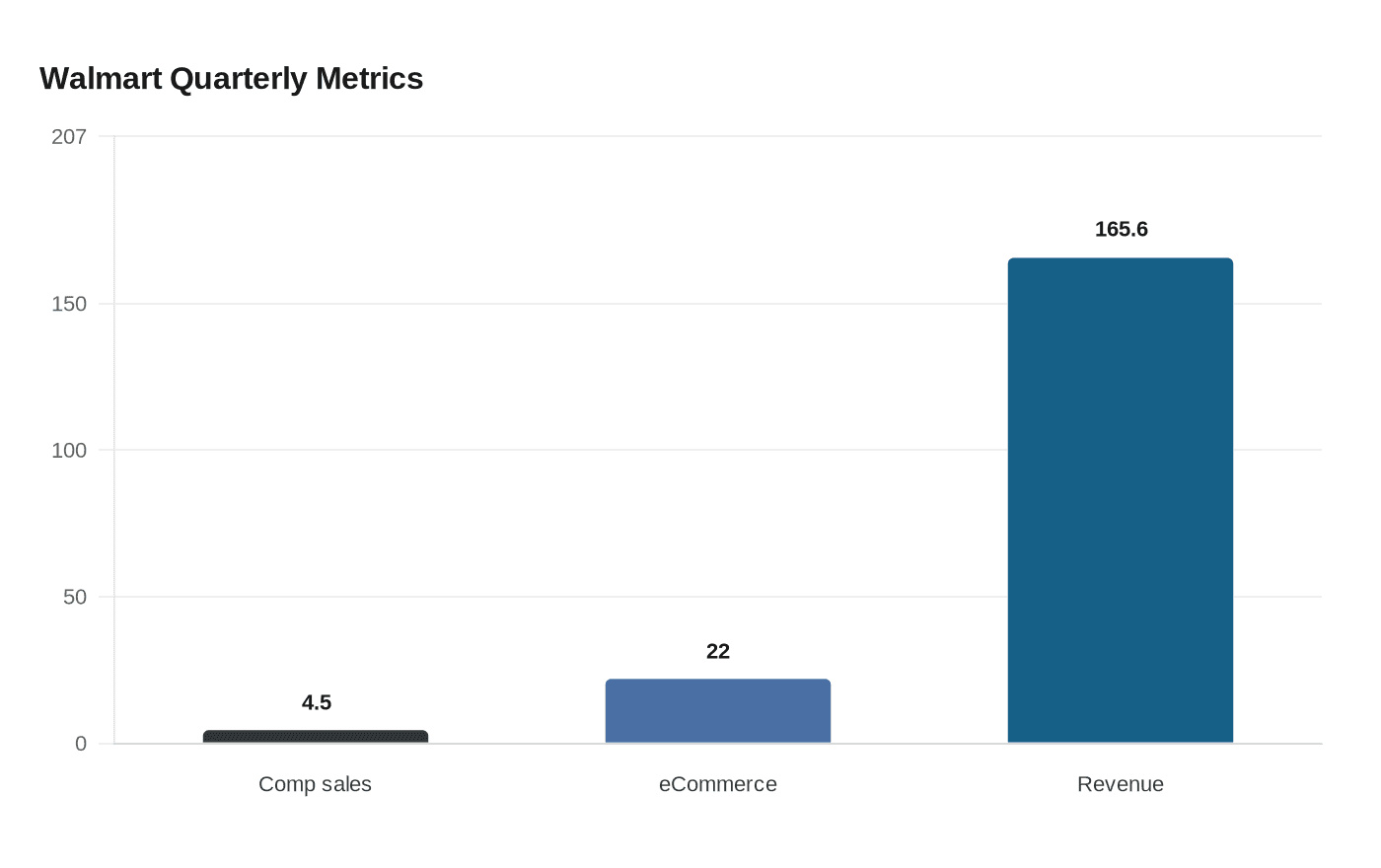
Walmart’s latest quarter sent a clear message to grocery rivals: value still sells, and it sells at scale. The Bentonville retailer reported U.S. comparable sales up 4.5% excluding fuel, revenue of $165.6 billion, and global eCommerce growth of 22%, with transaction counts and unit volume increases driving the gains.
That matters inside Trader Joe’s stores because Walmart remains the most powerful national benchmark for low-price competition. When Walmart posts strong traffic and basket growth even after a stretch of declining traffic, it reinforces the idea that many shoppers are still building their grocery trips around price, not just convenience or assortment. For Trader Joe’s crews, that can show up in more comparison shopping at the register, more questions about substitutes, and more pressure to explain why a basket at a specialty grocer costs more than the cheapest box-store options.

Trader Joe’s has built its case around a different kind of value. The Monrovia, California-based chain says it offers “outstanding value” through “the best quality products at the best everyday prices,” and it leans heavily on private-label items instead of branded goods. That model helps the company control pricing and keep the shelves distinct, but it also puts more weight on product curation, speed at the shelf, and crew knowledge when customers want a quick answer about an item, a swap, or a meal solution.
The broader retail lesson is less about one quarterly result than about the pressure it creates across stores. If Walmart can keep growing while pushing transaction counts and unit volume, other chains can feel the squeeze to sharpen labor efficiency, tighten pricing discipline, and move customers faster through the store. Trader Joe’s has so far resisted the heavily automated, self-checkout-heavy model some competitors use, which means its human-centered approach has to keep proving its worth in service, recommendations, and the pace of the floor.
That tension is especially relevant as Trader Joe’s keeps expanding. The company said on May 22 that a Tucson, Arizona, store would open Friday, May 29, and it said in a year-ahead note that it expected dozens of store openings in 2025. Third-party trackers put its store count in the low-to-mid 600s in early 2026. The chain has grown by selling a curated basket and a strong store culture, but a prolonged value war gives crews another reality to manage: more price-conscious shoppers, more operational pressure, and less room for error on every shift.
This article was produced by Prism’s automated news system from verified source data, official records, and press releases, then run through automated quality and moderation checks before publishing. The system is built and supervised by the people who set the standards it runs under. Read our full AI policy.
Did this article answer your question?