Why Trader Joe's Balances Shrink, Stockouts, and Labor Hours
Trader Joe’s floor pressure usually comes down to three numbers: shrink, stockouts, and labor hours. Knowing how they interact makes the rush, the reset, and the staffing decisions easier to read.
The three numbers behind the daily rush
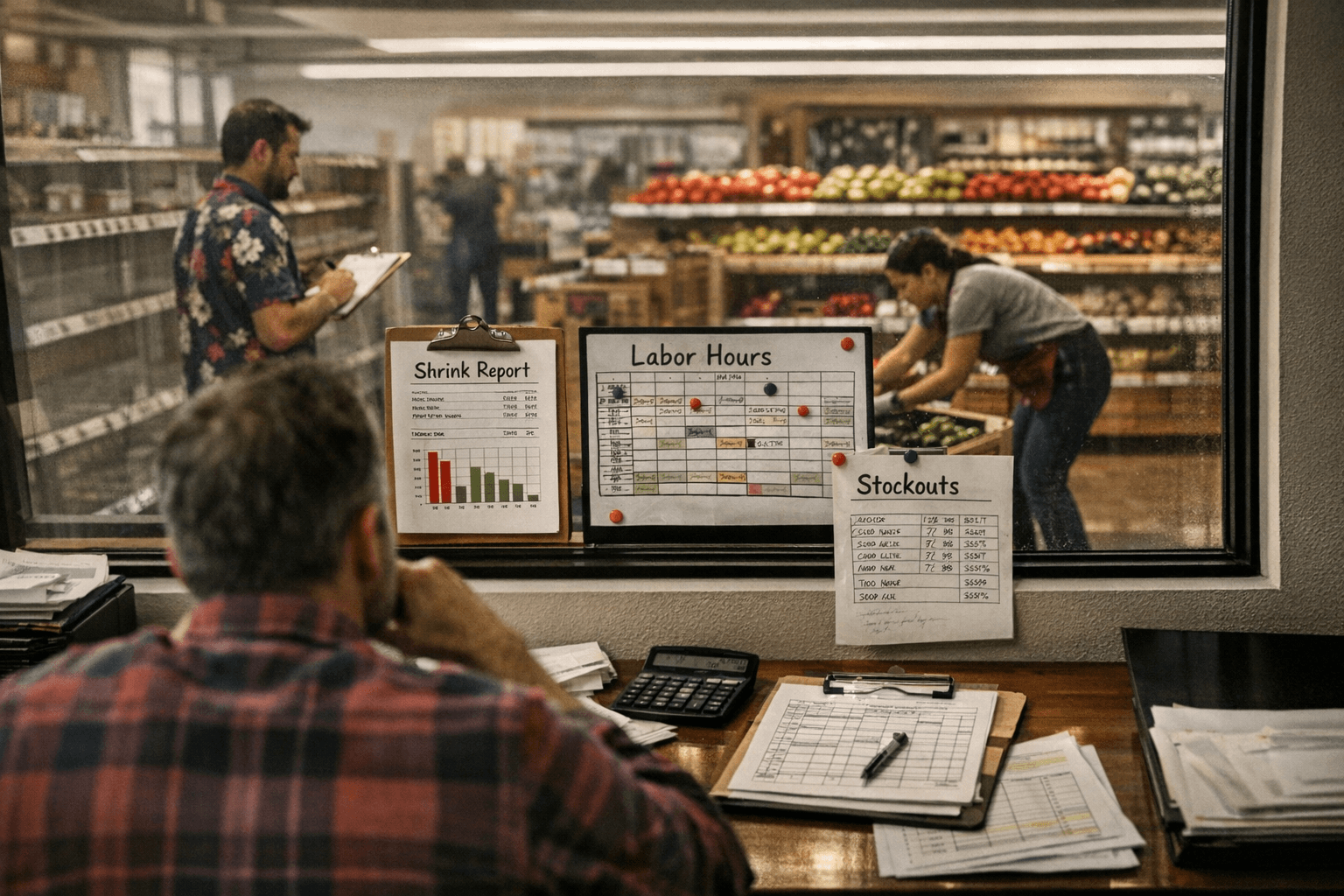
At Trader Joe’s, the pace of the day often looks simple from the floor: stock the shelf, ring the bell, clean the spill, help the customer. Underneath that routine sits a constant balancing act around shrink, out-of-stocks, and labor hours, three measures that shape almost every store decision.
Shrink is the value lost when product never makes it from the back room to a sale, whether because of spoilage, damage, theft, or inventory mistakes. Out-of-stocks are what happen when a customer reaches for an item that is not there. Labor hours are the paid time available to keep the store running. Put together, those numbers explain why a manager may push a crew to move faster in one moment and stand down in another.
Why managers watch shrink so closely
Shrink is more than a bookkeeping problem. In a grocery store with Trader Joe’s style of curated assortment and fast turnover, every case that spoils, every display that sits too long, and every count error that throws off replenishment cuts into the store’s margin. That is why the product with the shortest shelf life often gets priority, even when the rest of the floor feels busy.
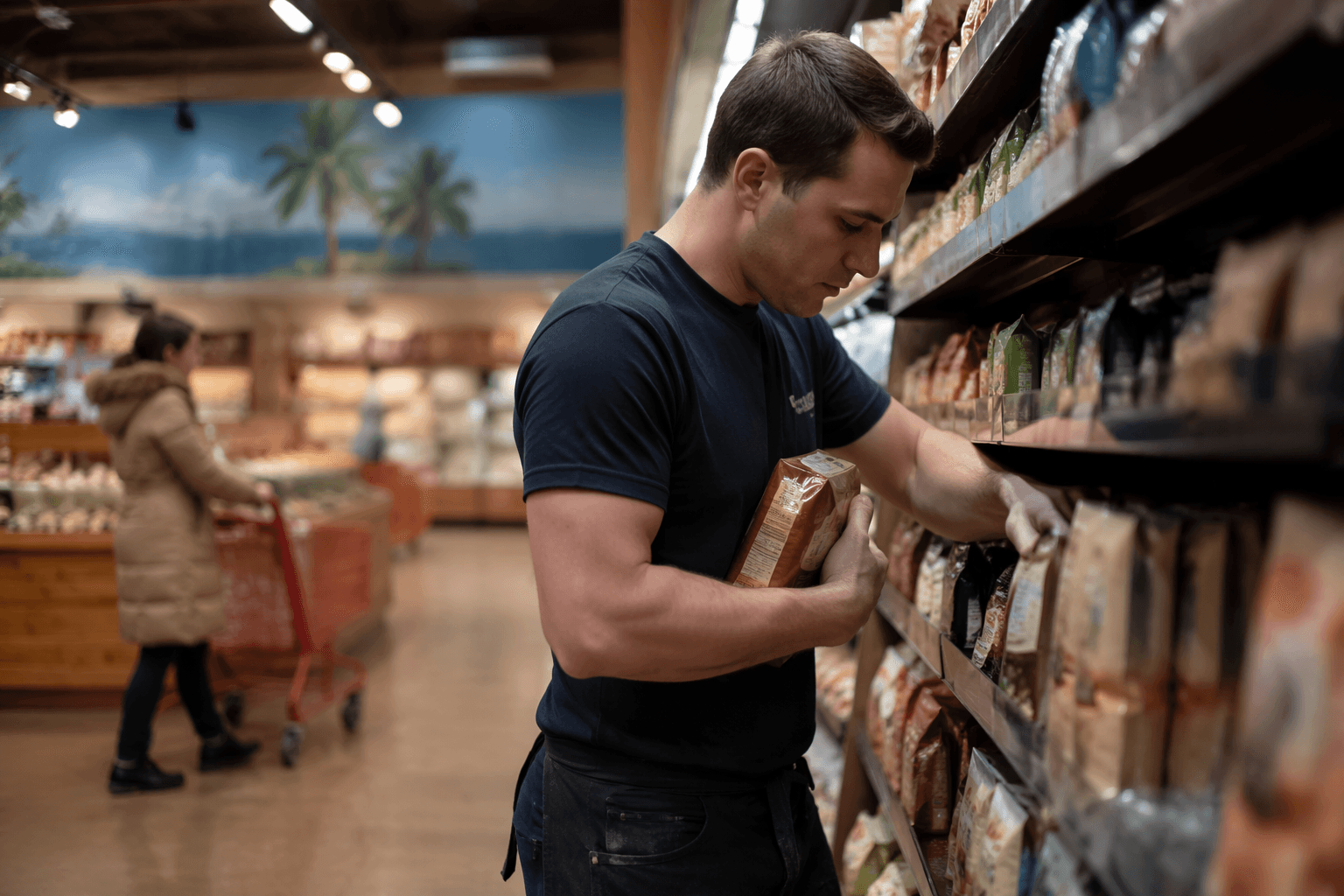
For crew members, shrink pressure shows up in the most ordinary tasks. It can mean rotating stock more carefully, breaking down a truck faster, pulling items before they turn, or making sure a seasonal endcap does not become a waste pile. The urgency around fresh product is not just a store preference, it is tied to public health as well. The FDA Food Code is the model regulators use for retail food stores, and it exists to provide a scientifically sound basis for food safety oversight.
Out-of-stocks are a customer-service problem and a labor problem
When a shopper cannot find a favorite item, the immediate reaction is usually frustration at the shelf. But out-of-stocks are also a signal that the store’s ordering, stocking, and timing are off somewhere. If the floor is understaffed, recovery slows down, pallets linger longer than they should, and the shelf can look empty even when product is already in the building.
That is why managers care about the timing of truck unloads, back-stock handling, and display maintenance. A store that looks busy but cannot keep the right products visible is failing in a very visible way. At Trader Joe’s, where the assortment is tight and customers often come in expecting specific seasonal or cult-favorite items, one gap on the shelf can feel bigger than it would in a larger conventional grocery store.
Labor hours determine how much the plan can actually happen
Labor hours are the budgeted paid hours that decide how many people can be scheduled and how long they can spend on the work. Cut them too deeply and the store may look efficient on paper, but the floor often tells a different story: messier aisles, slower service, missed recovery, and more out-of-stocks. Overstaff the store and the floor may look polished, but payroll can outrun sales.
That is the balance store leaders are trying to hit. The best-run grocery operation is usually not the one that looks the emptiest on labor or the one that has the most people walking around. It is the one where the store feels alive, the product is visible, and crew still have enough time to do the work correctly. In a service-heavy format like Trader Joe’s, where customer interaction is part of the brand, labor decisions land directly on the shopping experience.
Why the math is getting harder across grocery
The grocery business is not operating in the same way it did a few years ago. The Bureau of Labor Statistics has tied changes in grocery-store productivity to the rise of self-checkout, curbside pickup, online ordering, and other expanded services. Those additions change how labor gets used, because more tasks now compete for the same hours.
That pressure helps explain why demand forecasting matters so much. McKinsey says better forecasting can reduce both shrink and stockouts while helping grocers right-size inventory, space, labor, and capital. In plain terms, if a store gets demand right, it can order more accurately, avoid spoilage, keep the shelf fuller, and schedule labor where it will actually help. If the forecast is off, the store pays for it twice, once in wasted product and again in overtime-like scrambling or empty shelves.
What this means on the floor at Trader Joe’s
For crew members, the value of understanding these metrics is practical. If you know the business logic, you can tell which task matters most right now and why. A fast-turn item with a short shelf life deserves immediate attention. A truck that needs to be broken down before a rush may outrank a less urgent recovery project. A seasonal display that drives demand may matter more than a cosmetic reset in a slow corner of the store.
It also gives you a better answer when a customer asks why an item is gone or why a section is being reworked. The explanation is usually not arbitrary. It is the store trying to balance freshness, demand, labor, and the pace of shopping all at once. That is especially important at Trader Joe’s, where the shopping experience depends on a sense of discovery but also on the crew’s ability to keep a tight, high-turnover assortment moving.
Why these decisions feel especially sensitive at Trader Joe’s
Trader Joe’s has a reputation for above-market pay and strong crew culture, but it is also a private company, which means it does not disclose the same level of detailed financial and operational data as a public grocer. That makes store-level decisions feel opaque from the outside and sometimes even from inside the building. Industry estimates put the company at about 50,000 employees, so small shifts in scheduling and workflow affect a lot of people.
The labor backdrop also matters. Trader Joe’s has faced NLRB-related disputes and union-organizing conflict in multiple stores, with Trader Joe’s United playing a central role in the organizing push. Bloomberg Law also reported a part-time policy that required some workers to work at least three days a week, a rule critics said could reduce flexibility for school, caregiving, or other jobs. In that environment, labor hours are not just an accounting line. They are tied to how workers experience the job, how much control they have over their schedules, and how much strain lands on the crew when the floor gets busy.
The bottom line
Shrink, stockouts, and labor hours are the operating system of a Trader Joe’s store. Shrink tells managers whether product is being protected, stockouts show whether shoppers are finding what they came for, and labor hours determine whether the plan is even possible. Once you see how those numbers interact, a lot of day-to-day pressure starts to make sense: the urgency on truck day, the push to keep shelves full, the constant recalibration of who does what and when.
That is why these metrics matter so much. They are not management jargon floating above the store. They are the reason the floor looks the way it does, the reason some tasks jump to the front of the line, and the reason every hour has to earn its place.
This article was produced by Prism’s automated news system from verified source data, official records, and press releases, then run through automated quality and moderation checks before publishing. The system is built and supervised by the people who set the standards it runs under. Read our full AI policy.
Did this article answer your question?