Iran Tensions Spark Gas Shortages, Threatening Glass Supply for Walmart Shelves
Zero glass containers shipped from India's "Glass City" to U.S. retailers in March, and prices are already up 20 percent.

The drinkware aisle gap won't come with a warning. But the numbers out of Firozabad, India's glass manufacturing capital, made the trajectory clear: factories cutting output by 40 to 50 percent, prices rising nearly 20 percent, and not a single container shipped to American retailers in March.
Firozabad, a city in the northern state of Uttar Pradesh with a four-century tradition of glassmaking, lost its fuel supply when the Iran conflict disrupted tanker traffic through the Strait of Hormuz in March 2026. India imports a large share of its liquefied petroleum gas from Gulf states including Qatar and Saudi Arabia. With those shipping lanes severed, the Indian government rationed available gas, directing it toward households and transportation fuel rather than industry. Glass furnaces, which require continuous heat and a steady fuel supply to operate, were among the first industrial users cut off.
The impact landed hard at individual factories. Nitin Agarwal, CEO of Fine Art Glass Works in Firozabad, cut production by 40 percent and raised prices to compensate. "We've cut production and increased prices by 17-18%," he said. Ankur Mittal, manager at Shri Indra Scientific Glass Works, described a sharper situation: "We have had a 50 per cent cut in production. Our plant is running at about half capacity." Mukesh Kumar Bansal, a Firozabad manufacturer who supplies retailers in the United States and Europe, said output at his factory dropped by more than a third. "Usually from March to August we ramp up for Christmas and Halloween orders," Bansal said. "This year, not a single container has moved in March."
The Brewers Association of India, which represents Heineken, Anheuser-Busch, and Carlsberg, estimated that glass bottle prices surged around 20 percent across the market. Bloomberg reported the shortage was creating ripple effects from liquor companies to global retailers including Walmart.
Shipping added a second squeeze. India, unlike Japan, South Korea, and Taiwan, depends on Gulf shipping routes to move its exports. Vessels rerouted via the Cape of Good Hope to avoid the Strait of Hormuz add 10 to 14 days per trip while pushing up freight and insurance costs. India's manufacturing PMI fell to its lowest point in nearly four and a half years in March, according to an HSBC flash survey.
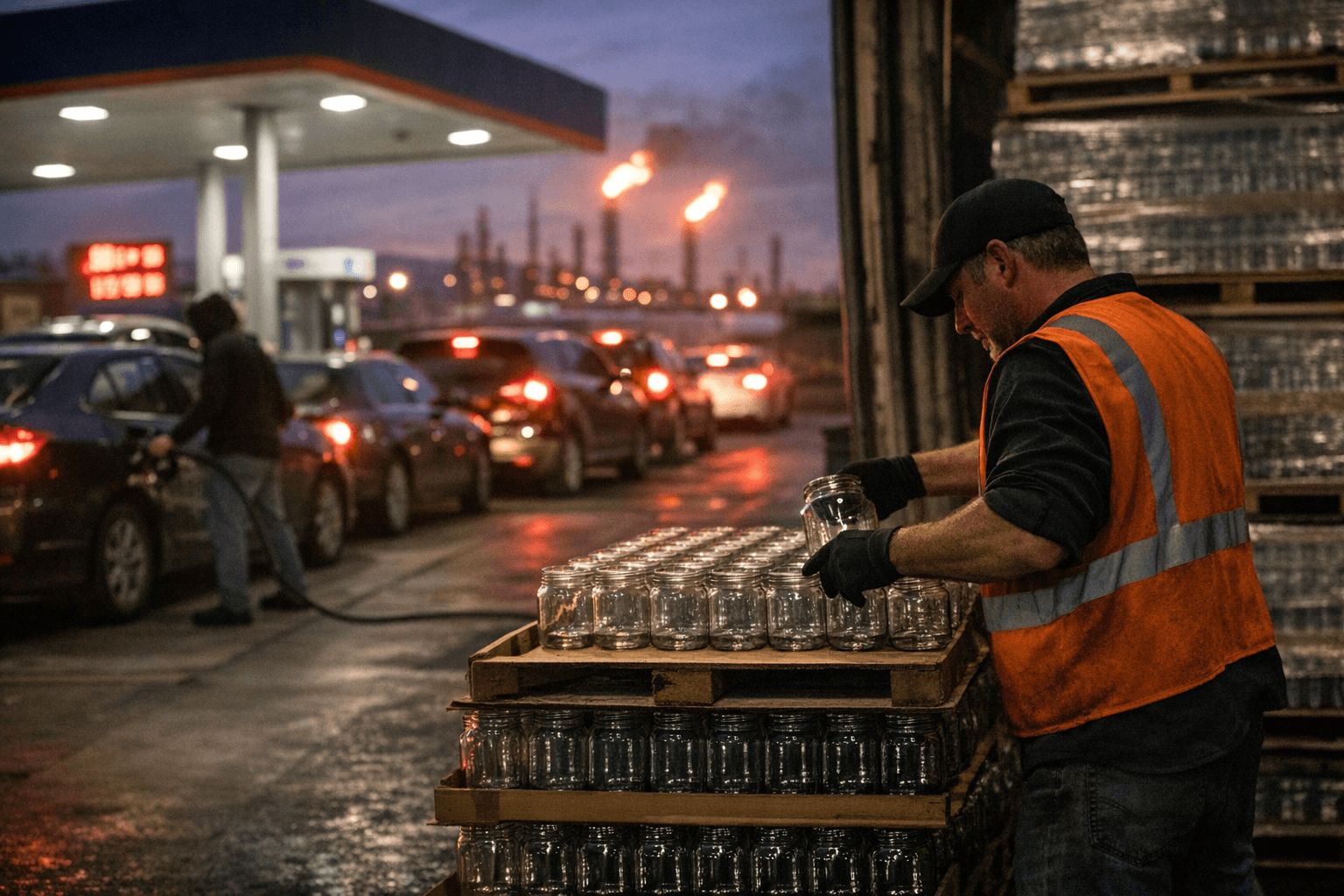
The seasonal calendar makes the timing especially damaging. March through August is when Indian manufacturers build the glass inventory, including decorative drinkware, home fragrance jars, seasonal displays, and holiday gift sets, that replenishes American shelves ahead of Halloween and Christmas planogram resets. With Firozabad's furnaces at reduced capacity and March container shipments already lost, the holiday season shortfall is effectively set.
On the store floor, partial shipments and ETA shifts on glass-adjacent purchase orders are the early signals to watch. When bottles or glass jars arrive short, stainless steel and BPA-free plastic alternatives can fill the shelf space and redirect customers without leaving pegs empty. At service desks and in pickup and delivery queues, pointing customers toward aluminum or plastic substitutes on normal replenishment cycles shortens the friction conversation considerably.
What didn't ship from Firozabad in March won't land on schedule. The substitution planning needs to happen before the gap becomes visible to every customer walking the aisle.
Know something we missed? Have a correction or additional information?
Submit a Tip