JOLTS data shows labor churn stays high, Walmart faces tougher retention pressure
March hires reached 5.6 million and quits stayed at 3.2 million, a churn-heavy backdrop that keeps Walmart stores competing harder for stable staff.
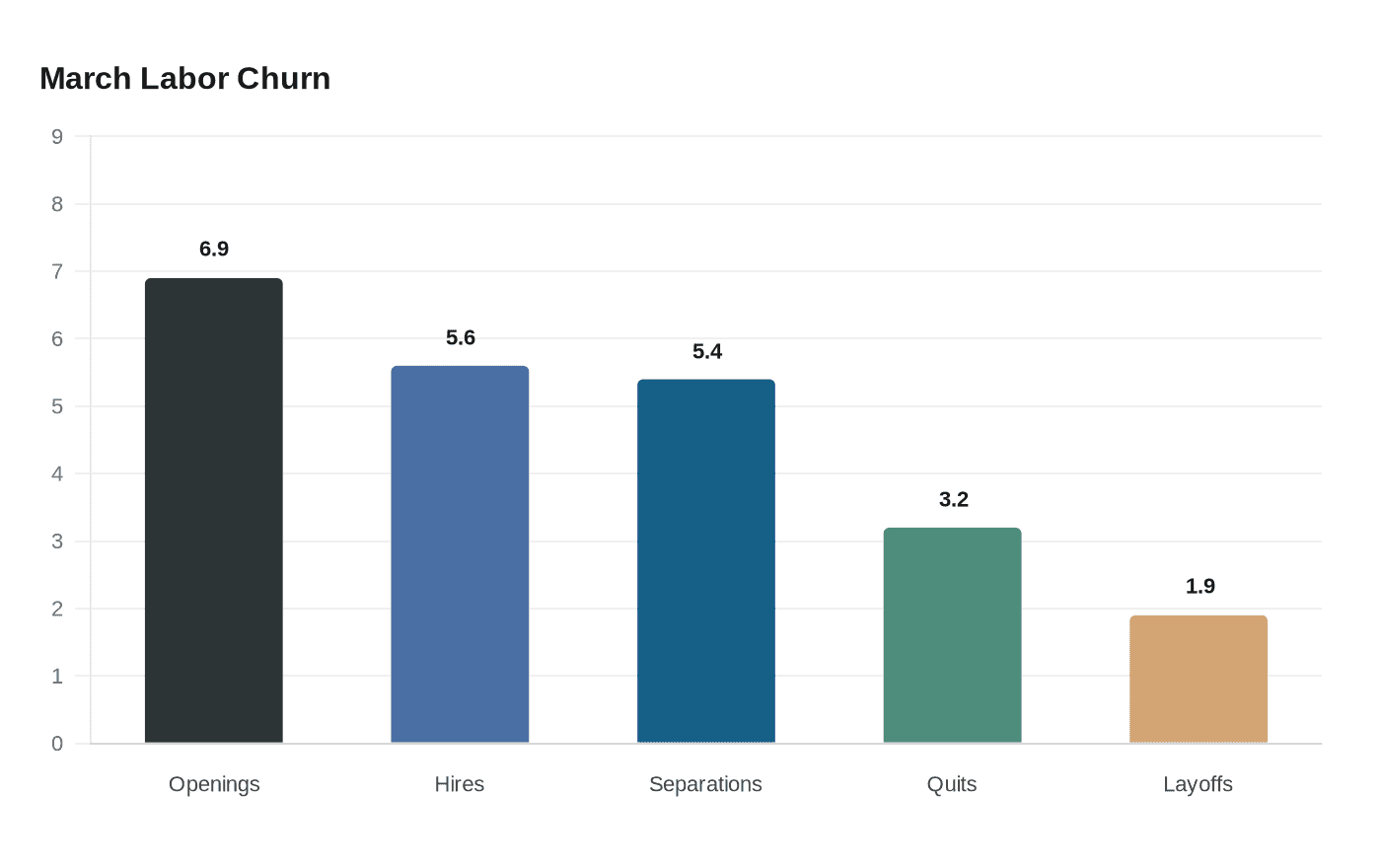
Hiring stayed strong enough to keep pressure on every retail floor, but not stable enough to make turnover fade into the background. The Bureau of Labor Statistics said March job openings held at 6.9 million, hires rose to 5.6 million, and total separations came in at 5.4 million, with quits at 3.2 million and layoffs and discharges at 1.9 million, both little changed. For Walmart stores, that mix means openings still have to be filled, trained and absorbed while the work keeps moving.
That matters in the most immediate way for hourly associates. A labor market with active hiring gives workers leverage if pay, schedules or workload do not hold up, and Walmart knows it is competing for the same labor pools as other large employers. The company says its average U.S. hourly associate makes more than $18 an hour, about 68% to 69% of U.S. hourly associates are full-time, and schedules are typically visible more than two weeks out. Walmart also says it has raised hourly wages by around 30% over five years. Those are retention tools, but they are also signals that the company expects turnover pressure to remain real.
For department managers and assistant managers, churn is not just an HR problem. Every vacancy means more strain on the people left behind, slower training for new hires and a greater risk that a store runs short-staffed long enough for service to slip. Walmart says U.S. associates receive their first promotion in about nine months on average, and about 75% of its U.S. salaried managers started as hourly associates. The company says the average tenure for a U.S. associate was five years in fiscal 2025, and that one-fifth of its current U.S. workforce were hourly associates in 2015 and have stayed for the past decade. That is the company’s case that retail can become a career, not just a stopover.
Walmart has reinforced that message with money and mobility. In June 2024, it said longer-tenured hourly store associates would have higher annual bonus potential, up to $1,000. It also said it had invested $1 billion in associate training and development and launched an Associate to Technician pilot in Dallas-Fort Worth with 100 associates, with technician roles paying between $19 and $45 an hour. Walmart says 90% of U.S. roles do not require a college degree. The broad labor market still leaves workers with options, and that means Walmart’s real test is whether its own pay, scheduling and promotion systems can turn churn into stability before it turns into more empty spots on the floor.
This article was produced by Prism’s automated news system from verified source data, official records, and press releases, then run through automated quality and moderation checks before publishing. The system is built and supervised by the people who set the standards it runs under. Read our full AI policy.
Know something we missed? Have a correction or additional information?
Submit a Tip