U.S. retail sales rise 1.7%, but gas and essentials drive gains
Gas helped lift March retail sales, but that kind of gain can still leave Walmart stores with tighter budgets and weaker general merchandise demand.
A 1.7% jump in U.S. retail sales can look like a clean win on a headline, but the mix behind it matters more for Walmart associates watching the floor. March retail and food services sales reached $752.1 billion, up from a revised $739.8 billion in February, yet much of the increase came from gasoline receipts rather than broad-based discretionary spending.
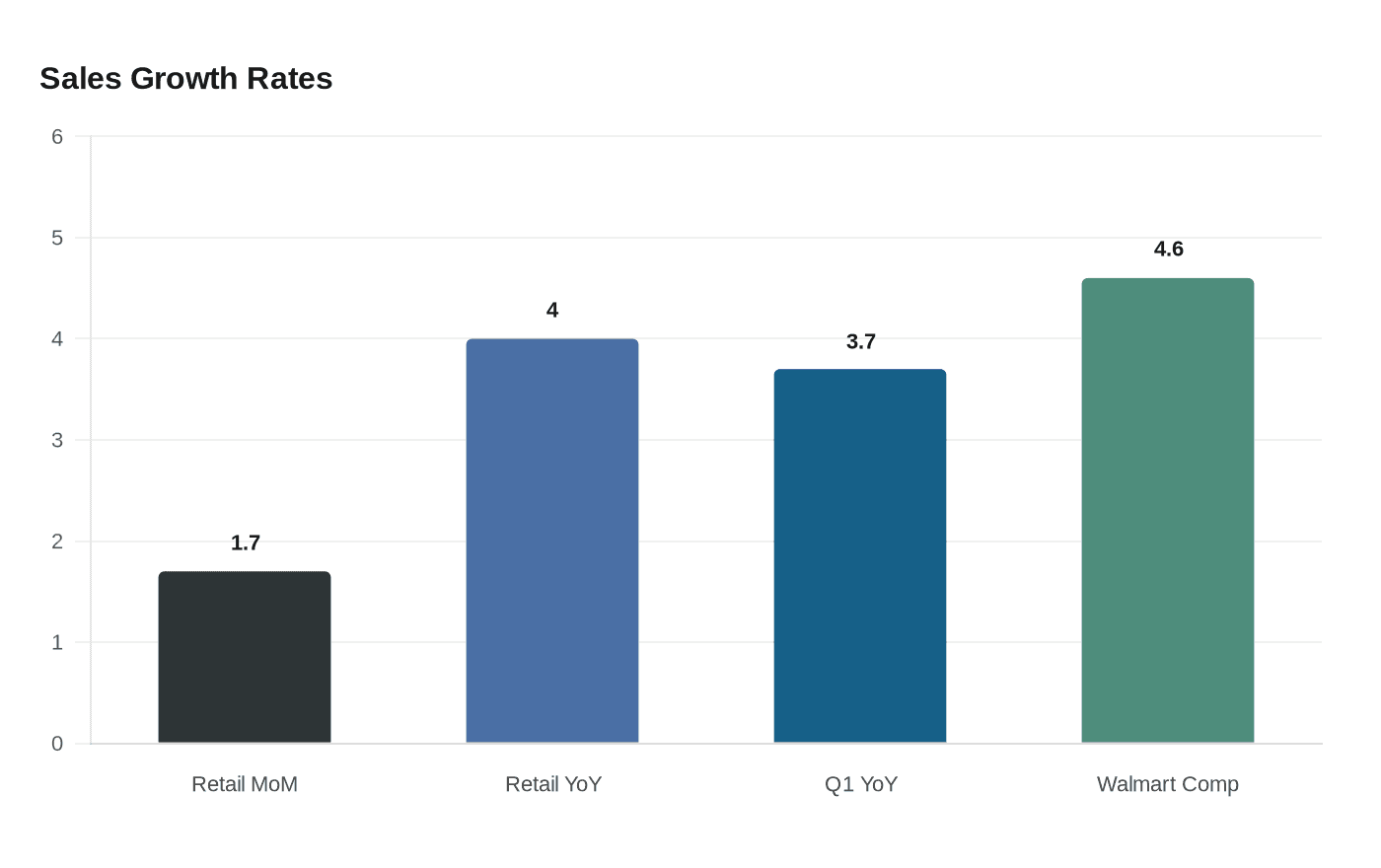
The U.S. Census Bureau said March sales rose 1.7% from February and 4.0% from March 2025. For the January-through-March period, sales were up 3.7% from a year earlier. The release landed on April 21, 2026, just as retailers were parsing what consumers were still willing to buy and what they were cutting back.
For Walmart, the important takeaway is not that customers suddenly have more room to spend. It is that more of their money may be going to fuel and essentials, which usually leaves less for general merchandise, seasonal goods and other higher-margin categories. That can change the daily work in stores fast: baskets skew harder toward grocery and consumables, pickup and delivery volume can rise on necessity trips, and front-end traffic can become more concentrated around value-driven purchases.

That mix matters on the schedule board, too. If shoppers are more cautious with discretionary dollars, department managers may see softer demand in apparel, home and entertainment even while grocery and health and wellness stay busy. In practice, that can mean more pressure to staff checkout lanes, keep staples full and shift labor toward replenishment and order fulfillment, while teams in slower departments are asked to do more with less.
Walmart Inc. has been signaling the same customer pattern from the other side of the cash register. In its Q4 FY26 materials, the company said value and convenience continued to resonate and reported U.S. comparable sales growth of 4.6% excluding fuel. It also pointed to strong sales, favorable general merchandise trends and faster eCommerce growth, including store-fulfilled delivery. Earlier earnings materials said customers were increasingly choosing expedited delivery and that share gains were showing up across income levels, with upper-income households leading some of that progress.
That is why a stronger national retail-sales number does not automatically mean stronger demand in every Walmart aisle. If spending is being pulled toward gas and necessities, store teams may still face tighter household budgets and smaller general merchandise baskets, even as the top-line economy looks healthier on paper.
Know something we missed? Have a correction or additional information?
Submit a Tip