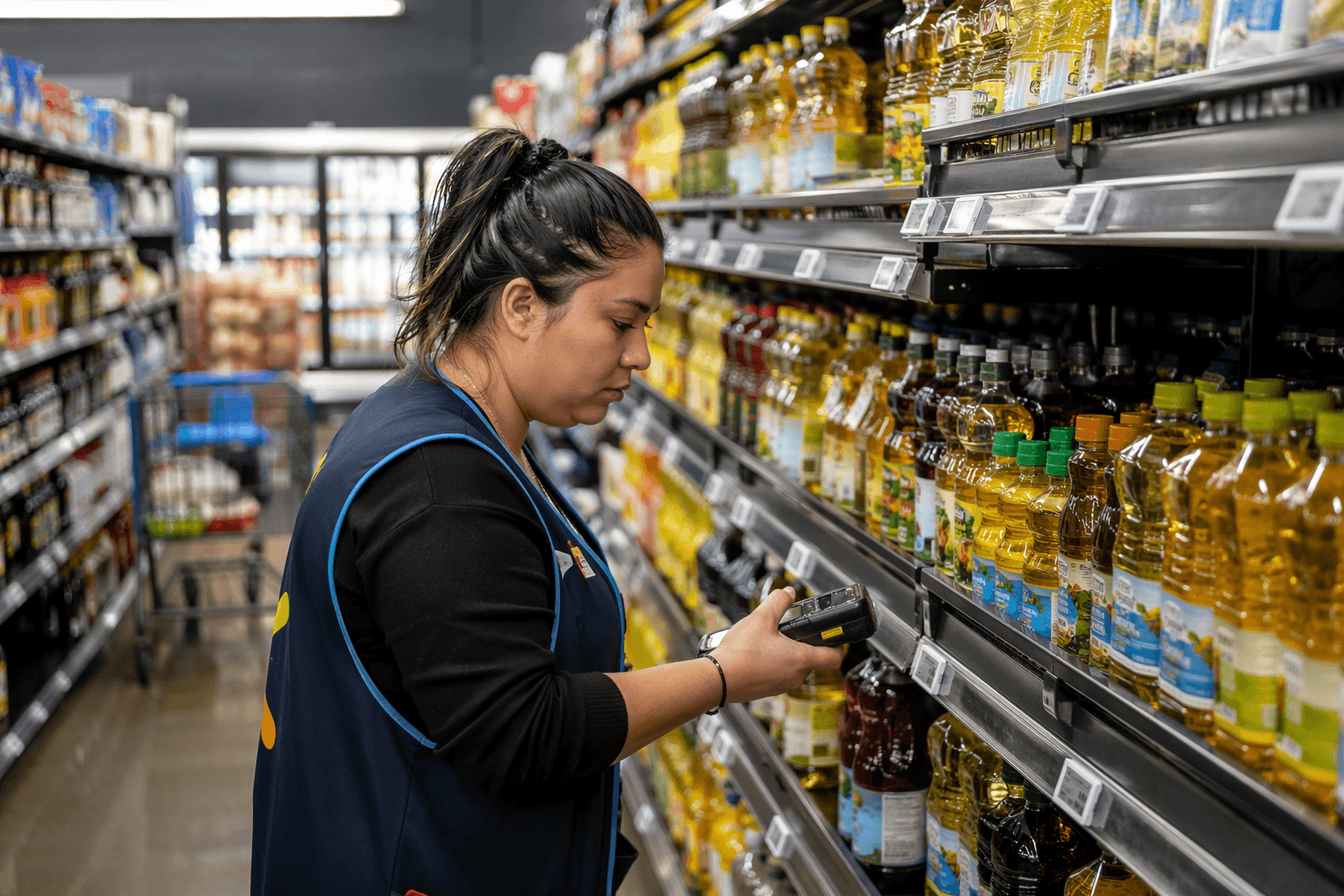
Walmart faces retail's labor churn, scheduling and service challenges
Retail chaos at Walmart is usually a design choice: the business runs on high volume, constant replenishment, and schedules that flex around customer traffic.

The economics behind the floor-level chaos
Walmart jobs look hectic because the business is built to move massive volume with tight labor control. Retail, as the Bureau of Labor Statistics defines it, is the final step in the distribution chain, and Walmart sits right at that pressure point, where merchandise has to turn quickly into sales, store shelves have to stay full, and customers expect both speed and convenience. That is why the work often centers on stocking, checkout, replenishment, customer help, and peak-hour labor deployment rather than on a narrow set of tasks.
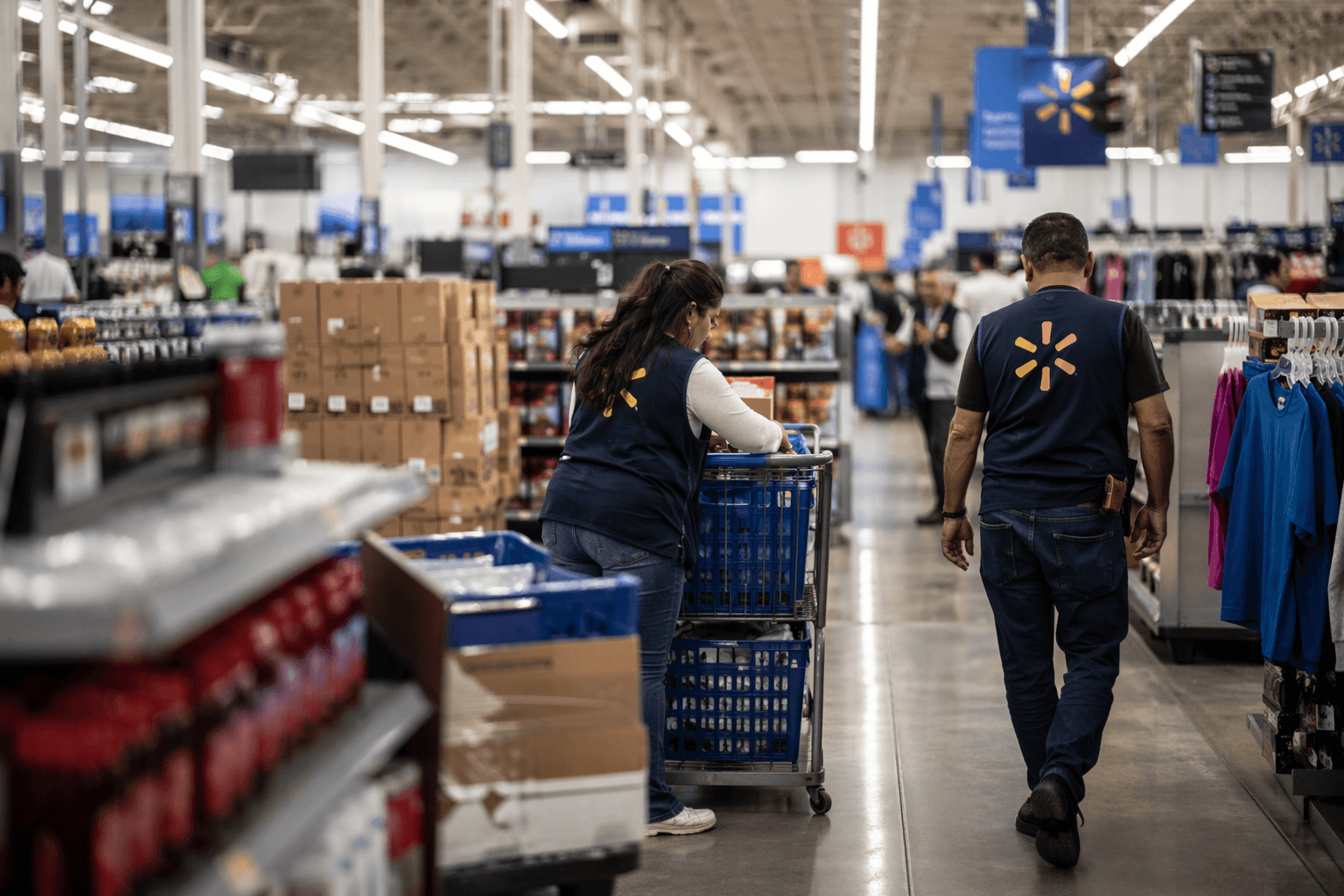
The scale matters. Walmart U.S. produced $462.4 billion in net sales in fiscal 2025, or 69% of Walmart’s consolidated net sales, and the company says it employs about 2.1 million associates worldwide. At that size, every store is part of a huge machine that depends on consistency, so the daily routine on the floor is less about improvisation than execution. When a store feels short-staffed or constantly in motion, that is often what a high-volume retail model looks like when demand, labor, and delivery timing all collide.
Why retail work is built around repetition, speed, and supervision
The retail trade sector is split into store and nonstore retailers, and that distinction helps explain why Walmart has to compete across physical stores, pickup, delivery, and e-commerce at the same time. Store retailers operate fixed point-of-sale locations designed to attract a high volume of walk-in customers, while the nonstore side keeps expanding the amount of work tied to digital orders and fulfillment. In practice, that means store associates are not just serving shoppers who walk in the door. They are also feeding an omnichannel operation that requires constant replenishment and fast handoffs.
The Bureau of Labor Statistics says many retail occupations require no formal education because workers usually learn on the job. That is a major reason Walmart can function as a first job, a second career, or a promotion track. It also explains why coaching, task discipline, and speed matter so much on the floor. The company is not assuming every worker arrives fully trained. It is counting on a system that can bring people in, teach them fast, and keep the operation moving.
For associates, the work environment is usually familiar but demanding. The Occupational Outlook Handbook says retail sales workers typically work in clean, well-lit stores, yet schedules may vary and evenings or weekends are often required. That is the reality behind the polished aisles and front-end traffic: the job is structured around customer flow, not around a predictable nine-to-five rhythm.
Labor churn is part of the model, not an exception to it
Retail is one of the most churn-heavy parts of the labor market, and Walmart sits inside that broader pattern. The Occupational Outlook Handbook says the median hourly wage for retail salespersons was $16.62 in May 2024, and about 586,000 openings are projected each year on average over the decade, mostly because workers leave for other occupations or retire. Those openings are not just growth. They are replacement hiring, which means turnover is baked into the industry.
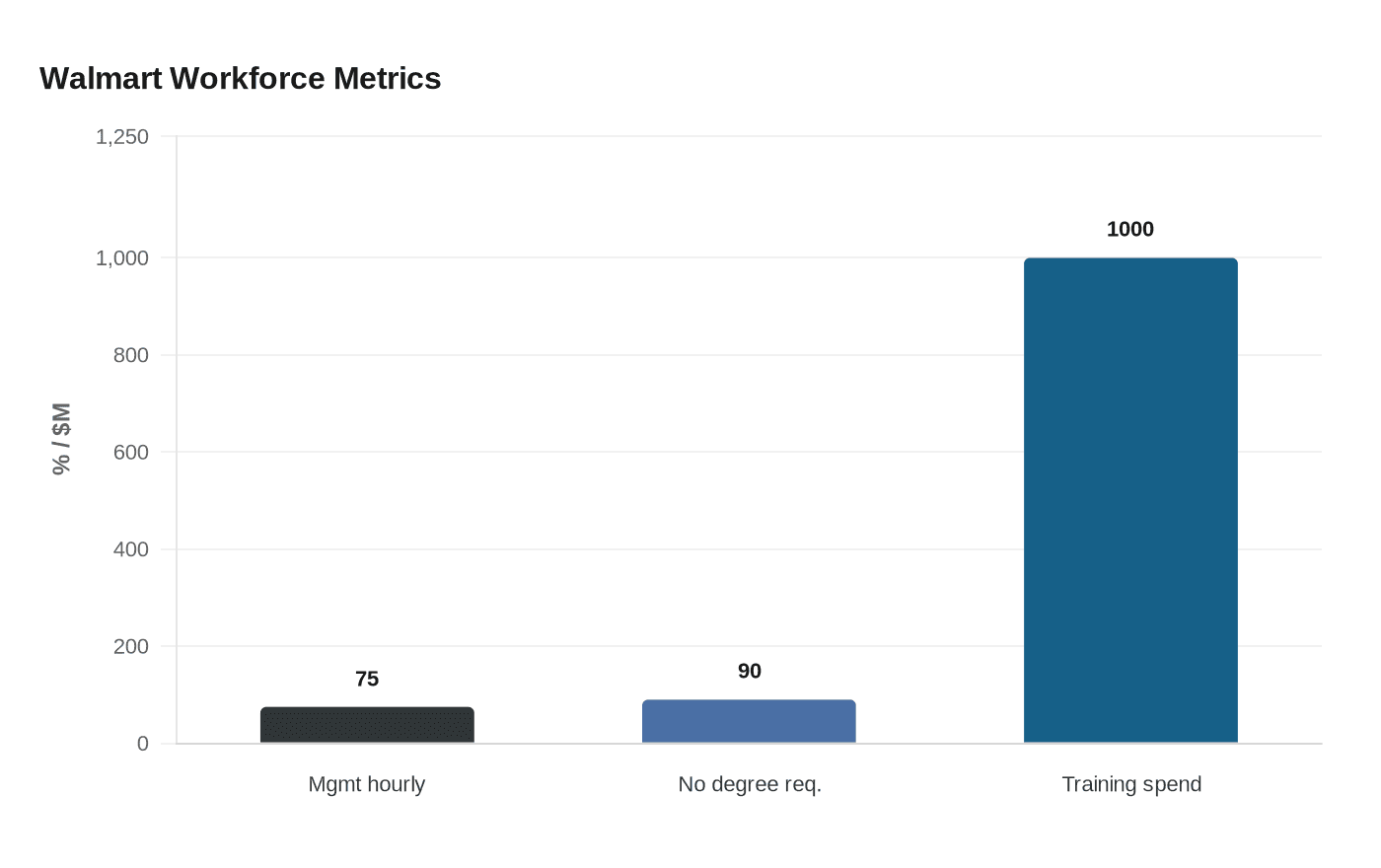
That churn helps explain why Walmart invests heavily in training and why the company talks so much about internal advancement. Walmart says it puts $1 billion into training and development, and it describes Walmart Academy as one of the largest training programs in the United States. It also says Live Better U helps associates learn new skills. For workers, that signals a very specific tradeoff: the company needs a broad base of people who can learn quickly and keep rotating into more complex roles as demand shifts.
Walmart says the average U.S. associate gets a first promotion in about nine months, and that roughly 75% of U.S. salaried store, club, and supply-chain management started in hourly positions. It also says 90% of U.S. roles do not require college degrees. Together, those numbers show why the company’s labor system leans on internal mobility. Walmart does not just hire for a single job. It hires for a pipeline.
What pay, promotion, and scheduling mean in practice
For hourly workers, the wage picture is more layered than the retail median suggests. Walmart says the average U.S. hourly field associate makes $18.25 an hour, while supply chain associates average $27 an hour. That gap reflects the different demands of store labor and logistics work, and it shows how Walmart uses pay to move people toward jobs that are harder to fill or require more specialized execution.
Scheduling is where the structure becomes most visible. The BLS Occupational Requirements Survey found that in 2024, work was controlled by people for 99.1% of retail salespersons, and 77.1% had work schedule variability. In plain terms, that means the job is heavily managed and rarely static. Stores need managers to move labor around by hour, department, and traffic pattern, which is why some days feel overstaffed in one area and thin in another. From the company’s point of view, that is not random. It is how a low-margin, high-volume retailer protects efficiency.
For associates, though, the effect can feel like instability. Evening and weekend requirements, task changes, and customer surges all land at once. The work can still offer a ladder upward, especially in a company where many leaders started hourly, but the entry point is always shaped by the same basic retail math: more shoppers, more inventory movement, tighter labor control, and constant pressure to keep the floor looking ready.
The first-store story still shapes the company’s labor culture
Walmart’s staffing model did not appear out of nowhere. The first store opened in Rogers, Arkansas, in 1962, and the company’s museum traces its growth from Walton’s 5&10 in Bentonville into a global retailer. That origin matters because the business was built around discount volume, lean operations, and fast service, not around a luxury or specialty-store model. The old logic still runs the newer, larger company.
That history also helps explain Walmart’s culture of promotion from within. The company publicly highlights current leaders such as Doug McMillon, John Furner, and Greg Penner as part of a management structure shaped by internal experience. For workers, the message is clear enough: the chain depends on a large hourly workforce, then promotes a smaller share into salaried leadership. The churn, the scheduling pressure, the need for training, and the emphasis on customer service are not separate problems. They are all part of the same operating design.
Walmart’s stores can feel chaotic because they are built to absorb constant demand with limited labor slack. Once you understand the economics, the pattern becomes easier to read: stocking keeps sales flowing, checkout keeps traffic moving, replenishment protects inventory turns, and scheduling is the lever that tries to make all of it fit. That is the real structure behind the disorder workers see every day.
This article was produced by Prism’s automated news system from verified source data, official records, and press releases, then run through automated quality and moderation checks before publishing. The system is built and supervised by the people who set the standards it runs under. Read our full AI policy.
Know something we missed? Have a correction or additional information?
Submit a Tip