FTC warns wire transfers through Western Union are hard to reverse
The FTC says Western Union wires can vanish fast, and scammers exploit panic, secrecy, and trust long before the transfer is sent.
Once money is wired through services such as Western Union, MoneyGram, or Ria, it is usually hard to get back, and scammers know it. The Federal Trade Commission warns consumers never to wire money to anyone they have not met in person, no matter how convincing the story sounds.
How the scam pattern works
The manipulation usually follows the same sequence: urgency, authority, secrecy, and a payment method that is difficult to undo. Impostor scams, fake emergency stories, threats of arrest or other urgent consequences, and instructions to keep the conversation secret from friends or family are common tactics. Those tactics are designed to short-circuit normal judgment and push the victim into acting before verifying anything.
The wire transfer itself is part of the trick. Scammers can quickly pick up wired money at locations around the world, which makes it difficult to identify or track the person who collected it. That speed makes wire transfers attractive to fraudsters and unforgiving to victims because the money can move before anyone stops it.
Why this matters inside Western Union
For Western Union employees, it is part of the daily operational reality of money movement, where employees see the consequences of a system built for speed. Fraudsters exploit the same features that make the service useful, which means unusual urgency, secrecy, and payment instructions should be treated as warning signs, not normal customer behavior.
Western Union tells customers to use the service for friends and family, not for strangers met online. The company also warns that after a transfer is sent or deposited, it may not be able to provide a refund. For employees, that is the key fact behind every escalation: once a transfer clears, the window to intervene narrows sharply, and customer frustration becomes harder to resolve.
A customer who says someone they have never met is demanding a quick wire, pushing them to hide the request, or warning them not to tell bank staff or relatives is presenting a classic scam profile.
What customers should do before any wire leaves the account
The FTC’s core rule: never wire money to anyone you have not met in person. That warning is broad on purpose, because scammers use every imaginable reason to make the request sound exceptional, whether it is a supposed emergency, a romance story, a lottery win, or a threat from an authority figure.
Western Union’s fraud hotlines are meant to give customers a last chance to stop the transfer. People who believe they were victimized should file a fraud report immediately, and if the transfer has not been paid, call its fraud hotline as soon as possible. In a wire scam, the clock starts ticking the moment the payment is sent. Fast reporting is the only realistic chance to limit the damage.
The settlement that changed Western Union’s risk profile
On January 19, 2017, Western Union agreed to forfeit $586 million and implement a comprehensive anti-fraud program. That program included training for agents and front-line associates, monitoring to detect and prevent fraud-induced transfers, and due diligence on new and renewing agents.
Western Union’s internal data showed the scale of the problem. Between 2004 and 2015, the company received 146,909 complaints about bogus online purchases totaling at least $187 million in losses. The same data showed 75,543 complaints about fraudulent lotteries, with $86 million in losses. The Department of Justice said the agreement resolved anti-money-laundering and consumer-fraud violations and imposed enhanced compliance obligations.
Why the refund process is still part of the story
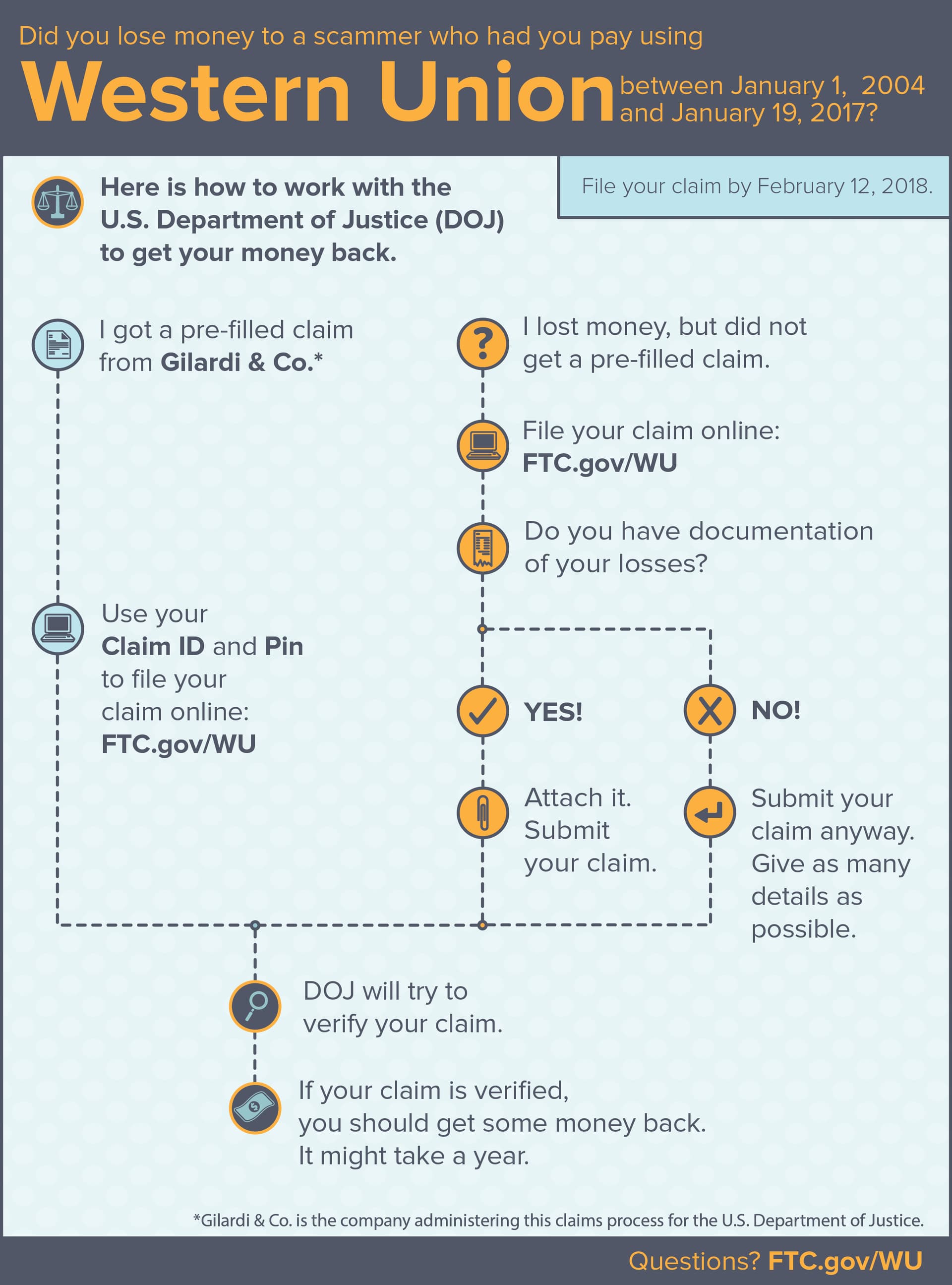
The relief process has stretched years beyond the original frauds. The FTC’s refund work covers people who sent money to scammers through Western Union between January 1, 2004 and January 19, 2017, and people who did not previously submit claims may still be eligible. In 2020, the FTC announced a second round of Western Union-related refunds totaling $147 million.
Credit cards come with protections that wire transfers do not. Once the wire leaves, recovery can be uncertain, slow, and partial.
How to respond when fraud is suspected
The FTC directs consumers to ReportFraud.ftc.gov, which helps connect individual incidents to broader enforcement and education efforts. Western Union directs suspected victims to use its fraud hotlines and file a report immediately. The Office of the Comptroller of the Currency directs consumers to contact the bank right away and request a recall of the wire transfer.
This article was produced by Prism’s automated news system from verified source data, official records, and press releases, then run through automated quality and moderation checks before publishing. The system is built and supervised by the people who set the standards it runs under. Read our full AI policy.
Did this article answer your question?