Western Union links compliance training to company-wide trust and fraud prevention
Western Union is using training, board oversight, and agent discipline to turn compliance into a live control. The real test is whether staff escalate risks before money moves.
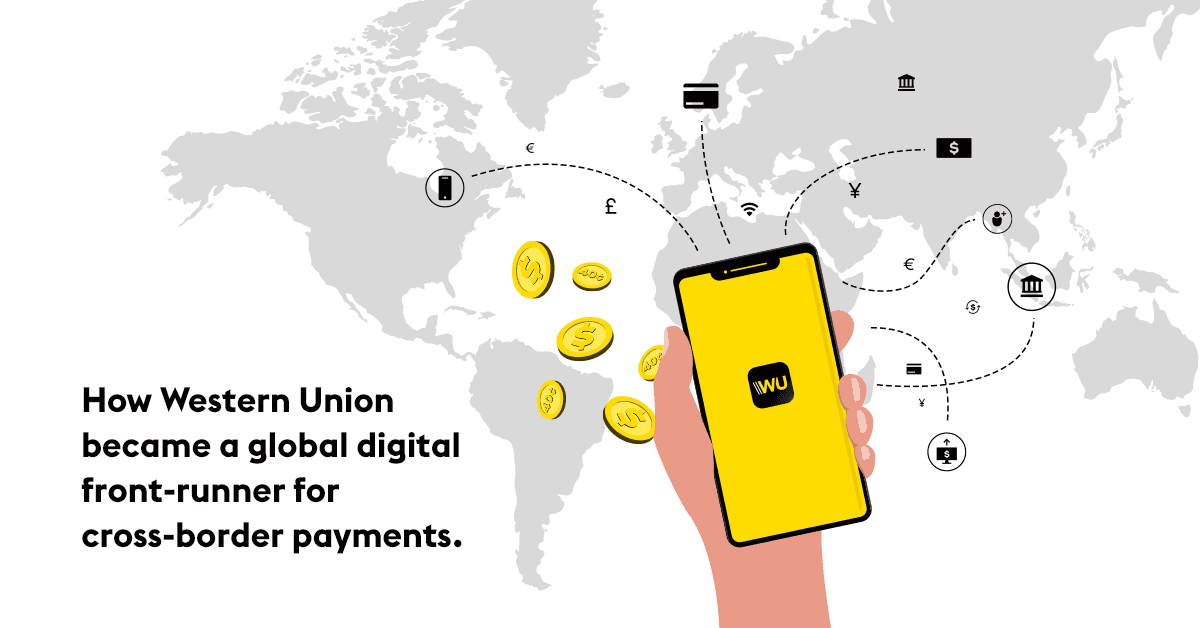
Western Union’s compliance message lands differently when you look at the business it runs. A company moving money across more than 200 countries and territories and over 130 currencies cannot rely on a rulebook alone; it needs people who can spot risk, stop it, and speak up fast. That is why Western Union’s emphasis on training for its board, employees, and agents matters as an operating control, not as a slogan.
Integrity as a daily control
Western Union says its compliance training covers anti-money laundering, fraud awareness, and other areas, and it applies that training across the board, literally, because board members are included alongside employees and agents. That scope tells you where the company sees risk: not in one compliance department, but across the whole network that actually moves the money. For workers in product, operations, customer support, technology, and sales, the practical value is a common baseline for when to escalate, what to flag, and how to keep a transaction from becoming a loss or a regulatory problem.
That shared baseline matters because Western Union’s model depends on third parties as much as its own staff. In a network business, a weak agent process can create onboarding errors, bad disclosures, or fraud exposure even when headquarters has strong internal policies. The company’s training language points to that reality: if the people touching customers at the edge of the network do not understand the same anti-money laundering and fraud expectations, the rest of the control stack is harder to trust.
Why the agent network changes the risk equation
Western Union’s footprint makes consistency difficult by design. A transfer company operating across more than 200 countries and territories and over 130 currencies has to keep its standards aligned across different legal regimes, customer behaviors, and partner models. That is why the company’s focus on agents is not a side note. It is the part of the business where the customer experience, the first line of detection, and the first chance to prevent harm often overlap.
For employees, that means compliance is tied to everyday judgment calls. Someone in operations has to know when a transaction pattern looks abnormal. Someone in customer support has to know when to route a concern instead of treating it as a routine service issue. Someone managing a partner relationship has to know when training gaps, inconsistent disclosures, or control failures become a business risk. The point of compliance training is not just to teach the rule. It is to create a shared language for escalation before the problem becomes visible to regulators or customers.
The enforcement history explains the posture
Western Union’s current emphasis makes more sense when set against its enforcement history. In January 2017, the company announced agreements with the U.S. Department of Justice and the Federal Trade Commission to resolve investigations tied mainly to conduct from 2004 to 2012. In the Justice Department’s account, Western Union admitted anti-money laundering and consumer fraud violations and forfeited $586 million in the settlement. Western Union also said in that announcement that it had increased compliance funding 200 percent over the previous five years.
The New York State Department of Financial Services added its own pressure with a $60 million fine for AML violations and for ignoring suspicious transactions to locations in China. That is the kind of history that turns compliance from paperwork into memory. It explains why the company would put anti-money laundering and fraud awareness in front of not just compliance staff, but board members, front-line teams, and agents who are far from headquarters.
How Western Union made the response visible
Western Union did not keep this work confined to internal policy updates. Its 11th Anti-Money Laundering, Anti-Fraud and Compliance Conference took place in 2017, and the company said it was the first version hosted in the United States to welcome agents from across the network. Hosting agents at a conference like that signals where the company thinks control actually lives: in the hands of the people who meet customers, process transactions, and escalate concerns before a transfer clears.
The company’s 2024 Code of Conduct also pushes the same theme in a more formal way. It says trust is an irreplaceable asset and notes that Western Union has operated for more than 167 years. That language matters because it frames trust as something the company has to protect through behavior, not something it can claim by heritage alone. Western Union’s ESG reporting reinforces that view with a mandatory annual Code of Conduct training program designed to support a culture of integrity and speaking up.
The 2023 ESG Report puts that culture into three focus areas: Combatting Illicit Activity, Preventing Corruption, and Culture of Integrity. Those labels are broad, but they map onto day-to-day work in a payments company: monitoring for suspicious activity, keeping bribery and corruption risks out of cross-border business, and making sure employees feel able to raise concerns without waiting for a crisis.
Governance reaches beyond headquarters
Western Union’s 2024 Modern Slavery and Human Trafficking Statement shows that this is not only a U.S. headquarters conversation. The statement applies to several company entities, including Western Union Financial Services (Australia) Pty Ltd, Western Union Payment Services GB Limited, and Western Union Payment Services Ireland Limited, and says those entities’ boards approved it. That is an important signal for a company with operations spread across jurisdictions: ethics and compliance are being reviewed at board level in multiple places, not just in one central office.
For workers, that board-level structure has a practical consequence. It means the expectations around integrity, escalation, and partner oversight are not meant to stay abstract. They are supposed to travel through the organization, from governance documents to line managers to the people handling transactions and third-party relationships. In a network as large as Western Union’s, consistency is the control. Without it, one weak handoff can undo a lot of good policy language.
Western Union’s own materials point to the same conclusion from different angles: training for boards, employees, and agents; annual code training; speaking-up culture; and board-approved statements across entities. In a global money-movement business, trust survives only when those ideas show up in actual decisions about fraud, suspicious activity, and partner behavior, not just in the handbook.
This article was produced by Prism’s automated news system from verified source data, official records, and press releases, then run through automated quality and moderation checks before publishing. The system is built and supervised by the people who set the standards it runs under. Read our full AI policy.
Did this article answer your question?