Western Union Philippines highlights internal promotions, women leaders, long tenure
Western Union Philippines pairs a 450-person team with eight-year tenure and 54% internal promotions, while its two-site setup shows where growth happens.
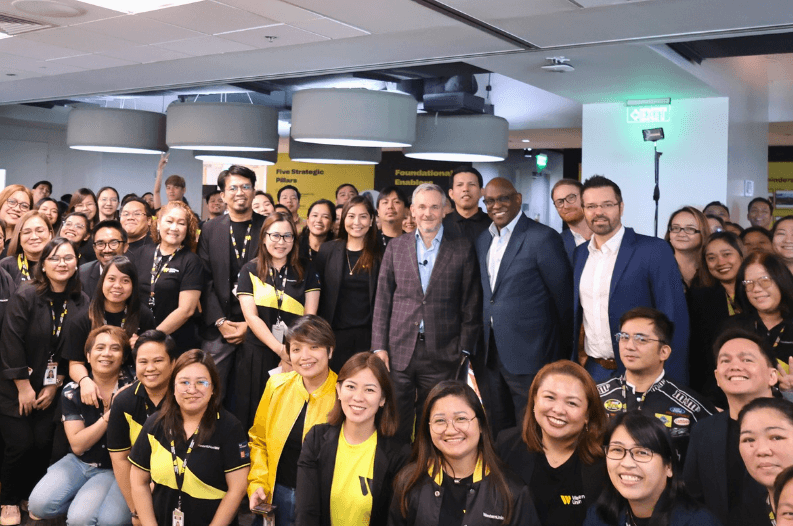
Western Union’s Philippines operation tells a clear internal-mobility story: a local team of about 450 employees, an average tenure of eight years, and 54% of the leadership team coming from internal promotions. The bigger clue is how the company maps that growth across Metro Manila, with work split between Quezon City and Taguig City and tied to functions that range from compliance to business development.
Internal promotion is part of the pitch
The strongest signal on Western Union Philippines’ careers page is not a slogan but the make-up of the leadership team. The company says women hold 67% of leadership roles, and more than half of leaders rose through internal promotions. For employees, that combination suggests the company is not treating the Philippines as a temporary posting or a low-level service center; it is building a bench and advancing people inside the market.
That message is reinforced by the eight-year average tenure. In a company that depends on operational discipline, regulatory awareness, and customer trust, a long-tenured workforce can matter as much as fresh hiring. It usually means people stay long enough to understand the transfer business, the controls around it, and the pace at which the company moves talent into bigger responsibilities.
Two sites, two different kinds of opportunity
Western Union says its Philippines operation began in 2006 and now runs from two strategic locations: Quezon City and Taguig City. The company describes Quezon City as a hub for global operations, compliance, and shared services, while Taguig City supports marketing, business development, and other professional functions. That split matters because it shows the company is not clustering every role in one lane; it is separating control-heavy work from growth-oriented work.
For workers, that structure creates more than geography. It creates a possible path across functions. Someone who starts in shared services or operations can see how the transfer engine works from the inside, while someone in marketing or business development can stay closer to customer-facing growth and the commercial side of the business. In a regional office, that breadth is often the difference between a job that stalls and one that can turn into a career.
The setup also says something about how Western Union uses Manila-area talent. Quezon City appears to anchor the business’s back-end muscle, while Taguig gives the Philippines team a seat near the company’s external growth work. For a financial services company that moves money across borders, that division of labor is a practical way to develop people with both operational depth and commercial range.
The local workforce sits inside a global money-movement business
Western Union frames its Philippines team as part of a much larger machine. The company says employees in the market help shape financial services through innovation, quality, convenience, and customer service, and it points to roles in marketing and business development, shared services and support, and global operations and compliance. That mix is important because it shows the Philippines is not limited to one kind of work; it spans the support functions and the growth functions that keep the business running.
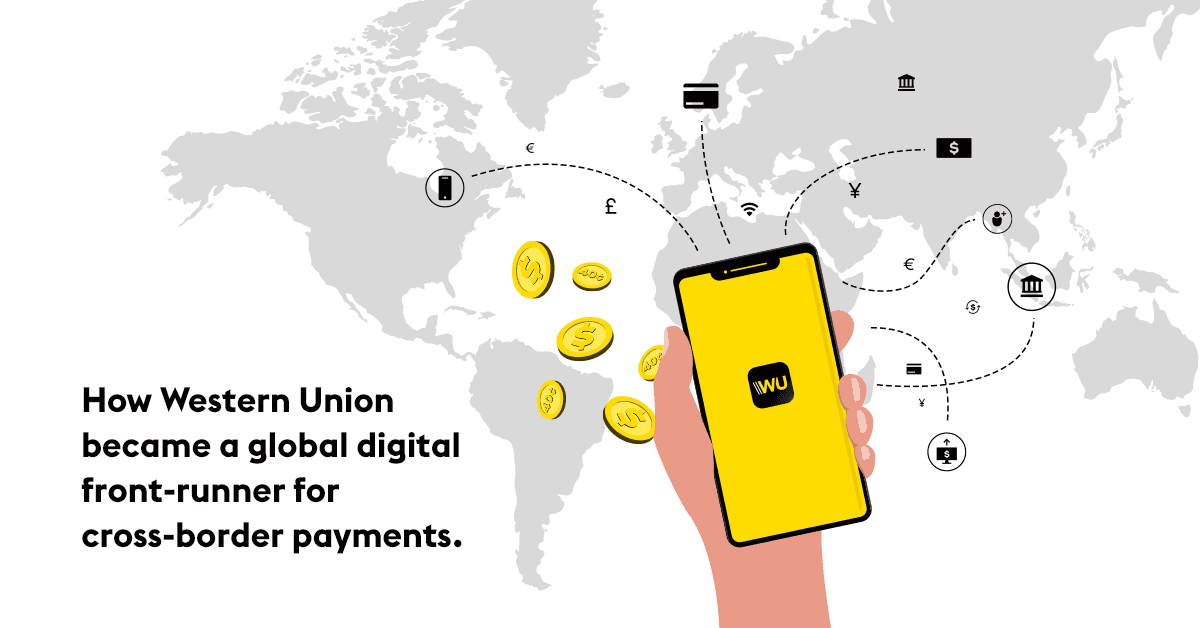
The customer side of the operation is just as broad. Western Union says people in the Philippines can send money online, through its app, in person, by bank account, and through mobile-wallet channels. On the receiving side, it says money can land directly in accounts at BDO, BPI, Landbank, and Metrobank, or through mobile-wallet partners including GCash, Maya, USSC, and PERA HUB. It also says transfers can be sent from the Philippines to almost anywhere in the world, with customer care available 24/7.
Western Union says its customers made millions of transfers with the company last year. For employees, that scale turns abstract mission language into a daily operating reality. Every role in the Philippines office, whether in compliance, support, marketing, or business development, sits close to a high-volume transaction network that has to work reliably for recipients, senders, and local payout partners.
Why the Philippines matters in the remittance economy
The careers story lands differently when set against the size of the remittance market. The World Bank says personal remittances received by the Philippines reached about $40.28 billion in 2024, equal to 8.7% of the country’s GDP. It also says remittances to low- and middle-income countries are expected to reach $685 billion in 2024. Those figures put Western Union Philippines in a market that is central to household budgets, not peripheral to them.
That context helps explain why the local operation can support both long tenure and internal movement. In a market where transfer reliability matters to families, a company cannot rely only on entry-level hiring and turnover. It needs people who understand regulations, payout channels, customer behavior, and the operational side of cross-border money movement. The eight-year average tenure and the promotion data fit that need.
Western Union also describes itself as a leader in cross-border, cross-currency money movement, payments, and digital financial services, and says it operates in more than 200 countries and territories. Its DEI messaging says diversity, equity, and inclusion are central to innovation and performance in that global footprint. The Philippines leadership figures make that claim feel local rather than abstract, because the market is showing a leadership profile and promotion pattern that lines up with the company’s broader message.
What the careers page really shows
Western Union Philippines is marketing career growth, but the details give that pitch some substance. The company is not only saying people can move up; it is showing a market with two distinct hubs, a workforce of about 450, a long average tenure, and a leadership team heavily shaped by internal hiring. That is a stronger signal than a generic employer-brand statement, because it points to actual routes people can take inside the business.
For employees watching the company from the inside, the takeaway is straightforward. In the Philippines, growth appears to run through functional movement as much as title changes, and the clearest paths seem to sit between operations, compliance, shared services, marketing, and business development. In a business built on trust, scale, and constant movement of money, that kind of internal mobility is not decorative, it is part of how the operation sustains itself.
This article was produced by Prism’s automated news system from verified source data, official records, and press releases, then run through automated quality and moderation checks before publishing. The system is built and supervised by the people who set the standards it runs under. Read our full AI policy.
Did this article answer your question?