1622 wedding gloves reveal love, luxury and bridal symbolism
A 1622 pair in the Rijksmuseum shows bridal style has always spoken through symbols, not just gowns. Gloves, pearls and embroidery can still say more with less.
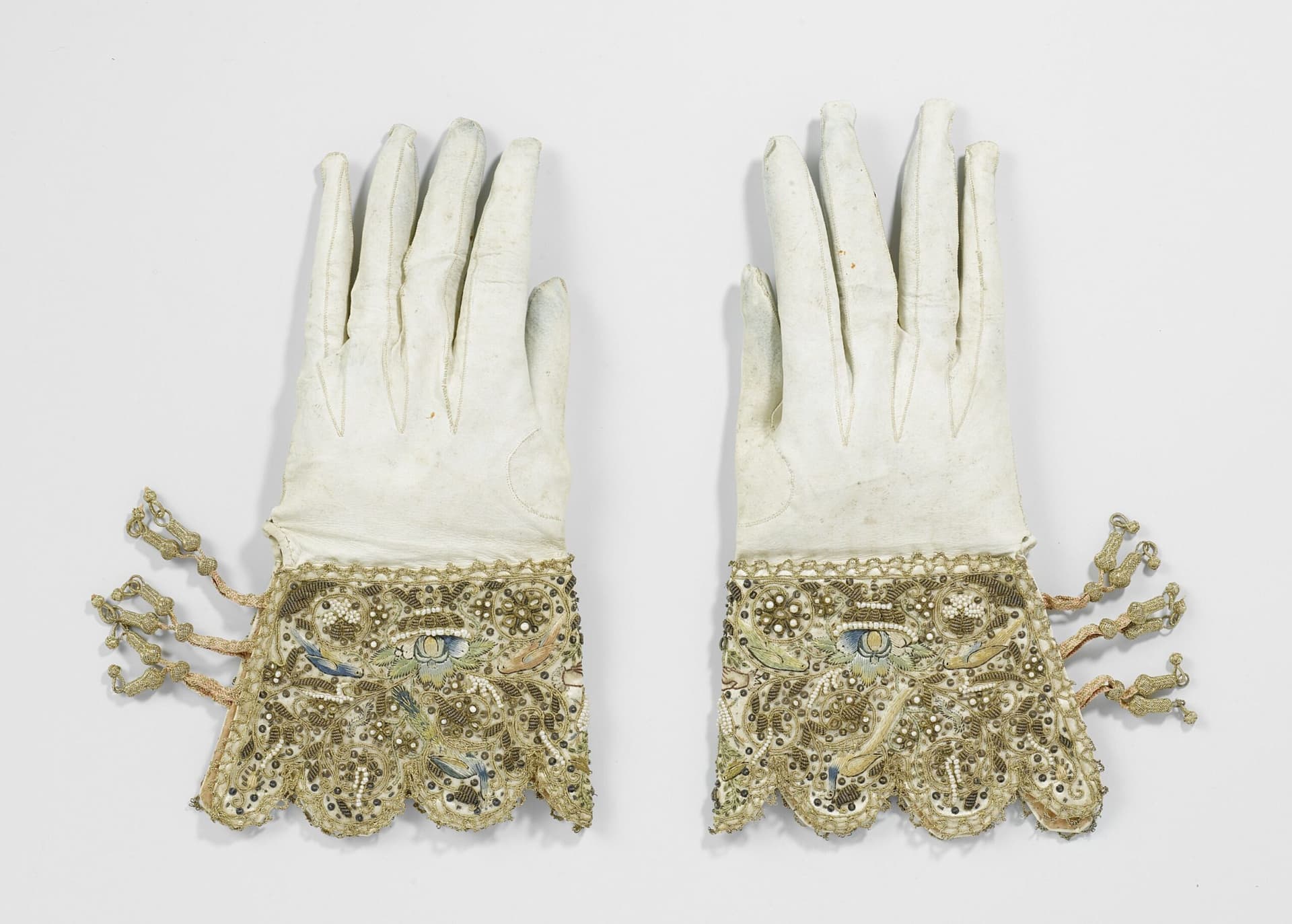
A pair of anonymous wedding gloves from 1622 in the Rijksmuseum proves that bridal fashion has never been only about the dress. CODART calls them “a very rare expression of love and luxury,” and the object earns that description immediately, with colored silk, costly metal thread, small pearls, sequins and white satin doing as much storytelling as any hemline.
The language hidden in the gloves
Look closely and the message becomes unmistakable. A heart pierced by arrows stands for deep love, while the linked hands beneath it signal the confirmation of marriage and fidelity. That is what makes the gloves so compelling for modern brides: they were never just accessories, but a compact declaration of commitment, status and feeling, all stitched into one pair.
Early modern gloves carried that kind of charge in more than one setting. In Italian early modern painting, gloves could signify status, fidelity, love, ceremony, religiosity and political allegiance, and they were sometimes given as wedding gifts. That wide symbolic range is exactly why the 1622 pair still feels contemporary. The object shows that the bridal look has always been a coded system, where a single detail can say what a whole gown cannot.
Why the bridal wardrobe was built from details
The Rijksmuseum’s research on 17th-century garments and accessories makes the larger point clear: surviving pieces from that century are rare. The museum holds only a small number of exquisitely embroidered accessories, expensive linen shirts, silk fabrics and leather shoes, which means every surviving object carries unusual weight.
Those pieces also reveal how much work sat behind luxury dress. The making of such clothing and accessories involved specialized weavers, embroiderers, shoemakers, goldsmiths and tailors, with materials arriving from all over the world. Bridal fashion was therefore never a single garment in isolation. It was a network of textiles, metal thread, fine handiwork and imported material, all arranged to express rank, aspiration and emotion at once.
That is why the gloves matter far beyond the museum case. When CODART announced its Canon in December 2019, the pair was included among 100 Dutch and Flemish works of art dating from before 1750 selected for particular importance to art history. A bridal accessory landing in that company says a great deal about how seriously decorative objects have long been taken when they carry both craft and meaning.
What today’s bride can borrow from 1622
The smartest modern takeaway is not to copy the gloves literally, but to copy their intention. If the gown is clean and restrained, one accessory can do the emotional work the dress does not need to do. That might be gloves, a veil, a piece of jewelry, embroidery or a charm, but the point is the same: let one detail become the sentence your look is trying to speak.
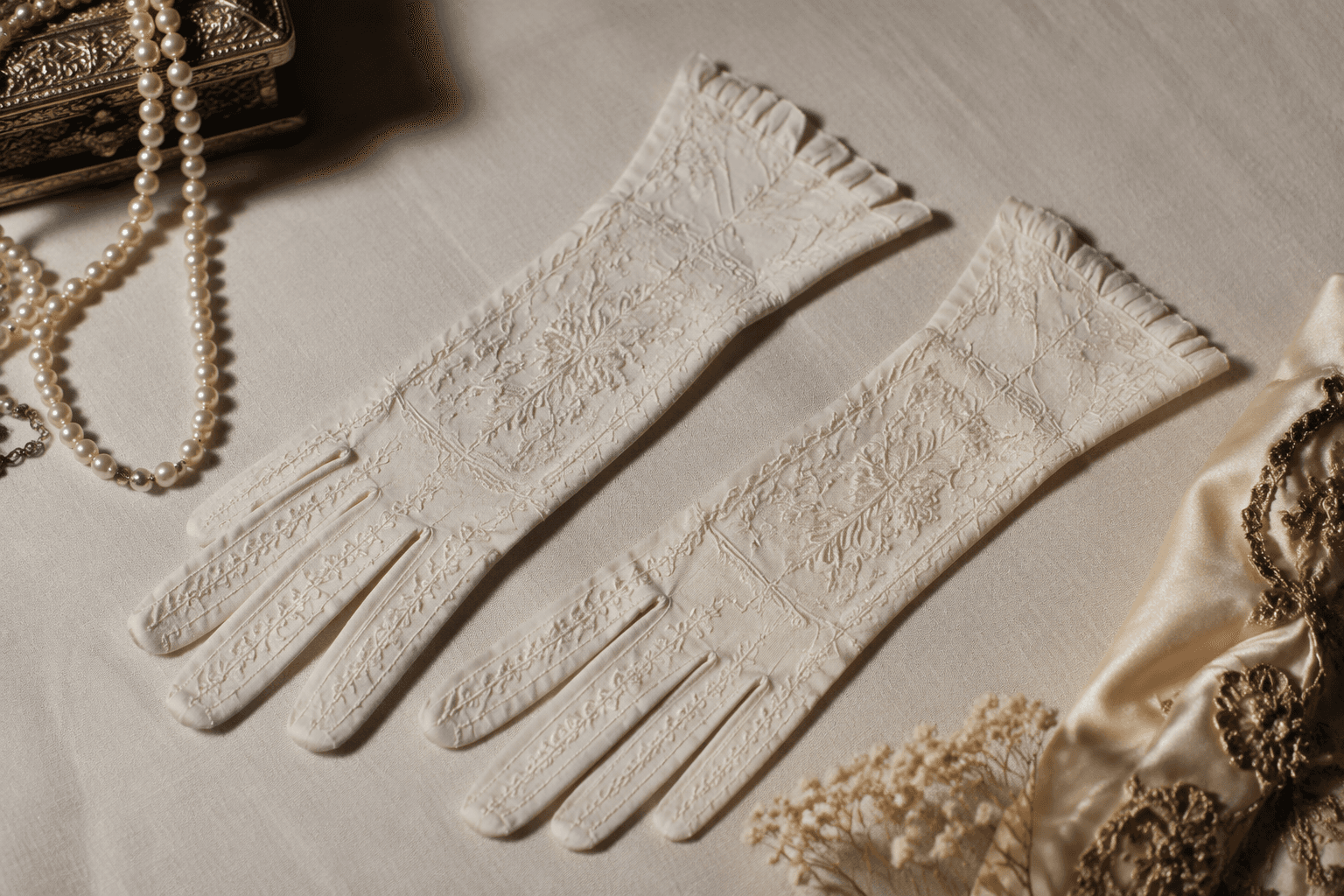
- Wear gloves if you want the most direct historical echo. Satin, silk or lace gloves can add ceremony without changing your silhouette, especially with a pared-back dress or a sharply tailored column.
- Choose pearls or metal thread when you want the accessory to read as luxurious rather than fussy. The 1622 pair works because its materials are costly and deliberate, not overloaded with competing effects.
- Use embroidery to carry the private meaning. A monogram, a tiny heart, linked initials or a discreet motif at the cuff, hem or veil edge can create the same sense of coded significance the historical gloves had.
- Add a charm or hidden token when you want sentiment that stays close to the body. A small piece sewn inside a glove, stitched into a lining or attached to a bouquet handle can echo the old practice of symbolic gifts without turning the whole look theatrical.
- Skip accessories that all say different things at once. The 1622 gloves are effective because the materials and motifs tell one coherent story: love, fidelity, and status. A veil heavy with beads, earrings, a statement necklace and embellished gloves can dilute that clarity fast.
The best modern bridal styling often works the same way a 17th-century object did: one strong idea, executed with precision. If the dress is the foundation, the accessory is the signature, and the signature lands hardest when it is specific.
Why this still feels relevant now
The reason these gloves continue to resonate is that they make bridal symbolism visible. They show that wedding dress codes have always been about more than purity or prettiness. They have also been about public declarations, private messages, and the social meaning of what a bride chooses to place on her body.
That is a useful reminder for anyone building a wedding look today. You do not need a new gown to create a new story. A pair of gloves, a pearl-edged veil, a line of embroidery or a small charm can shift the entire mood of the day, giving the outfit history, personality and intent in one move.
This article was produced by Prism’s automated news system from verified source data, official records, and press releases, then run through automated quality and moderation checks before publishing. The system is built and supervised by the people who set the standards it runs under. Read our full AI policy.
Did this article answer your question?