Bridal bustle types explained, how to choose the right one
The right bustle keeps a train off the floor, protects the fabric, and lets you dance. The best choice depends on gown weight, train length, and how much movement your wedding really demands.
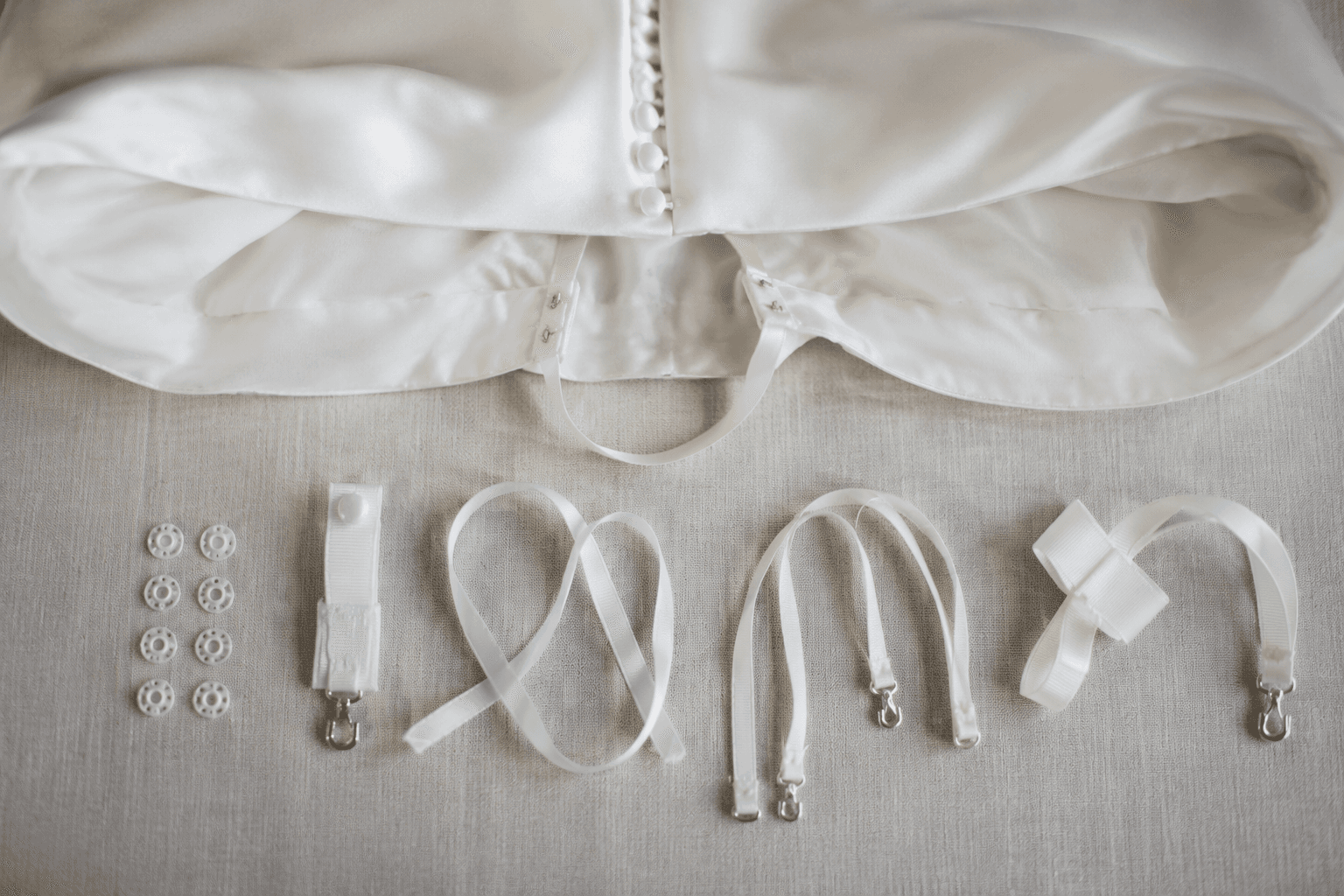
A bustle is sewn into the back of the dress to lift and secure the train off the floor after the ceremony. It reduces tripping risk and keeps the fabric cleaner while you move, dance, and take photos.
What a bustle actually does
A ceremony train can look spectacular in a photograph and become a liability the moment you start greeting guests or crossing a dance floor. Bustle decisions belong in the same final fitting stage as the hem, because those two changes affect one another, and the dress should be fitted in the wedding shoes so the length and drape work together.
That is also why there is no universal bustle. A slim crepe column, a satin ballgown, and a chapel-train dress do not need the same fix, and a bustle that works on one silhouette can flatten or overcomplicate another. The construction of the gown, including fabric weight, appliqués, beadwork, and train length, determines how the train can be lifted without ruining the line of the dress.
The five bustle types brides hear about most
Five bustle types come up again and again in bridal fittings: American bustle, ballroom bustle, French bustle, royal bustle, and Victorian bustle. Terminology can vary by salon or tailor, but the core idea stays the same: gather the train so the dress still looks like itself once the ceremony is over.
American bustle
The American bustle, also called an over-bustle, lifts the train over the back of the skirt. It is the kind of bustle many brides picture first because it creates an immediate change in length and makes walking easier fast. It works on a dress with a straightforward train and enough structure to hold the lift cleanly.
French bustle
The French bustle, also called an under-bustle, tucks the train underneath the gown. That makes it a smart choice when you want the skirt to keep its shape and the bustle to disappear into the dress rather than sit visibly on top of it. “A wedding dress with a train is a beautiful thing, until it comes time to hit the dance floor,” Zola says, and the French bustle is often the answer for a bride who wants elegance without dragging silk across the floor.
Ballroom bustle
The ballroom bustle is a discreet option for a fuller skirt. Instead of simply shortening the train, it is designed to keep the silhouette intact while gathering the length in a way that still reads polished from the back. It works for dresses with volume, especially when the goal is to preserve the sweep of the skirt rather than create a visibly tucked-up finish.
Royal bustle
Royal bustle terminology can shift from salon to salon. It is often used for more elaborate trains and can be customized to support the weight and shape of a dress that needs more than a single lift point. If your gown has a long, dramatic train and decorative detail you want to show off, it may need more than a single lift point.
Victorian bustle
The Victorian bustle is more specialized. It can be used to create a layered effect that shortens the train while keeping the back of the dress visually interesting, especially on gowns with multiple layers of tulle or more ornate construction. On a dress with lace, beadwork, or appliqués, the exact placement of the attachment points matters because the detail still needs to read beautifully when the train is lifted.
Match the bustle to the dress, not just the dress code
A heavy satin or mikado ballgown needs a different strategy from a whisper-light chiffon dress. Heavier fabrics need a bustle that can support weight differently, and longer chapel or cathedral trains generally need more attachment points than a shorter sweep train. On a dress with beadwork or appliqués, the bustle should be placed with enough care that the decorative work still looks intentional instead of bunched or hidden.
The bustle conversation belongs inside alterations, not at the very end of it. The hem has to be finalized first, then the train length, then the attachment points that will carry the dress through the rest of the day. If the gown is still changing in length, the bustle can shift too.
How to think about real bride scenarios
If you are wearing a heavy satin ballgown, think structure first. A gown with a full skirt and a cathedral train usually benefits from a bustle that can hold more weight and keep the back of the dress balanced, not one that simply pulls a handful of fabric upward and hopes for the best.
If you are getting married on the beach, a lighter bustle often makes more sense. Sand, wind, and movement punish a train that still drags, so a cleaner under-bustle or another low-profile solution keeps the hem off the ground without fighting the relaxed setting. The goal is to look neat for portraits and keep the dress from collecting grit before dinner even starts.
If your reception is built around all-night dancing, prioritize security and ease of movement. The bustle is the difference between a ceremony-ready dress and one that can actually be worn comfortably for the full event, and that is where sturdier attachment points matter. You want a bustle that stays put while you move, not one that needs constant adjustment between songs.
If your venue is outdoors, from a garden lawn to a gravel path, the bustle becomes more than a style choice. Keeping the train off the floor helps protect the fabric and reduces the chance of tripping on uneven ground, which is especially important with longer chapel or cathedral trains.
When to decide, and what to do before the wedding
Bustles are usually decided at the final fittings, after the hem is set and before the wedding day. That fitting should happen in the shoes you plan to wear, because heel height changes where the dress falls and where the bustle needs to sit.
Also practice the bustle with the person who will help on the day. A bustle that looks simple in the fitting room can become a small puzzle once gloves, nerves, and a crowded dressing room are involved.
This article was produced by Prism’s automated news system from verified source data, official records, and press releases, then run through automated quality and moderation checks before publishing. The system is built and supervised by the people who set the standards it runs under. Read our full AI policy.
Did this article answer your question?