How to commission a custom wedding dress, from sketch to fittings
Custom is worth it when the dress has to solve fit, fabric or silhouette problems. If not, made-to-measure or alterations will save time and budget.
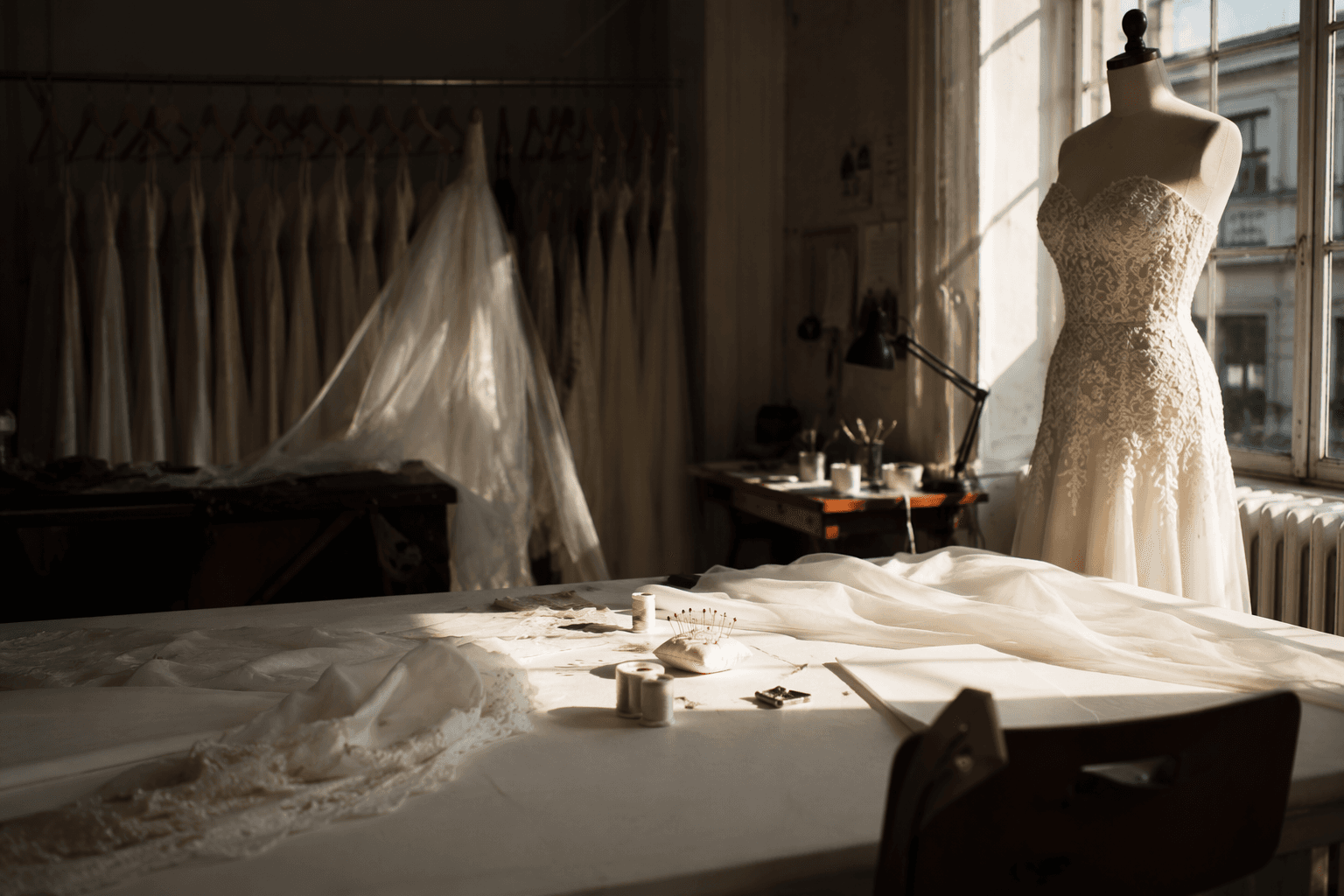
The Knot puts the starting price for a custom wedding dress at about $3,000 to $4,000. It makes sense when the gown has to do a job off-the-rack cannot: solve a hard fit, turn heirloom fabric into something new, or create a silhouette that does not exist in a salon. In Vogue, Shelby Wax lays out the process as a series of practical decisions, the right mindset if you want a dress that feels personal without letting the project run away from you. If your timeline is short or the shape you want already exists, made-to-measure or alterations are usually the sharper buy.
When custom is worth the money
The custom route starts at a real price point, not an abstract one. That starting price usually buys more than a pretty idea: a custom sketch deck of silhouette options and a prototype of the dress. That kind of investment only pays off when the design itself matters, whether you need precision around the bodice, want a family lace transformed into a modern gown, or cannot find the right neckline, train, or waistline anywhere on the rack.
A New Year’s Eve wedding in Brooklyn featured a custom Christopher John Rogers gown. Giorgia Gabriele wore a custom off-white wedding dress with a 26-foot train for her Lake Como ceremony.
Start earlier than you think
Custom and couture bridal work live on a long calendar. Start the process at least 8 to 12 months before the wedding, and at David’s Bridal couture can run as a 12-month bridal fitting journey. The Knot puts made-to-order wedding gowns at three to 12 months to receive.
That timeline is also the first filter for deciding whether to go custom at all. If your wedding is under a year away, a full commission can still work, but only if the designer has space for design development, fabric sourcing, multiple fittings, and final adjustments. If you are closer than eight months out, the cleaner solution is often a made-to-order gown or a strong off-the-rack dress with expert alterations.
What the custom process actually looks like
The process runs in a sensible order: gather inspiration, choose the right designer, plan fittings, protect the timeline, and set the budget before the work begins. The most successful brides come armed with specifics, not mood alone. Bring a clear sense of the silhouette, the fabric family, the kind of movement you want in the skirt, and the details you will actually care about when you look at the dress years later.
The custom sketch deck is where the collaboration starts to become concrete. It gives you silhouette options to compare before the atelier commits to a single pattern, and the prototype tells you whether the vision works in three dimensions. That is the stage where a gown can shift from romantic to stiff, or from dramatic to balanced, so the prototype is not a formality.
How to keep budget creep under control
The quoted price is rarely the final price. That starting price can climb once you add better fabric, a more complex structure, extra fittings, or revisions after the first sketch deck. Before you commit, ask exactly what is included in the estimate, whether the prototype is part of the price, and how much each additional fitting or alteration will add if the plan changes.
Those questions matter because custom budgets get blurred fast. One bride may think she is paying for a finished gown, while the designer is pricing only the first stage of development. Ask about fabric sourcing, who will actually construct the dress, how long each stage takes, and what happens if you change your mind about the neckline, sleeves, or train after seeing the first version.
The non-negotiable questions to ask before you sign
Before you commit, make sure you have straightforward answers to these points:
- What is included in the quoted price
- How many fittings are expected
- Whether the sketch deck and prototype are part of the commission
- How long the design and construction process will take
- What happens if the dress needs extra revisions
- Whether the designer can handle your chosen fabric or heirloom material
- How much of the work is custom and how much is adapted from an existing pattern
If a designer cannot answer those questions clearly, the process will almost certainly be more stressful than glamorous.
When alterations or made-to-measure are the smarter choice
If you already love a dress shape and only need the fit refined, alterations are usually the better call. You are paying to perfect what exists, not to invent something from scratch, and that can be far more efficient when the silhouette is already right. Made-to-order sits between the two, offering a custom feel without the full custom timeline or the cost of building a gown from the ground up.
Made-to-measure works when time is tight or your priorities are simpler. A bride who wants a classic column, a clean A-line, or a familiar shape in a better fabric may get a stronger result from made-to-measure than from a full bespoke commission.
This article was produced by Prism’s automated news system from verified source data, official records, and press releases, then run through automated quality and moderation checks before publishing. The system is built and supervised by the people who set the standards it runs under. Read our full AI policy.
Did this article answer your question?