Historic wedding shoes reveal brides once matched footwear to dresses
Rebecca Tailer married in 1747 with green shoes made to match her dress, proof that brides once treated footwear as part of the look, not hidden white.
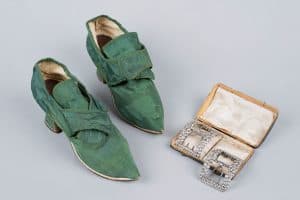
Rebecca Tailer’s wedding shoes are the kind of object that makes modern bridal white look like a very recent habit. When she married Mather Byles on 11 June 1747 in Boston, her shoes were made to match her green wedding dress, which means the shoe was not a secret underlayer, it was part of the outfit.
The pair survives in the Massachusetts Historical Society as Shoes belonging to Rebecca Tailer Byles, and the record is gloriously specific: silk damask, leather, wood, and silk lining, made by Robert Dasson, a cordwainer in London, circa 1747. They measure 11.5 cm high, 8 cm wide, and 25 cm long, which gives the whole thing the right amount of heft, the kind of detail that says this was made for a real body, not a display myth.
The old bridal rule was coordination, not disappearance
That green-to-shoe match tells you everything about how brides dressed before white took over. In the 18th century, brides of all social classes often wore their best dress for the wedding, color notwithstanding, instead of commissioning a separate dress that existed only for the aisle. The point was not to erase the feet. The point was to look complete.
That is why the modern bridal obsession with hiding the shoe feels so flat. If the dress is a satin column, a corseted bodice, a bubble hem, or a cape with attitude, the footwear should help carry the silhouette, not surrender to it. Rebecca Tailer’s shoes make the case plainly: a shoe that belongs to the dress can sharpen the whole look.
What the object tells you up close
The materials matter here. Silk damask gives the pair texture, leather and wood give it structure, and silk lining adds the kind of finish that turns a shoe into an object worth keeping. Robert Dasson, the London cordwainer who made them, was working before industrialization, when shoes were built by hand and every component had to earn its place.
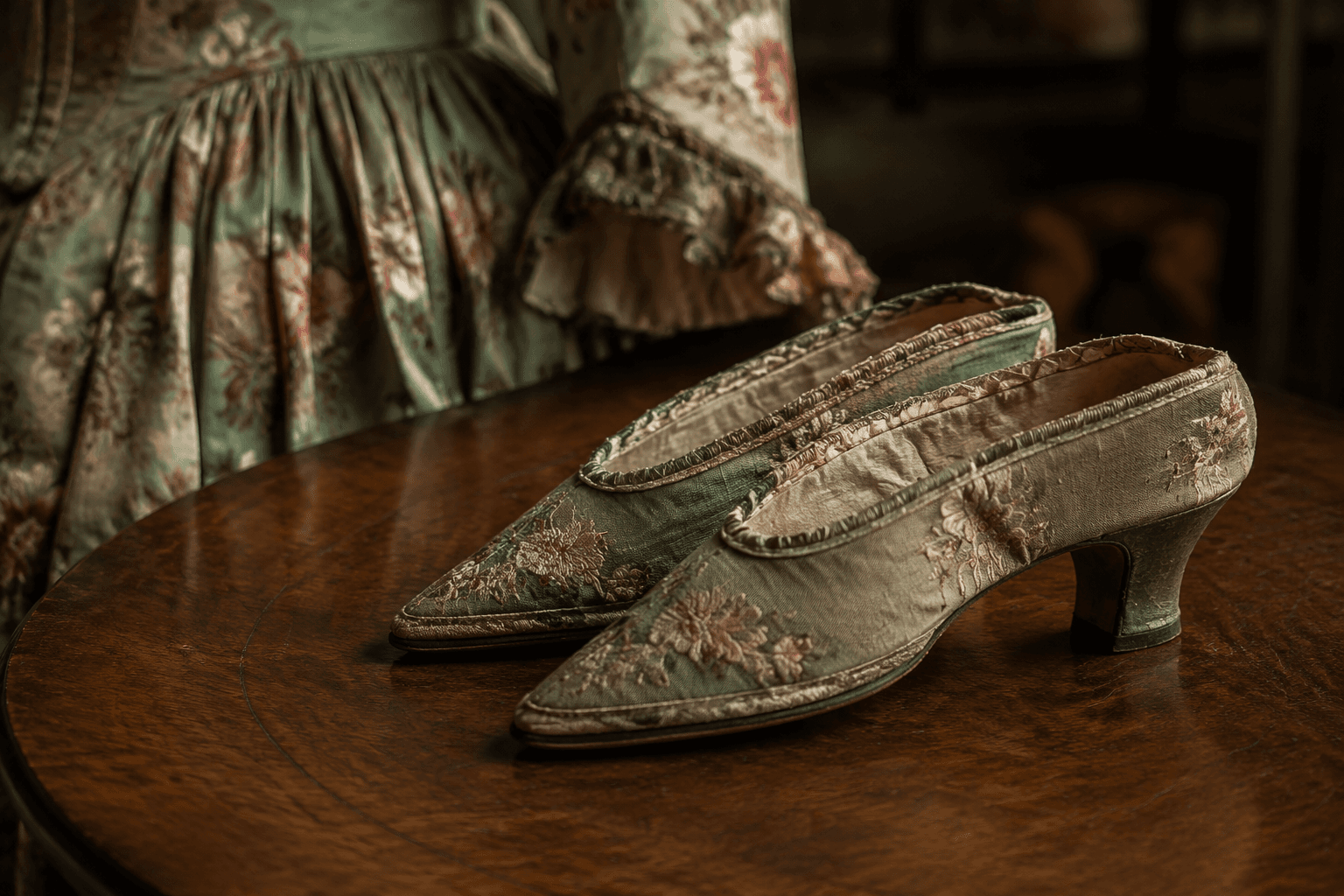
That is exactly why the dimensions are so useful. At 11.5 cm high and 25 cm long, these are not fantasy accessories floating free of the body. They are intimate, practical, and visibly constructed, which makes them a smarter model for bridal styling than a generic white pump bought just to disappear under tulle.
The survival story is just as revealing. The Massachusetts Historical Society has collected family materials since 1791, including clothing that arrived alongside letters and diaries, and textiles are often stored separately from papers because they need different conditions. That is why a pair of shoes can survive as a vivid fragment while the rest of the wardrobe is gone. It is also why fashion history often lives in objects first and paperwork second.
The Tailer shoes sit inside a broader two-part look at shoes and fashion in The Beehive, paired with a companion post on how shoes were made before the Industrial Revolution. The archive even echoes forward in a later surviving MHS marriage record from November 1768 to February 1773, where Mather Byles, Jr. officiated marriages. These records do not just preserve names. They preserve how people dressed, moved, and marked milestones.
How to use the idea now
The takeaway is not that every bride should wear green. It is that the shoe should be chosen with the same intention as the dress. If Rebecca Tailer could make footwear part of a coordinated wedding look in 1747, there is no reason to pretend the default white heel is the only refined choice now.
- If your dress is already a strong color, let the shoe stay in that family. A dyed satin pump or a silk shoe in a matching tone reads polished, not loud.
- If your gown is ivory, use the shoe to carry the color story. A blue shoe can work as the wedding-weekend something blue, and it gives you a detail that does not vanish after the ceremony.
- If you want rewear value, think like the archive, not the trend cycle. Silk, leather, and patterned fabrics survive stylistically because they can move from wedding to dinner, party, or suit with almost no translation.
- If the dress has a visible shape, like a column, corsetry, gloves, or a bubble hem, do not hide the footwear. A visible shoe line makes the whole silhouette feel designed instead of defaulted.
Pattern matters too. Tailer’s pair was silk damask, which already tells you that texture was part of the message. A patterned bridal shoe today can do the same thing, especially when the dress is pared-back and the bride wants one sharp note at the bottom of the look.
The real bridal upgrade
The smartest bridal styling move is not always the most ornate one. It is the one that makes the full look feel intentional, from hem to heel. Rebecca Tailer’s green shoes prove that bridal footwear was once made to coordinate, and that is a much better standard than making it vanish.
This article was produced by Prism’s automated news system from verified source data, official records, and press releases, then run through automated quality and moderation checks before publishing. The system is built and supervised by the people who set the standards it runs under. Read our full AI policy.
Did this article answer your question?