How bridal neckline shapes change the whole wedding dress feel
A neckline changes more than the bodice line, it shifts support, jewelry, veil placement, and how formal the whole dress feels.
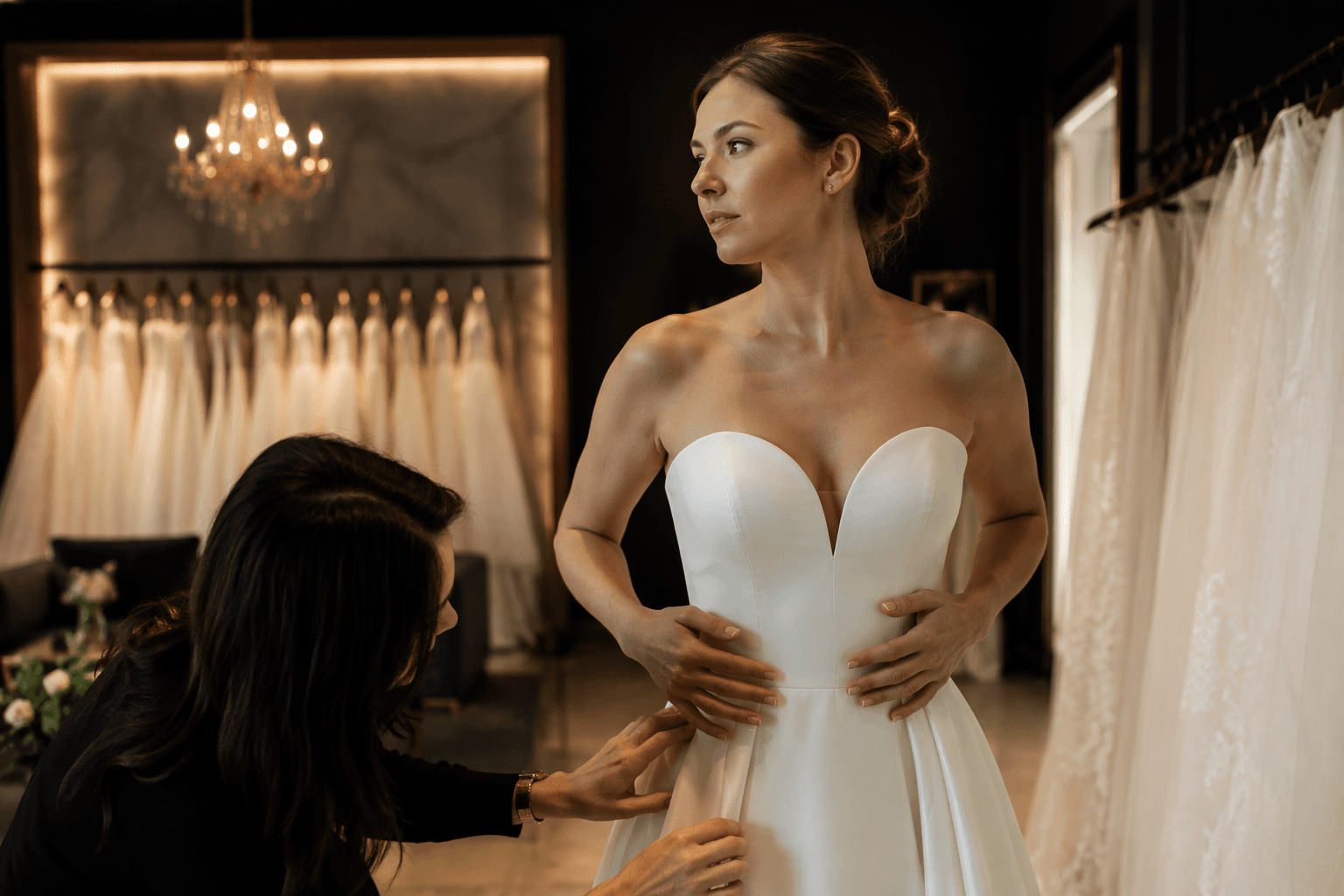
Sweetheart, square, V-neck, and bateau cuts can make the same wedding dress read softer, cleaner, longer, or sharper. It can turn the same fabric into something soft and romantic, crisp and modern, or suddenly much easier to wear through a full day of vows, photos, and dancing. The useful question is not whether a neckline is flattering, but what it does to your proportions, your support, and the rest of the styling equation.
Why neckline shape does so much work
A neckline is simply the upper portion of the garment that goes around the neck, but in bridal wear that strip of fabric acts like architecture. It determines where the eye lands first, how broad the shoulders look, how long the torso appears, and whether the dress needs help from structure underneath. Neckline choice is tied to silhouette, support, comfort, and your overall bridal vision, not just body type alone.
That is why two brides with the same bust size may make completely different choices. One may want a soft sweep of fabric that lets statement earrings do the talking. Another may want a cut that locks in support, keeps movement easy, and frames the face without asking for much jewelry at all.
For more support without losing softness
Sweetheart necklines remain a bridal favorite because they soften the bust and create a gentle, romantic curve across the chest. They are especially useful if you want the bodice to feel feminine rather than severe, and they pair well with fuller skirts, lace, or any gown where the upper half needs a little visual easing.
Square necklines are the more architectural option. They feel cleaner and more deliberate, with straight edges that can give the bodice a stronger frame and make the shoulders look neatly squared off. Illusion necklines add a different kind of support story: they offer coverage without the visual weight of a solid panel, which makes them useful for brides who want modesty, subtle detailing, or a little extra security without closing the look in.
These are the necklines that often matter most if you are thinking about built-in structure, bra compatibility, or how the dress will feel after several hours on your feet. A romantic shape can still be highly functional, but the trick is knowing whether the neckline is doing the work itself or depending on construction underneath.
For a longer-looking neckline and a lighter upper body
V-necks are one of the most efficient ways to lengthen the torso. The open plunge draws the eye down through the center of the dress, which is why it works so well on everything from a sleek crepe sheath to a lace A-line with more softness in the skirt. A pendant can sit beautifully with a V-neck because it follows that vertical line instead of fighting it.
Scoop necklines create a similar sense of openness, but with a softer curve. Where a V-neck is directional, a scoop feels easier and more relaxed, especially on dresses that are meant to move lightly rather than stand in strict shape. If you want the upper body to feel less compressed and the overall dress to read as airy, this is one of the most forgiving options.
These necklines also change the feel of the veil. A deeper open line can handle a more dramatic veil without looking crowded, while a gentler scoop often works with a veil that stays visually light so the bodice remains the main event.
For a stronger shoulder line and a more directional mood
Bateau necklines travel close to the collarbone and create one of the cleanest horizontal lines in bridal dressing. They are polished, refined, and especially good when you want the dress to feel composed from the shoulders outward. That straight sweep often pairs beautifully with a low bun or a sleek hairstyle, because the neckline itself already provides the structure.
Halter styles shift the eye upward and outward, putting the shoulders and back in focus. They are particularly effective in modern, minimal gowns where the cut has to carry the whole look. Halters can also make movement feel different in a flattering way, since the neckline tends to keep the bodice visually contained while the skirt or train does the dramatic work.
Off-the-shoulder and one-shoulder necklines are where bridal dressing becomes more editorial. Off-the-shoulder styles create a romantic balance, exposing the collarbone while still feeling soft and celebratory. One-shoulder gowns push harder in a contemporary direction, creating asymmetry and a stronger graphic line, which can be striking in satin, crepe, or any fabric that holds shape cleanly.
How the neckline changes the rest of the styling
The neckline is the anchor for hair and jewelry. A strapless dress opens the door to chokers or a bolder necklace if the bodice is simple enough to carry it, while a V-neck naturally wants something vertical, like a pendant. A halter or high neckline usually looks strongest with restraint, so the hair can be clean and the jewelry minimal.
A few practical pairings make dress shopping easier:
- Sweetheart and strapless-adjacent styles often support statement earrings and a fuller veil.
- Bateau and square necklines tend to look balanced with an updo, since the clean line at the collarbone is already doing visual work.
- Halter and one-shoulder gowns often need careful veil placement, because the neckline itself is part of the drama.
- Illusion necklines are useful when you want coverage, embellishment, or support without adding heaviness to the chest and shoulder area.
The other practical question is comfort. Necklines affect how warm you feel, how freely you can move your arms, and how much the dress relies on internal construction to stay in place through dinner, dancing, and the last photograph of the night. That is why neckline choice should always be considered alongside venue, season, and the amount of support you want from the dress itself.
Why bridal collections keep circling back to neckline shape
After New York Bridal Fashion Week on April 17, 2024, Spring/Summer 2025 collections still treated neckline shape as a defining design move. New Alexandra Grecco wedding dresses for Fall 2025 and Viktor & Rolf Mariage for Fall/Winter 2025 show that even the newest collections rely on the neckline to shift a gown from romantic to sharp, minimal to decorative.
This article was produced by Prism’s automated news system from verified source data, official records, and press releases, then run through automated quality and moderation checks before publishing. The system is built and supervised by the people who set the standards it runs under. Read our full AI policy.
Did this article answer your question?