Hyderabad’s khada dupatta, the bridal tradition modern brides still cherish
Hyderabad’s khada dupatta still gives brides what gowns rarely can: instant lineage, family continuity, and a bridal identity everyone recognizes.
The bridal code Hyderabad still recognizes
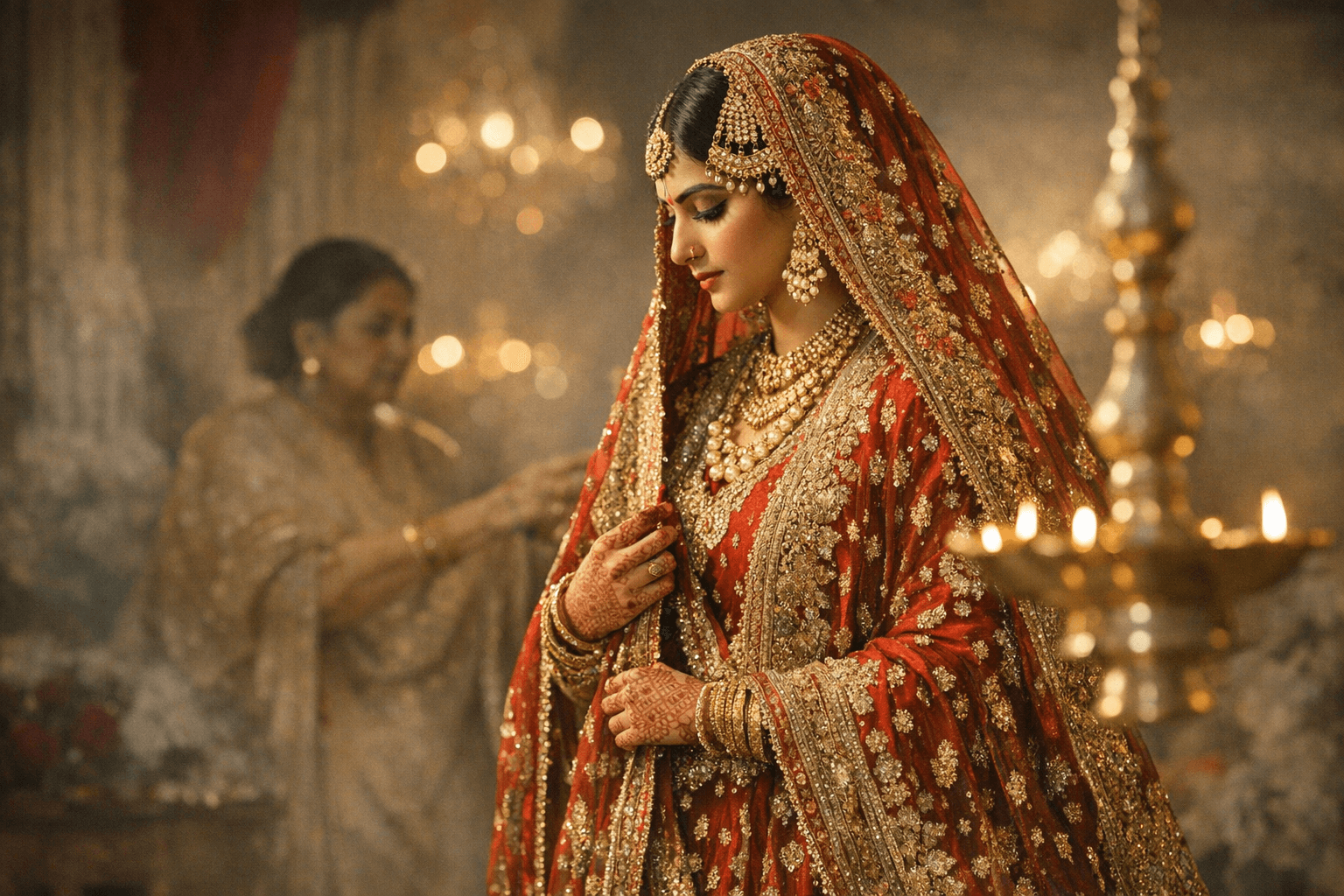
The khada dupatta works because it never tries to look like anything else. In Hyderabad, that six-yard drape is not a costume nod to the past but a living bridal language, one that still gives a bride instant authority, family continuity and an identity the moment she steps into the room. Vogue India’s framing is exactly right: this is the soul of Hyderabadi bridal dressing, not a museum piece.
What makes it so distinctive is the social choreography around it. The khada dupatta is typically worn on the first day of an elaborate wedding, especially by Muslim brides, and the look often extends to sisters and cousins, turning the opening ceremonies into a family tableau rather than a solo entrance. The Hindu went so far as to describe a Hyderabadi bride without the khada dupatta as “unimaginable,” and that is the point: in this city, the ensemble still reads as bridal before the jewelry even goes on.
From Deccan court elegance to a modern bridal signature
The origin story sits in the layered glamour of Deccan court culture, with older reporting connecting the khada dupatta to the world of the Nizams and even to broader Mughal fashion influences. One version threads it back to Noorjehan and the kind of ornate craftsmanship that flourished when clothing was as much power dressing as ornament. Another points to Hyderabad’s political shifts, including the moment Nizam Ali Khan made it the capital again in 1762, when northern and Maharashtrian influences may have shaped the drape’s length and stiffness.
That is where the garment becomes especially interesting for a modern reader. The khada dupatta is not frozen in one “authentic” form. Its structure seems to have absorbed influences from Paithan’s weaving traditions, from Banaras, and from the royal houses that wore it, which is why it still feels both unmistakably Hyderabadi and unusually adaptable. It belongs as much to Chowmahalla Palace as it does to the lanes around Charminar.
How the look is built, and why it still feels ceremonial
The classic ensemble is a study in controlled grandeur: a kurta and churidar, a six-yard dupatta worn upright, and jewelry that frames the face, wrists and ankles with precision. The traditional finishing touches are deeply specific, including tikka, chintaak or jadawi lacha, karan phool, bazu bund and paizeb. Together they turn the look into a full bridal architecture, with the dupatta acting less like an accessory than a vertical plane of dignity.
Older khada dupattas were made in fine silk and embroidered with zardozi and silver thread, and The New Indian Express notes that some versions were once worked in pure gold and silver threads. Those pieces must have carried extraordinary weight, which is part of their aura but not necessarily their appeal for a bride who has to move, greet relatives and survive a day of rituals. Over time, royal household styles adapted into cotton and karga net for easier wear, while other versions moved into Banarasi brocade, Banarasi Jamdani silks, tissue and gota borders. The evolution is practical, but it never strips away the formality.
Why modern brides still choose it over a more generic bridal silhouette
There is a reason the khada dupatta still commands loyalty in a city flooded with contemporary bridal options. A gown can be dramatic, and a lehenga can be exquisitely embellished, but neither automatically tells Hyderabad who the bride is or where the tradition comes from. The khada dupatta does that in one glance. It gives a wedding its recognizable code, the kind of rootedness that feels personal rather than performative.
That continuity is visible in the way the style moves through families. Hyderabad designer Fareeha Anjum of Anjum Designs describes the khada dupatta as part of the city’s tehzeeb, and her own family story maps the ensemble’s changes across generations. Her grandmother wore Banarasi Jamdani silks with pure gold borders, her mother moved into pure tissue and gota borders, and today’s brides are still reworking the same silhouette rather than abandoning it. That is the real modernity here: not replacement, but refinement.
How brides are updating it now without losing its soul
The smartest contemporary versions keep the silhouette intact and lighten everything around it. That means choosing softer textiles, trimming back the heaviest embroidery and letting the dupatta sit with a little less rigidity, even when the mood stays formal. The result is a look that can still signal ceremony while being easier to wear from the first ritual to the last photograph.
Jewelry is where the update often becomes visible. A bride may keep the traditional face-framing pieces, but the styling can be edited so the ensemble does not overwhelm her. In Hyderabad’s current bridal conversation, the khada dupatta is still being worn by brides and bridesmaids from all walks of life, and public revisitations by figures like Rekha and Sania Mirza have helped keep it culturally legible beyond the wedding hall. Deccan Chronicle describes it as part of the bridal trousseau in the Charminar city, and that is the right frame: it is not an occasional revival, but a living part of how Hyderabad dresses a bride.
At Izzath Uroosam’s little boutique, the orders still come in for brides who want the traditional khada dupatta with khada pants and kurta, proof that the look has not been absorbed into nostalgia. It remains what it has always been in Hyderabad: a bridal statement with memory in its seams, elegance in its drape and enough cultural certainty to outlast the trends circling around it.
This article was produced by Prism’s automated news system from verified source data, official records, and press releases, then run through automated quality and moderation checks before publishing. The system is built and supervised by the people who set the standards it runs under. Read our full AI policy.
Did this article answer your question?